

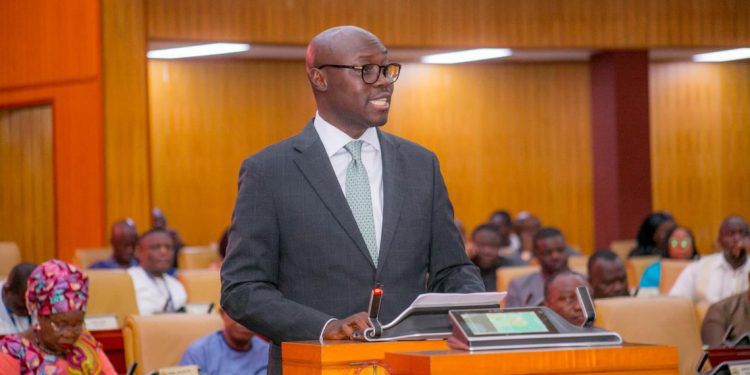
Ato Forson to Present 2026 Budget to Parliament on November 13
Finance Minister Dr. Cassiel Ato Forson is expected to present Ghana’s 2026 Budget Statement and Economic Policy to Parliament on Wednesday, November 13, 2025. The proposed date—pending formal approval by the leadership of Parliament—was confirmed by senior sources at the Ministry of Finance.
This will mark the first full-year budget of the Mahama administration since its return to power in January 2025 and is widely anticipated as the clearest expression yet of the government’s economic direction and priorities.
According to the Public Financial Management Act (PFMA), the Minister of Finance, acting on behalf of the President, must submit the national budget to Parliament not later than November 15 each year. The date therefore aligns with legal timelines for fiscal planning and legislative review.
The 2026 Budget will be the administration’s most consequential fiscal presentation so far. Unlike the 2025 Budget—which largely operated within the expenditure and revenue framework inherited from the previous government—the upcoming document is expected to reflect the Mahama government’s own policy agenda and long-term development vision.
Economic analysts view this budget as a pivotal opportunity for the government to translate its campaign promises into measurable policy actions. It is also seen as a credibility test for how the administration will balance fiscal consolidation with its commitment to inclusive growth and job creation.
“The 2026 Budget will show whether this government can move beyond stabilisation toward a growth-oriented, job-led recovery,” said Dr. Kwame Mensah, a financial economist at the University of Ghana.

The Ministry of Finance has reportedly concluded several rounds of stakeholder consultations with private sector groups, civil society organisations, and development partners. The engagements aimed to gather input on key spending priorities, tax policy adjustments, and strategies to support small and medium enterprises (SMEs).
A senior official at the Ministry noted that these consultations have shaped the budget’s framework, ensuring it reflects both the government’s priorities and the realities of the business community. “This budget will be people-centred, with focus on sustainable jobs, productivity, and efficiency in spending,” the official said.
Dr. Forson has in recent public statements hinted that job creation and economic growth will anchor the 2026 fiscal policy. Targeted investments are expected in key sectors such as agriculture, manufacturing, technology, and renewable energy—areas identified as critical to reducing unemployment, particularly among the youth.
Recent data from the Ghana Statistical Service shows that youth unemployment stands at around 14%, while underemployment remains high, especially in the informal sector. Economists believe government spending in productive sectors could help reverse this trend and support long-term economic resilience.

The Finance Minister, Ato Forson is also expected to announce significant tax reforms to broaden Ghana’s revenue base while providing relief to households and businesses. Sources within the Ministry suggest that the COVID-19 Health Recovery Levy and other temporary charges could be reviewed or phased out to ease the cost burden on consumers and entrepreneurs.
The tax policy component of the budget is expected to focus on improving compliance and modernising collection systems rather than introducing new levies. Digitalisation, revenue automation, and property tax enforcement are likely to feature prominently in the new fiscal plan.
The 2026 Budget will be presented at a critical juncture as Ghana approaches the scheduled end of its US$3 billion International Monetary Fund (IMF) programme in May 2026. The document is therefore expected to outline a “post-IMF fiscal roadmap” that consolidates macroeconomic stability while fostering home-grown growth.
Economists and market watchers will be paying close attention to how the government plans to sustain debt reduction, manage expenditure, and maintain confidence among investors once IMF oversight ends. Ghana’s public debt currently stands at about 72% of GDP, down from over 90% in 2022 following debt restructuring efforts, according to official Ministry of Finance data.

Another key test for the upcoming budget will be managing the fiscal deficit in the face of growing debt service obligations. Dr. Forson is expected to outline strategies to streamline government spending while maintaining funding for critical infrastructure, healthcare, and social protection programmes.
Observers also expect a renewed focus on fiscal transparency and public financial accountability—areas that have drawn both domestic and international attention in recent years. With interest payments consuming nearly half of government revenue, efficient expenditure management will be essential to maintaining fiscal space for development priorities.
The presentation of the 2026 Budget will likely generate strong parliamentary debate and broad public interest. It is expected to provide clear targets on inflation, revenue mobilisation, and deficit control, while addressing ongoing concerns over high living costs and private sector credit access.
Businesses, investors, and development partners will be keenly monitoring the policy signals from this budget—especially those related to industrialisation, energy reform, and social welfare.
If successful, the 2026 fiscal plan could set the tone for Ghana’s transition into a post-IMF growth phase and strengthen confidence in the government’s ability to deliver economic recovery through prudent yet inclusive policy choices.
Read also: Government to Borrow GH¢75bn Locally in Q4 to Manage Debt, Fund Key Programmes