

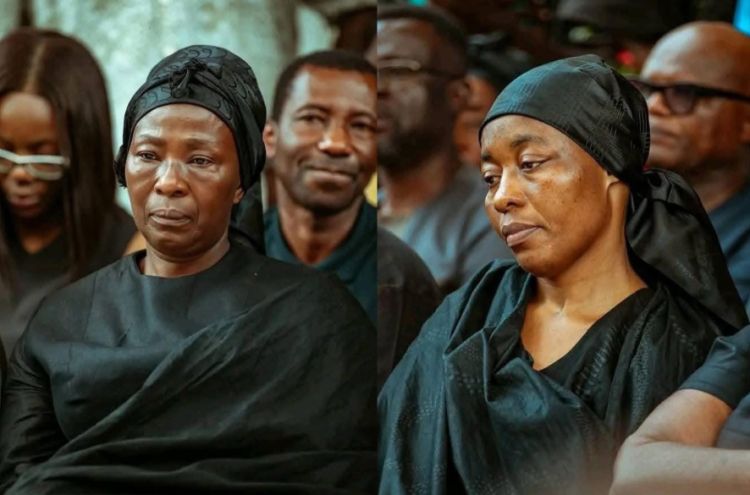
A courtroom dispute has emerged in Kumasi over the final funeral rites of Ghanaian music legend Charles Kwadwo Fosu (Daddy Lumba). On October 1, 2025, Akosua Serwaah Fosuh (also spelled Serwaa), who claims to be Lumba’s only lawful wife, filed an interlocutory injunction at the Kumasi High Court. She is seeking to restrain the deceased’s family, an alleged partner, and the funeral home from taking possession of the body or proceeding with any burial or rites until the substantive case is resolved.
Her application names Abusua-Panin Kofi Owusu Fosu (the family head), Priscilla Ofori (aka Odo Broni), and Transitions Funeral Home as defendants. She argues that she has been excluded from decisions and preparations, and that other parties have attempted to assert spousal status over her rightful role.
Key Claims and Reliefs Sought – Daddy Lumba’s Wife
- Mrs. Serwaa asserts that she legally married Charles Fosu on December 23, 2004, in Bornheim, Germany, under monogamous marriage law. She contends that the marriage was never dissolved and remains valid, disqualifying any subsequent marital claims.
- She further alleges the defendants have already registered themselves as the parties controlling the musician’s body at the morgue, thereby preventing her access.
- Mrs. Serwaa claims that Odo Broni has fraudulently represented herself as a spouse, and that the family head has indicated his intention to allow Odo Broni to perform the culturally significant widowhood rites rights she insists belong exclusively to her as the legal widow.
- Among her reliefs, she asks the court to:
- Declare her as the sole surviving spouse of the late artist.
- Assert that only she can carry out widowhood rites.
- Restrain the family head from recognizing Odo Broni as a spouse.
- Prevent Odo Broni from publicly presenting herself as Lumba’s widow.
Her motion also warns of irreparable harm if the funeral proceeds without her involvement, including the loss of legal, customary, and conjugal rights that she argues cannot be compensated through damages alone.
The High Court is expected to hear the motion in the coming days, and if granted, it would effectively suspend all funeral activities until the full case is adjudicated.

Spokespersons for Daddy Lumba’s extended family have publicly dismissed Serwaa’s legal move as lacking merit, affirming that plans for his final rites remain firmly scheduled.
In one public response, Collina Amankwah (family spokesperson) stated that the family, not external parties, determines who qualifies as Lumba’s widow and emphasized that no injunction had been obtained to stop the process.
Meanwhile, the family had earlier announced December 6, 2025, as the date for the final funeral service at Baba Yara Stadium, Kumasi, a decision they say they made independently. The same announcement had caused consternation, since Mrs. Serwaa and her children claimed the date was publicised before being consulted.
The family and Mrs. Serwaa’s legal team have traded accusations: Serwaa’s side describes the announcement as “deeply distressing” and a sign of marginalization, while the family insists it has the authority to move ahead.
This case underscores recurring tension in Ghana and many African societies between customary norms, statutory marriage law, and evolving notions of spousal rights after death. When prominent figures pass away leaving multiple partners or complex family structures, disputes often erupt over burial rights, inheritance, and public legacy.
By invoking German marriage law, Serwaa is asserting the primacy of a foreign legal system in regulating her status despite the context being Ghanaian. The case raises questions about how foreign marriages are recognized in Ghanaian courts and how cross-border marital status interacts with domestic customary practice.

In Akan custom, widowhood rituals are often seen as a sacred and irrevocable prerogative of the surviving spouse. Denial of that role is sometimes viewed as a profound cultural and social injustice. The exclusion of a widow from funerary rites can significantly diminish her standing in the lineage and her rights to inheritance.
In Ghanaian jurisprudence, widows have at times successfully challenged family heads or communities that restrict them from performing rites or accessing property. For instance, a 2024 case saw a widow petition the Accra High Court to halt funeral rites and secure access to her marital home.
Under Ghana’s Marriage Ordinance (Cap 127), marriages under the Ordinance are strictly monogamous; a person cannot legally marry another so long as the first union remains valid. However, customary marriages are polygynous by default unless expressly converted to monogamy under law.
Serwaa’s argument is that her German monogamous marriage precludes any second valid marriage. But courts may have to reconcile that claim with Ghanaian legal recognition of marriages abroad, as well as whether Odo Broni’s status is recognized under customary or statutory law.
Charles Kwadwo Fosu, known widely as Daddy Lumba, passed away on July 26, 2025, in Accra. He was a towering figure in Ghanaian highlife music with over 30 albums and numerous hit songs over a four‑decade career.
His death has triggered not only national mourning but also public scrutiny over how his estate and burial will be handled. The difficult intersection of public legacy, private family interests, and Ghana’s legal-cultural frameworks has made this dispute especially salient.
As of now, the cause of his death remains under investigation, though the family has not disclosed full details.
Possible Scenarios & Legal Implications
If the court grants the interlocutory injunction, all funeral plans including collection of the body and any rites would be put on hold pending full hearing. That would grant Mrs. Serwaa temporary control over her husband’s remains and force the family to engage in court-supervised dialogue.
If the injunction is denied, the defendants may proceed, and the full case will focus on whether Mrs. Serwaa is indeed the sole lawful widow, and whether Odo Broni has any legal standing to challenge that. The court may need to assess foreign marriage recognition, claims of fraudulent spousal representation, customary rights, and documentary evidence of marriage.
A decision either way could set precedent in Ghana for how courts resolve competing widow claims in cases where multiple partners dispute legitimacy especially in high‑profile and cross‑jurisdictional marriages.
This legal showdown over Daddy Lumba’s funeral arrangements goes beyond one family’s quarrel. It touches on fundamental issues of marital recognition, women’s rights, cultural legitimacy, and the interplay between domestic and foreign law. As Ghana’s judiciary tackles the case, observers will watch closely not just for the fate of a national icon’s burial, but for the potential legal benchmarks it may set in Ghana and West Africa on spousal recognition and funeral entitlement.
Read also: Bawumia Secures Key Regional Endorsements Ahead of NPP Flagbearer Race