

The EnjoyAI African Open 2025 officially commenced on Friday, September 26, 2025, at the Accra Digital Centre, bringing together thought leaders in artificial intelligence, educators, policymakers, and innovators under the theme “A Continent United by Innovation.” The two-day conference, running from September 26–27, positioned Ghana at the heart of Africa’s growing AI ecosystem, serving as a melting pot for discussions on how the continent can harness technology for sustainable development and global competitiveness.
The opening ceremony was marked by energy and optimism, with participants emphasizing the urgent need for Africa to transition from being mere consumers of AI technologies to becoming active creators. Organised by EnjoyAI Africa in partnership with key stakeholders in education and technology, the event served as a blueprint for Africa’s digital future.
A high-level panel discussion on Responsible AI and Africa’s Future set the tone for the event. Moderated by Paulette Watson Mbe, the session featured distinguished panelists including Richard Osei Anim, Olima Mashauri, Rashida Musa of Rhema Technologies, Edem Wunu, and Evans Kofi Martin. The panel explored how African nations could move beyond AI pilot projects to implementing system-wide, inclusive AI education and governance frameworks.

The speakers emphasized that for Africa to thrive in the global AI race, national governments must integrate responsible AI into public policy, with a focus on teacher training, sustainable funding, and cross-sector collaboration. “We can’t afford to leave AI to chance,” one panelist remarked. “It must be intentional, inclusive, and adapted to Africa’s realities.”
The discussion further touched on the idea of a continental AI strategy—one that respects the diversity of African societies while harmonizing innovation goals. Experts underscored the importance of contextualized curricula that reflect indigenous knowledge systems, African languages, and local problem-solving approaches. Such a framework, they argued, would prevent dependency on Western-centric models of technology education.
Another major highlight was the call to place teachers at the center of the digital revolution. The panel urged policymakers to ensure access to digital infrastructure for both rural and urban schools while addressing inequalities that could deepen the educational divide. Training programs, it was suggested, should equip teachers not just with digital tools but with the confidence to integrate AI meaningfully into classrooms.

There was also a strong push for localizing technology development. The speakers cautioned against Africa’s reliance on imported systems and instead advocated for homegrown solutions developed through collaborations between universities, startups, and government institutions. Proposals such as introducing a three-year IT training program for university students to serve as AI educators were discussed as practical steps toward long-term capacity building.
Financial institutions, the panelists said, must play a bigger role than funding scholarships—they should invest directly in AI infrastructure development and innovation hubs. This approach, according to the experts, will bridge the gap between policy and implementation while enabling equitable participation across the continent.
However, one of the most thought-provoking discussions revolved around the widening gap between urban and rural access to technology. As AI gains traction in major cities, rural communities risk being left behind. The speakers urged individuals to take personal responsibility for learning, leveraging freely available online resources to upskill themselves rather than waiting solely on government intervention. The message was clear: Africa’s AI transformation requires both collective and individual accountability.

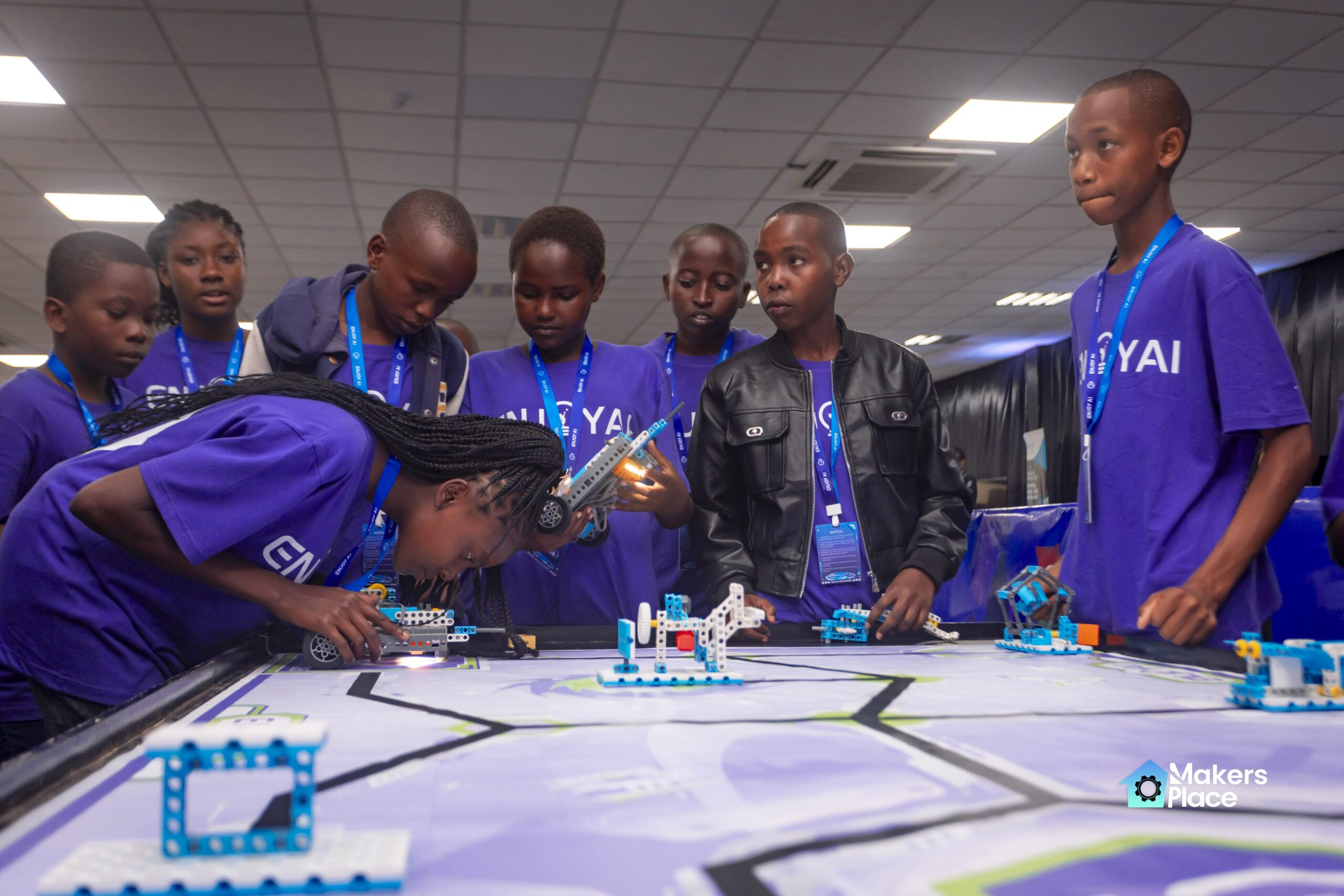
Beyond discussions, the event also celebrated innovation at the grassroots level through a robotics competition for young learners. The contest featured teams from various schools, including Ahtoo Montessori School’s Beta Red, Blue, and Green teams, Tech AI, Makers AI, B-weh Pathfinders, and CyberCity. The young participants demonstrated problem-solving and creativity through robot-assisted material organization challenges, showcasing the potential of Africa’s next generation of innovators. This segment of the event reinforced the message that early STEM exposure is critical to preparing young Africans for the digital economy.
As the conference drew to a close, participants echoed a unified sentiment: Africa’s AI journey is not just about catching up with the world—it’s about shaping a new narrative. From education to infrastructure and policy, the EnjoyAI African Open 2025 has set the tone for a future where innovation is homegrown, ethical, and inclusive. The conversations in Accra reaffirmed that Africa’s success in AI will depend not on imported expertise but on local creativity, cultural wisdom, and a determination to redefine the continent’s technological destiny.
More Pictures 📸 From The Open:


Also Read: 5 AI Tools That Can Elevate Your Business in Ghana