


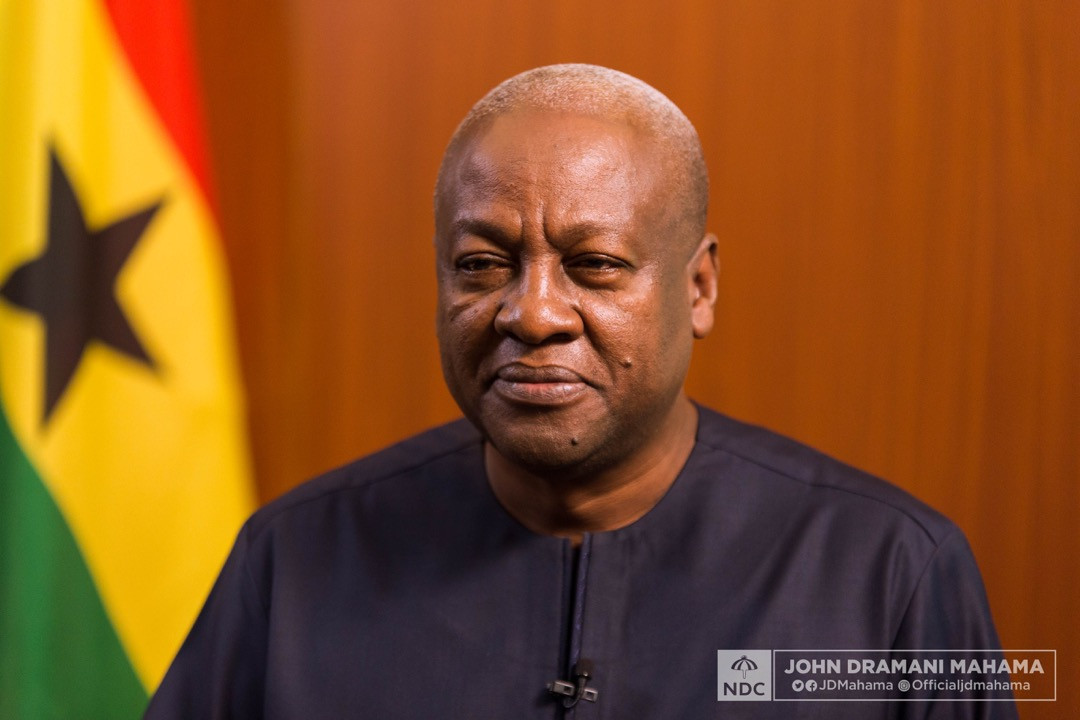
President John Dramani Mahama has disclosed that Ghana’s sustained diplomatic engagement with Washington secured the reversal of visa restrictions the United States had placed on the country.
Speaking at the Jubilee House on Thursday during the commissioning of 11 newly appointed ambassadors and high commissioners, Mahama described Ghana as the only country so far to have achieved a full lifting of such measures. He said the outcome was the result of careful negotiations that balanced U.S. concerns with Ghana’s national interests.
The restrictions, first imposed in 2019, limited the issuance of visas to certain categories of Ghanaians after the U.S. accused Ghana of failing to cooperate in the deportation of citizens who had overstayed or violated immigration laws. At the time, Washington warned that the action could be expanded if the situation did not improve.
Mahama explained that the United States’ main concern was the number of Ghanaians who travelled legally on student, business, or official visas but did not return when their permits expired. U.S. officials, he said, presented data showing a pattern of overstays that had crossed what they considered an acceptable threshold.
“We assured them that we will work with them to ensure our people do not overstay,” the President said. “Those of you applying for visas must remember that when you fail to return, you affect everybody else.”
Mahama warned that once the number of overstays rises beyond a certain level, the U.S. can revoke long-term visas such as five-year B1/B2 permits and reclassify applicants into shorter-term categories. He urged Ghanaians to comply with visa rules to avoid jeopardising access for others.
The President stressed that no money was involved in the agreement. He rejected claims that the deal could undermine Ghana’s sovereignty or security, saying the government would not accept deportees with criminal records.
“This is not an arrangement that makes Ghana a dumping ground for rejected migrants,” he said. “It was carefully vetted and falls within ECOWAS protocols.”
The visa restrictions had been a source of frustration for many Ghanaians, particularly students and business professionals who faced uncertainty in securing U.S. entry permits. Travel agents in Accra reported long delays and reduced visa categories during the period, which they said created hardship for clients planning education or investment opportunities abroad.
The lifting of the restrictions is likely to be welcomed by Ghanaian travellers and could ease tensions that have lingered in bilateral relations. It also positions Ghana differently from other African states that remain under partial U.S. visa sanctions.
Mahama acknowledged, however, that talks with Washington are continuing on other issues, including a 15 per cent tariff on some Ghanaian exports and the renewal of the African Growth and Opportunity Act (AGOA). The trade framework, first signed into law in 2000, allows duty-free access for qualifying African goods into the U.S. market. Ghana, like several other West African economies, is lobbying for its extension beyond 2025.
Analysts say the timing is important. Ghana is grappling with a difficult economic environment, with high unemployment and reduced access to foreign capital. Improved trade relations with the U.S. could provide new opportunities for local businesses in sectors such as agriculture and textiles.
The President urged the new envoys to represent Ghana with transparency and accountability, reminding them that diplomacy goes beyond negotiation.
“Diplomacy is not just negotiation,” he said. “It is about safeguarding how your nation is perceived.”
The announcement marks a rare instance in which visa restrictions have been fully lifted after being imposed, and could serve as a test of Ghana’s ability to enforce stricter compliance among its nationals abroad.
Source: GNA