Mahama’s Removal of Chief Justice Was a Long-Planned Scheme – Asenso-Boakye

0
158

Asenso-Boakye Alleges Orchestrated Plot

Francis Asenso-Boakye, Member of Parliament for Bantama, has sharply criticised President John Dramani Mahama over the removal of Chief Justice Gertrude Araba Esaaba Sackey Torkornoo. According to him, the President’s action was not coincidental but rather a meticulously crafted scheme aimed at undermining Ghana’s judiciary.

In a strongly worded statement shared on Facebook, the former Roads and Highways Minister warned that the move poses a grave danger to Ghana’s democratic foundations. “President Mahama’s sacking of the Chief Justice Gertrude Torkornoo is no accident; it was a long-planned scheme, executed with precision. This reckless move shatters judicial independence and strikes at the heart of our democracy,” he wrote.

Asenso-Boakye further cautioned that if a Chief Justice could be removed on what he described as “flimsy grounds,” no judge in the country would feel secure enough to uphold the Constitution.

Implications for Democracy and Rule of Law

The Bantama MP framed the decision as an assault on the Republic itself, arguing that Ghana’s democratic progress was being threatened. “This is not just an attack on one individual, it is an assault on the very foundation of our Republic. Ghana has come too far to let the Rule of Law be hijacked. We must resist every attempt to weaken our institutions. Ghana deserves better,” he stressed.

His criticism comes after President Mahama, on Monday, September 1, invoked Article 146(9) of the 1992 Constitution to remove Justice Torkornoo from office. The move followed the recommendation of a committee set up to investigate petitions of alleged misconduct and incompetence.

Widespread Reactions Across Ghana

The decision has drawn sharp responses from various quarters. The Ghana Bar Association, civil society organisations, and the opposition New Patriotic Party (NPP) have all condemned the President’s action, labelling it unconstitutional and a direct threat to judicial independence.

Observers fear that the removal could set a dangerous precedent where judicial officers may be vulnerable to political influence. Legal experts have cautioned that Ghana’s long-standing democratic stability depends heavily on the independence of the judiciary, and any perception of interference could erode public trust in governance structures.

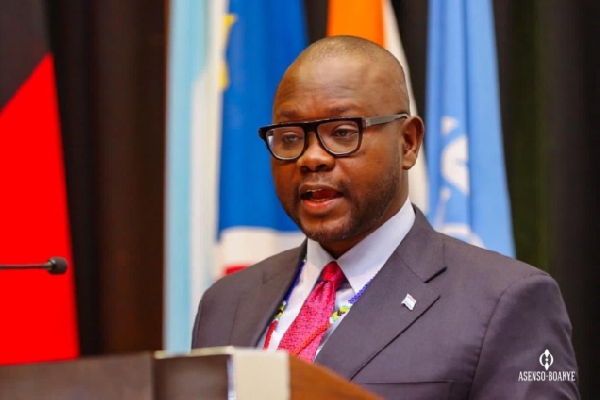
Bantama MP Francis Asenso-Boakye has accused President Mahama of orchestrating a long-planned scheme in the removal of Chief Justice Gertrude Torkornoo, warning of a threat to Ghana’s democratic foundations and judicial independence.
Hon. Asenso-Boakye

For many, this development raises urgent questions about the balance of power, the integrity of constitutional processes, and the future of Ghana’s democratic institutions.


Read Also: Election Watch Ghana Urges Postponement of Akwatia By-Elections

Author

  • Daniel Ablordey

    Daniel Ablordey is a Business Analytics student at the University of Ghana Business School and an emerging strategist at the intersection of data, markets, and narrative. With a keen analytical mind and a passion for African business and economic trends, he is building a career focused on translating complex data-driven insights into accessible, decision-relevant stories that matter.

    As a writer and editor with Insight Ghana, African Business Insight, and The African Journal, Daniel delivers sharp, high-impact analysis on current affairs, business developments, and emerging trends across the continent. His work is defined by precision, clarity, and a deep commitment to responsible journalism — ensuring that every story he tells is not only accurate but meaningful to the audiences it serves.

    Beyond his editorial work, Daniel serves as an Ecobank Youth Ambassador, where he actively promotes financial inclusion, digital banking, and financial literacy among young Ghanaians. His leadership experience spans academic, professional, and faith-based institutions, where he has consistently driven initiatives centered on growth, structure, and long-term impact.

    Grounded in the principles of Pan-Africanism and service, Daniel brings a rare combination of analytical rigour and storytelling depth to his work. Whether unpacking market behavior, profiling emerging business leaders, or covering cultural shifts shaping the continent, he approaches every assignment with strategic intent and editorial integrity.

    His broader ambition is to contribute to Africa's transformation by shaping how data, business, and storytelling intersect — not just locally, but on a global stage.

Previous articleNestlé CEO Fired for “Romantic Relationship”
Next articleShocking Twist: Thomas Partey’s Court Case Adjourned as Ghana FA Defends His Black Stars Call-Up
Daniel Amenyo Ablordey
Daniel Ablordey is a Business Analytics student at the University of Ghana Business School and an emerging strategist at the intersection of data, markets, and narrative. With a keen analytical mind and a passion for African business and economic trends, he is building a career focused on translating complex data-driven insights into accessible, decision-relevant stories that matter.

As a writer and editor with Insight Ghana, African Business Insight, and The African Journal, Daniel delivers sharp, high-impact analysis on current affairs, business developments, and emerging trends across the continent. His work is defined by precision, clarity, and a deep commitment to responsible journalism — ensuring that every story he tells is not only accurate but meaningful to the audiences it serves.

Beyond his editorial work, Daniel serves as an Ecobank Youth Ambassador, where he actively promotes financial inclusion, digital banking, and financial literacy among young Ghanaians. His leadership experience spans academic, professional, and faith-based institutions, where he has consistently driven initiatives centered on growth, structure, and long-term impact.

Grounded in the principles of Pan-Africanism and service, Daniel brings a rare combination of analytical rigour and storytelling depth to his work. Whether unpacking market behavior, profiling emerging business leaders, or covering cultural shifts shaping the continent, he approaches every assignment with strategic intent and editorial integrity.

His broader ambition is to contribute to Africa's transformation by shaping how data, business, and storytelling intersect — not just locally, but on a global stage.