


In a single-room apartment in Madina, three university graduates share a space designed for one. They have negotiated a rent arrangement that splits the monthly cost three ways, pooled grocery runs to reduce food expenditure, and developed an informal schedule for the kitchen that would be absurd if it were not simply practical. None of them planned to be living this way at 27. None of them is particularly embarrassed about it either. Embarrassment, it turns out, is a luxury that the current cost of living in Ghana does not readily permit.
This scene, and the hundreds of variations on it playing out across Accra, Kumasi, Takoradi, and Tema, is the lived texture of a generation navigating a cost of living crisis that has fundamentally reshaped what adulthood looks like in Ghana and what strategies are available for surviving it with any degree of dignity intact.
The numbers behind the squeeze
The economic pressure on young Ghanaians is not imagined or exaggerated. It is documented, measurable, and in many cases still worsening even as headline macroeconomic indicators suggest recovery.
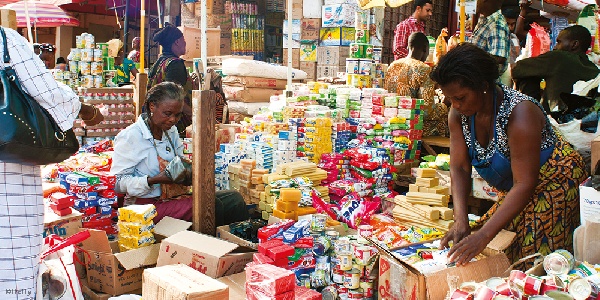
Despite Ghana’s inflation falling to a four-year low of 5.4% in December 2025, ordinary Ghanaians are still feeling the squeeze, from new Public Utilities Regulatory Commission utility tariff hikes to surging market rents and climbing school fees. Inflation for the utilities, gas, and other fuels category surged by 330 basis points to 12.6% year-on-year as the first quarter 2026 utility tariff hike ignited price momentum. At Makola No. 2 Market, traders revealed that rent stood at GH¢95,848 in 2024, increased to GH¢120,343 in 2025, and a newly proposed rent for 2026 stands at GH¢158,035, representing nearly a 58% increase over two years.

Youth unemployment in Ghana exceeded 30% among individuals aged 15 to 24 in 2025, with overall unemployment at approximately 14.5%. Women are disproportionately affected, highlighting the urgency of employment-generating investments, particularly in agriculture, agro-processing, and services.
The true cost of living in Ghana is not determined by headline inflation alone. It is determined by the gap between income and the actual cost of maintaining a basic standard of life: rent, food, transport, data, and the family obligations that formal economic analysis rarely factors into individual cost of living calculations. That gap, for many young Ghanaians, is not narrowing. It is widening, even as the official numbers suggest improvement.
The housing adaptation
The most visible adaptation young Ghanaians are making to the cost of living crisis is in housing, where the combination of rapidly rising rents, the requirement for advance payment typically spanning one to three years, and stagnant wages has fundamentally altered the residential geography of young adulthood.
The shared apartment model, once associated primarily with students, has become the default housing arrangement for a significant segment of working young adults in Ghana’s major cities. The framing has shifted accordingly. What was once described with mild embarrassment as an arrangement you were still in is now discussed with the matter-of-fact pragmatism of a logical economic decision. Two incomes can cover what one income cannot. The mathematics is not complicated.
Extended stays in the family home have similarly been reframed. The Ghanaian cultural baseline of children remaining in the family home until marriage has in some respects worked in favour of the current generation, providing a legitimate cultural cover for an arrangement that is also financially necessary. But for those who cannot or do not want to remain with family, the alternatives are increasingly constrained. The neighbourhoods that were affordable for young working people five years ago are less affordable now. The frontier of affordability keeps moving further from the economic centres where most formal employment is located, which means the transport cost savings from cheaper housing are frequently partially offset by higher commuting costs and time.
The cost of living in Accra sits somewhere between remarkably affordable and shockingly high, and the difference comes down entirely to the lifestyle choices made before signing the first lease. A one-bedroom apartment ranges from GH¢1,500 to GH¢12,000 depending on whether one lives in Dome or Cantonments. The gap between local living and expat living is not gradual. It is a completely different financial universe.
The food adaptation
Food is the cost of living category where adaptation is most visible and most creative, partly because it admits the most variation and partly because the cultural weight of food in Ghanaian social life means that eating well remains a priority even when the budget is under severe pressure.
The migration from restaurant and chop bar dining to home cooking has accelerated significantly among young working Ghanaians managing tight budgets. The economics are not subtle: a plate of food at a midrange Accra restaurant costs between GH¢60 and GH¢150, while the equivalent meal cooked at home from market-bought ingredients costs a fraction of that. The time cost of home cooking is real, and for people managing long working days and long commutes it is not trivial, but as the financial pressure has intensified, more young people have concluded that the time investment is worth the financial saving.
Bulk buying and collective purchasing have emerged as informal adaptive strategies. Groups of friends or housemates pool grocery purchases to access the price advantages of buying in larger quantities. Market relationships, buying regularly from the same vendor and developing the familiarity that produces better prices and better produce, are being cultivated with a deliberateness that previous generations who had more financial cushion did not need to apply.
The shift toward seasonal and locally produced foods, driven by necessity rather than health consciousness, has had the unintended effect of improving dietary quality for some young people who had previously defaulted to processed and convenience foods. Kontomire, garden eggs, cowpea, and plantain are not only cheaper than their imported or processed alternatives. They are nutritionally superior. The adaptation forced by financial pressure has in some cases produced a dietary pattern that is healthier than what preceded it.
The income adaptation
Perhaps the most significant adaptive response to the cost of living crisis among young Ghanaians is the systematic development of multiple income streams, a financial strategy that has moved from the exception to the near-universal norm within a remarkably short period.
The salaried young professional who does not have at least one side income is now the minority rather than the majority within the urban professional class. The strategies are extraordinarily varied: freelance graphic design, content creation, social media management, tutoring, small-scale trading, food preparation and delivery, photography, event planning, makeup artistry, fashion design, and the full range of digital services that global platforms have made accessible to Ghanaians with reliable internet access and marketable skills.
Ghana’s digital economy has been growing at a rate that significantly exceeds the overall economy, with the information and communications technology sector contributing an increasing share of GDP and providing employment pathways and income supplementation opportunities that are not dependent on traditional formal sector employment. The mobile money infrastructure that Ghana has developed has been particularly enabling for small-scale income generation, reducing the friction of payment collection and making micro-transactions viable in ways that cash-dependent economies struggle to support.

The geographic arbitrage of earning in foreign currency while living in Ghana has become an explicit financial strategy for a growing segment of young Ghanaians with skills marketable to international clients. The software developer, writer, designer, or consultant who prices their services in dollars or pounds and converts at the prevailing exchange rate is accessing a significant premium over local market rates while bearing local cost of living expenses. This strategy requires specific skills, reliable internet access, and the ability to navigate international client relationships, which limits its accessibility, but for those who can execute it, it represents one of the most effective individual responses to the cost of living pressure available.
The social adaptation
The cost of living crisis is reshaping Ghanaian social life in ways that are less immediately visible than the housing and income adaptations but equally significant.
Social expenditure, the funerals, outdoorings, weddings, church donations, family contributions, and the full range of communal financial obligations that Ghanaian social participation involves, has become a site of active renegotiation for young people whose budgets cannot accommodate the expectations that previous generations established under different financial conditions. The negotiation is rarely explicit. No one announces that they are reducing their social spending. But the contributions are smaller, the attendance is more selective, and the guilt around both is a quiet but persistent feature of many young people’s social experience.
The gifting culture that is central to Ghanaian social relationships is under pressure in ways that are generating genuine social friction. The expectation of gifts for births, funerals, weddings, and the full calendar of social events in an extended network represents a financial obligation that compounds across the year into a sum that is not insignificant for someone managing tight margins. Young people are adapting by coordinating with peers to give collectively rather than individually, by scaling down gift values, and by being more selective about which events they participate in, each of which involves a social cost that the financial relief only partially compensates.

The debt culture that has developed among young Ghanaians managing the gap between income and expenditure deserves acknowledgment. Borrowing from friends, family, and mobile money platforms to cover shortfalls is common, normalised, and accumulating in ways that are not always visible until they become crisis. The mobile money lenders that operate through apps and USSD codes charge interest rates that are high enough to be described as predatory, and the ease of access they offer makes them the tool of first resort for people in short-term financial difficulty, creating debt obligations that compound faster than the income needed to service them.
The psychological adaptation
The adaptations described so far are behavioural and practical. There is a parallel set of adaptations happening at the psychological level that receives considerably less attention but is no less consequential.
The revision of timeline expectations is among the most significant. The life script that placed home ownership, independent living, and family formation at specific ages has been rewritten by the generation living through this economic period, not always willingly, but with a pragmatism that is arguably more realistic than the script it is replacing. The young person who has genuinely accepted that the timeline they inherited is not the timeline their economic conditions support, and who has rebuilt their sense of progress around achievable rather than inherited benchmarks, is managing the psychological dimension of the crisis considerably better than the one who is measuring their life against a standard that the economy has made currently unreachable.
The community of shared difficulty has become, for many young Ghanaians, an unexpected source of resilience. The conversations that began as private complaints and became shared acknowledgments that everyone is navigating versions of the same difficulty have produced a generational solidarity that is specific to this economic moment. There is a quality of mutual understanding, of not having to explain the difficulty because it is shared, that reduces the isolating dimension of financial pressure in ways that the previous generation’s insistence on individual resilience did not always permit.

The high cost of living for the ordinary Ghanaian is not just a temporary economic phase. It is a continuous challenge affecting Ghanaian households. As prices rise faster than incomes, Ghanaians are forced to adapt through heavy sacrifices, resilience, and constant adjustment. This is the reason the youth are increasingly frustrated, with many desperate to leave the country, because no matter how hard one tries, it still feels insufficient.
What the adaptations reveal
The ways that young Ghanaians are adapting to the cost of living crisis reveal something important about the generation navigating it. They are not passive recipients of economic circumstances. They are active, creative, and often ingenious in their responses to conditions they did not create and cannot individually change.
The shared apartments, the multiple income streams, the collective purchasing, the revised social expectations, the digital income generation: these are not evidence of a generation that has given up. They are evidence of a generation that has decided to keep going under conditions that would justify stopping, and that is building something real, if different from what was planned, within the constraints it has been given.
What this generation deserves, beyond the resilience it is already demonstrating, is structural conditions that make resilience less necessary. An economy that generates employment commensurate with the output of its educational system. A housing market that does not require years of advance payment. A cost of living trajectory that allows income growth to be felt rather than immediately absorbed by rising costs. These are not gifts. They are the basic conditions of a functioning social contract, and their delivery is the conversation that the adaptive genius of Ghanaian youth should not have to substitute for indefinitely.
Malawi fuel price hike deepens cost-of-living pressures