

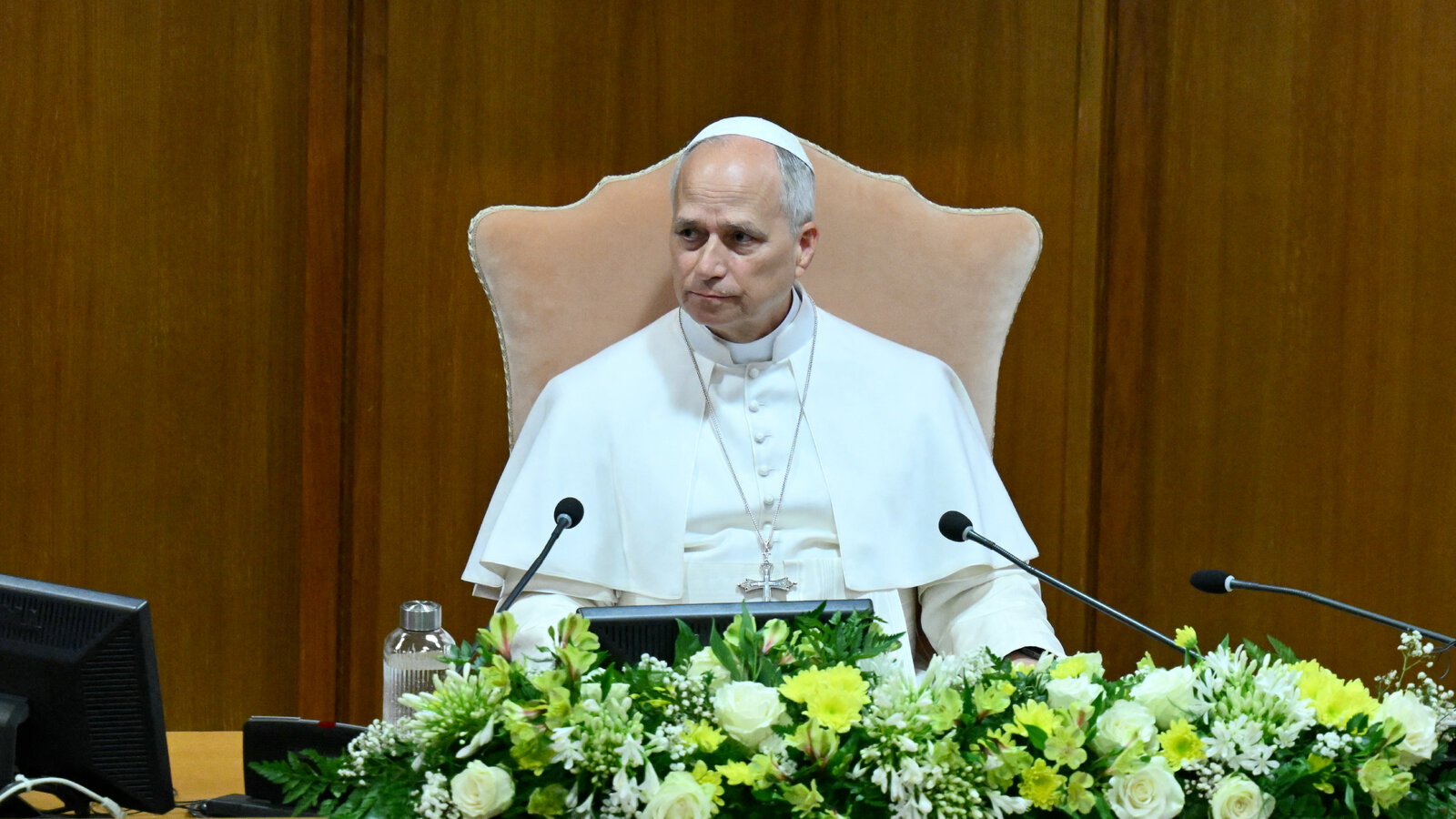
Pope Leo XIV has issued an apology acknowledging the Catholic Church’s historical involvement in slavery, expressing regret over its role in legitimising and sustaining the system during key periods of global history.
The statement marks one of the most direct admissions in recent times from a senior Catholic authority regarding the Church’s association with slavery, a system that shaped centuries of exploitation across Africa, the Americas, and parts of Europe. The apology is being interpreted by observers as part of a broader effort within the Vatican to confront difficult aspects of its institutional past and strengthen reconciliation with affected communities.
Speaking on the Church’s historical record, Pope Leo XIV recognised that religious institutions, including the Catholic Church, at different points contributed to systems that dehumanised people and justified forced labour. He described such involvement as incompatible with the core Christian teachings of human dignity, equality, and compassion.

The Catholic Church’s role in slavery has long been a subject of academic and moral debate. Historical records show that while some Church leaders and missionaries opposed slavery, others either remained silent or provided theological justification for systems that enabled the transatlantic slave trade and colonial exploitation. Over time, successive popes have issued statements condemning slavery in all its forms, but calls for a more explicit institutional apology have continued from historians, human rights advocates, and descendants of enslaved peoples.
Pope Leo XIV’s apology is therefore seen as part of a continuing evolution in the Church’s position. In recent decades, the Vatican has increasingly acknowledged historical wrongs linked to colonialism, indigenous displacement, and slavery. Previous popes have called slavery a “grave sin” and a “crime against humanity,” while also engaging in symbolic gestures of reconciliation, including apologies during international visits to Africa and the Americas.
The latest statement, however, goes further in directly addressing institutional responsibility, rather than framing the issue solely as the actions of individuals in past centuries. Religious scholars say this shift is significant because it strengthens accountability narratives and aligns with modern expectations for transparency from global institutions.

Reactions to the apology are expected to vary across different communities. For many descendants of enslaved Africans, such statements carry symbolic importance but are often accompanied by calls for tangible actions, including education reform, historical restitution efforts, and stronger engagement with affected communities. Others view the apology as an important moral step that helps to confront painful historical truths and promote healing.
The Catholic Church remains one of the world’s largest religious institutions, with a global membership spanning continents, including significant populations in Africa and Latin America, regions deeply impacted by slavery and colonialism. As such, its statements on historical injustice often carry both spiritual and political weight.
In recent years, there has been increasing pressure on global institutions, including governments, universities, and religious organisations, to reassess their historical roles in slavery and colonial systems. This has led to renewed research, public debates, and in some cases formal apologies and reparative initiatives.

Pope Leo XIV’s remarks are expected to contribute to this broader global conversation on historical justice and institutional accountability. While the apology does not by itself resolve long standing debates about reparations or material redress, it reinforces a growing international consensus that historical injustices must be acknowledged openly.
As the Church continues to navigate its role in a changing global society, observers say such acknowledgements may shape its relationships with younger generations, particularly in regions where historical memory of slavery remains deeply significant.
Just In: Robert Francis Prevost Becomes 1st American Pope: Takes Name Pope Leo XIV