

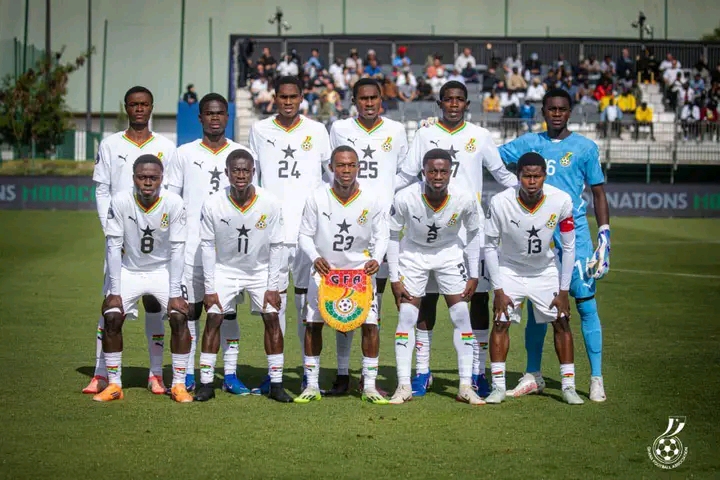
Ghana national under-17 football team have failed to qualify for the 2026 FIFA U17 World Cup after a heartbreaking penalty shootout defeat to Uganda national under-17 football team in their playoff clash at the CAF U17 Africa Cup of Nations.
The match ended 2-2 after regulation time before Uganda edged Ghana 8-7 on penalties in a tense and dramatic shootout, bringing an end to Ghana’s qualification hopes and sealing a historic milestone for Uganda.
For Ghana, the result represents a major setback for a nation with a proud history at youth level, having previously produced global stars through its U17 system. The Black Starlets entered the tournament with expectations of securing a return to the global stage, but inconsistencies in performance and decision making ultimately proved costly.

The game itself was fiercely contested, with both teams showing urgency and attacking intent knowing what was at stake. Ghana displayed moments of quality, particularly in their attacking transitions, but defensive lapses and missed opportunities allowed Uganda to remain competitive throughout the encounter.
Despite Ghana’s efforts, the match was pushed into penalties, where composure and precision became decisive. Uganda held their nerve in the shootout, converting eight of their attempts, while Ghana narrowly fell short in what turned out to be a defining moment of the tie.
The victory marks a historic achievement for Uganda, as they secure qualification for the FIFA U17 World Cup for only the second time in their history, with this particular campaign carrying added significance due to the leadership on the touchline.

Former Ghana international Laryea Kingston, now head coach of Uganda’s U17 side, played a central role in orchestrating the triumph. His tactical approach and ability to manage pressure situations have been widely credited for Uganda’s success in the playoffs.
Kingston’s journey from representing Ghana at senior level to guiding Uganda to a historic qualification has added a compelling narrative to the result. His work with the team, particularly in reshaping their tactical identity and instilling discipline, has been highlighted as a key factor behind their breakthrough performance.
Observers noted that Uganda demonstrated strong organisation and resilience, especially under pressure, maintaining composure in critical phases of the match. Their ability to execute in the penalty shootout reflected a team well prepared mentally and tactically for high stakes scenarios.
For Ghana, the defeat raises important questions about the development pathway at youth level. The Black Starlets have historically been one of Africa’s most successful youth teams, winning multiple U17 World Cup titles, but recent performances suggest a need for structural improvements in talent development, tactical preparation and game management.

Analysts have pointed to defensive vulnerabilities and inconsistent decision making as recurring issues throughout the campaign. While the team showed flashes of attacking brilliance, the inability to maintain balance between defence and attack proved costly in crucial moments.
The loss also underscores the growing competitiveness of African youth football, where emerging nations are increasingly closing the gap with traditional powerhouses. Uganda’s success reflects broader progress across the continent, with more teams investing in youth development and coaching structures.
As Uganda celebrates a landmark qualification, Ghana will be left to regroup and reassess its youth football strategy ahead of future competitions. The focus is expected to shift toward rebuilding, identifying new talents and strengthening systems to ensure a return to the global stage.
For now, the night belongs to Uganda and to Laryea Kingston, whose achievement has etched his name into the country’s football history, while Ghana faces the reality of another missed opportunity at youth level.
Ghana drop to third after draw of lots defeat to Algeria sets up crucial U-17 World Cup playoff