

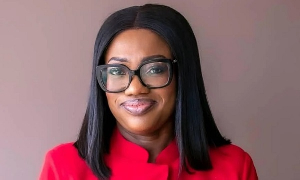
President John Dramani Mahama has nominated Pamela Graham as Ghana’s next Auditor General, a move that signals a renewed focus on strengthening public financial accountability and institutional oversight.
Pamela Graham brings to the role a strong background in financial governance, having served as a Senior Partner at Ernst & Young since 2020. Her experience spans financial auditing, advisory services, and institutional risk management, positioning her as a technically grounded candidate for one of the country’s most critical constitutional offices.
The nomination comes at a time when Ghana continues to grapple with concerns around public financial management, audit enforcement, and accountability gaps across state institutions. The office of the Auditor General plays a central role in addressing these challenges, with constitutional authority to audit public accounts, investigate irregularities, and surcharge individuals responsible for financial losses to the state.

Under Article 187 of Ghana’s 1992 Constitution, the Auditor General operates independently and is not subject to direction or control by any authority, making the position one of the most powerful oversight roles in the country’s governance framework.
Mahama’s decision to nominate a private-sector professional with deep audit and advisory experience suggests a strategic attempt to bridge the gap between corporate governance standards and public sector accountability. It also reflects a broader policy direction under his administration, which has consistently emphasized transparency, anti-corruption measures, and institutional reforms.
This is not accidental.
Since returning to office in 2025, Mahama has repeatedly highlighted the misuse of public funds and weak enforcement mechanisms as key barriers to national development. His administration has taken steps to push for stronger compliance with asset declaration laws and more effective follow-up on audit findings.
Against this backdrop, Graham’s appointment, if approved, could represent a shift in how the Audit Service engages with public institutions. Her background at a global firm like Ernst & Young means she is likely to bring a more structured, data-driven, and risk-focused approach to auditing government operations.
But there’s a reality check here.
Technical expertise alone will not fix Ghana’s accountability problem.
The real test will be enforcement. Historically, Auditor General reports have exposed significant financial irregularities, yet follow-through on sanctions and recoveries has often been weak. Without stronger collaboration between the Audit Service, Parliament, and law enforcement agencies, even the most competent Auditor General risks being limited to reporting rather than driving consequences.
That said, the symbolism of this nomination matters.
It signals an attempt to professionalize the role further and potentially restore public confidence in state institutions. It also aligns with a growing trend across Africa, where governments are increasingly appointing technocrats with private-sector experience into key oversight and economic roles.
If confirmed, Graham will step into a position that has previously been held by figures who shaped Ghana’s accountability landscape, including Daniel Yaw Domelevo, whose tenure was marked by aggressive enforcement of surcharge powers and heightened public scrutiny of government spending.
The expectations will be high.

Can Pamela Graham move beyond reporting to actual enforcement? Can she strengthen institutional coordination to ensure audit findings translate into real accountability? And more importantly, will the political environment support or resist a more assertive Auditor General?
Because in Ghana’s governance system, the strength of oversight is not just about who holds the office.
It is about how far the system allows them to go.