

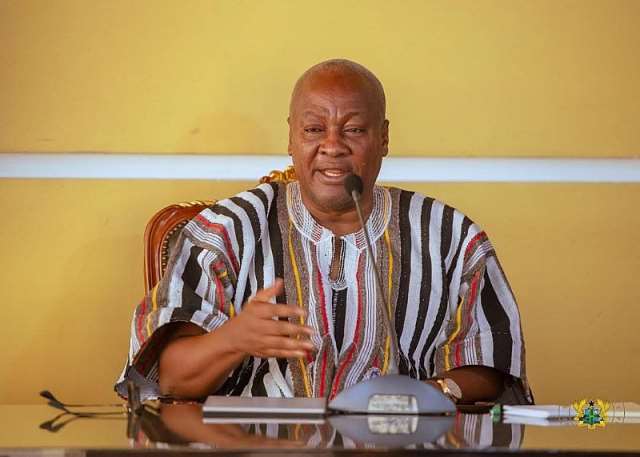
President John Dramani Mahama‘s Cabinet has taken a series of emergency decisions aimed at bringing down the cost of fuel and transport for ordinary Ghanaians, directing the Finance and Energy ministries to suspend certain taxes and margins on petroleum products effective from the next pricing window on April 16, 2026.
The decisions, which emerged from an emergency Cabinet session, reflect growing concern within government over the burden that rising fuel prices are placing on households and businesses. The tax and levy suspension will take effect for an initial period of four weeks and remains subject to review depending on how the situation evolves in the Middle East and how crude oil prices move in international markets. The specific taxes and margins to be suspended are to be announced at the next pricing window.

Beyond the direct intervention on pump prices, Cabinet also directed the Minister for Transport, Joseph Bukari Nikpe, to fast-track the deployment of 100 newly acquired Metro Mass Transit buses onto high-traffic corridors across the country. These buses are mandated to charge fares lower than what private commercial operators currently charge, offering commuters a more affordable alternative at a time when transport costs have become a major strain on household budgets. The directive requires the buses to be deployed with urgency, in addition to those already in circulation under the Metro Mass Transit system.
President Mahama also used the emergency session to reaffirm and reinforce his earlier directive banning fuel allocations and allowances for ministers and all senior government appointees. Cabinet was instructed that strict compliance with this ban is non-negotiable, a signal that the presidency intends to lead from the front on cost-cutting even within the corridors of government.
The decisions come at a time of considerable pressure on Ghana’s energy and transport sectors. Global crude oil prices have remained volatile, with ongoing tensions in the Middle East continuing to introduce uncertainty into supply chains and pricing. Ghana, like many fuel-importing economies, has found itself exposed to these external shocks, with downstream effects felt most sharply by low-income earners who rely heavily on public transport and petrol-powered livelihoods.
The four-week timeline attached to the tax suspension points to a government that is balancing the need for immediate relief against the fiscal realities of foregoing revenue from petroleum levies. Ghana’s fuel pump prices incorporate a broad range of taxes, levies and margins, including the Energy Sector Recovery Levy, the Price Stabilisation and Recovery Levy, and various margins built into the pricing formula by the National Petroleum Authority. A suspension of even a portion of these charges can translate into meaningful reductions at the pump, though the scale of the relief will depend on which specific components are targeted.

The Metro Mass Transit bus deployment is also timely. Transport fares in Ghana have risen sharply in recent months in line with fuel prices, with operators citing higher running costs as justification for multiple fare adjustments. For workers who commute daily, particularly along busy urban corridors in Accra, Kumasi and Tamale, the introduction of subsidised government buses on key routes could offer tangible savings. The success of the initiative will, however, depend heavily on how quickly the buses can be put into service and how consistently fares are enforced below commercial rates.
Public reaction to the announcements has been cautious but broadly positive, with many Ghanaians welcoming the intent while watching closely to see whether the measures translate into real reductions at filling stations and bus terminals when the new pricing window opens.