

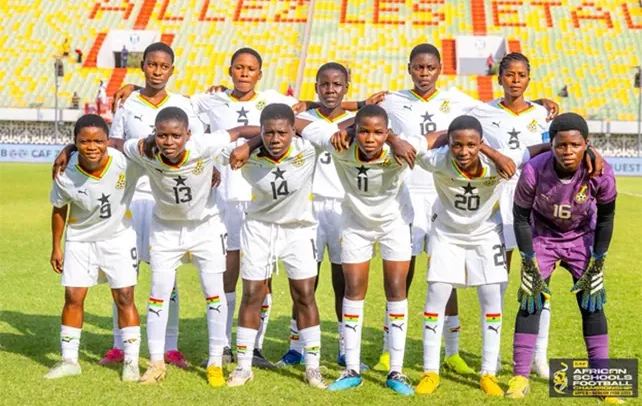
Ghana’s Black Damsels are once again standing on the edge of continental relevance, not by accident but by sustained performance, as they prepare to face Zambia in a defining semi final encounter at the CAF African Schools Football Championship. This is not just another youth fixture. It is a test of whether Ghana’s growing investment in grassroots football is producing consistency or merely flashes of brilliance.
The stakes are immediate and unforgiving. Ghana enter this match as defending champions, carrying both expectation and pressure. Zambia arrive unbeaten, disciplined and efficient, having swept through their group with maximum points. That contrast alone frames the contest clearly. One side is protecting a title. The other is coming to take it.
Ghana’s route to the semi final has been convincing but not flawless. The team opened their campaign with authority, dismantling Guinea 6-0 before grinding out a 2-1 win over Tanzania. Those results did more than secure qualification. They established attacking credibility and resilience. However, the narrow 1-0 loss to Burkina Faso in their final group match exposed a vulnerability that Zambia will not ignore. At this level, lapses are punished quickly.
Zambia, on the other hand, have built their campaign on control and consistency. Three wins from three matches, including victories over Morocco, Zimbabwe and DR Congo, underline a side that is not only organised but confident in its identity. They are not chasing the game. They dictate it. That alone makes them arguably the most dangerous opponent Ghana could face at this stage.

Beyond the immediate fixture, the significance of this tournament runs deeper. The CAF African Schools Football Championship is no longer a symbolic youth event. It has become a structured pipeline for talent across the continent, engaging thousands of schools and millions of participants since its launch. For countries like Ghana, success here is not just about medals. It is about validating a system that feeds future national teams.
That is where the real pressure sits. Ghana’s football structure has often been criticised for over reliance on external based talent while underdeveloping local systems. The Black Damsels challenge that narrative. Their rise reflects deliberate coordination between the Ghana Football Association and the education system, a model that is beginning to show results at youth level. But success at this stage must translate upward, or it remains a missed opportunity.
There is also a financial dimension that sharpens the stakes. The winner of this competition stands to secure significant funding tied to school development projects. That means this match is not only about football progression but also about tangible impact on educational infrastructure. Victory carries both sporting and social consequences.
The broader African context matters as well. Countries across the continent are increasingly treating youth football as a strategic investment, not a peripheral activity. Zambia’s rise in this competition is not accidental. It reflects deliberate regional development through COSAFA structures and sustained grassroots focus. Ghana is no longer competing against underprepared sides. It is facing systems.
What happens next will reveal more than the final scoreline. If Ghana win, it reinforces the credibility of its grassroots model and signals continuity in women’s youth football dominance. If they fall short, questions will shift quickly from performance to structure, from talent to sustainability.

The semi final, scheduled for April 9, is therefore a defining moment. It will determine who advances to the final and who is forced to reassess. There is no middle ground at this stage of the competition.
For Ghana, the equation is simple but demanding. Experience must meet execution. Reputation must meet discipline. Zambia will not be intimidated by history. They have built their campaign to challenge it.
This is where youth football stops being developmental and starts becoming decisive. And for the Black Damsels, the margin for error is now gone.
Black Starlets face stern test after being drawn into tough U-17 AFCON group