

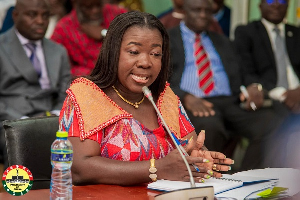
The government’s assurance that there will be no increase in the price of sachet water has delivered immediate relief to millions of Ghanaians, but beneath that announcement lies a more complicated and unresolved economic reality that cannot be ignored.
The Ministry of Trade, Agribusiness and Industry confirmed on April 6, 2026 that the planned price adjustment would not take effect as scheduled, following last minute negotiations with industry players. Producers had earlier announced a significant upward revision, citing escalating production costs driven by global supply disruptions and currency pressures.
At the centre of the dispute is a fragile supply chain. Sachet water producers, represented by the National Association of Sachet and Packaged Water Producers and supported by the Ghana Plastic Manufacturers Association, had proposed increasing prices to as high as GH¢15 per bag at retail level, with factory prices rising to GH¢8. These adjustments were not arbitrary. They were rooted in rising costs of key inputs such as plastic resins, fuel, water treatment chemicals and transportation, all of which have been affected by global inflationary trends and geopolitical tensions.
The Ministry’s intervention effectively paused what would have been a nationwide price shock. Officials framed the decision as part of a broader effort to protect consumers and maintain market stability, especially given the essential nature of sachet water in Ghana’s urban and peri urban communities. For many households, sachet water is not a convenience but a necessity, particularly in areas where access to reliable piped water remains inconsistent.
However, the decision is not a solution. It is a postponement.

The economic fundamentals that triggered the proposed increase remain unchanged. Producers are still dealing with elevated input costs, and without structural adjustments, their margins will continue to shrink. In a liberalised market, sustained cost pressures inevitably translate into higher prices. Government intervention can delay that outcome, but it cannot eliminate it indefinitely.
There is also a deeper structural issue at play. Ghana’s dependence on imported raw materials, particularly plastics used in sachet production, exposes the sector to external shocks. Fluctuations in global oil prices and supply chain disruptions directly affect production costs. Without local alternatives or policy incentives to reduce import dependency, the industry remains vulnerable to repeated cycles of price instability.
The Ministry has acknowledged this reality by scheduling further engagements with industry stakeholders to identify long term solutions. These discussions are expected to explore options such as sourcing alternatives, cost sharing mechanisms and possible regulatory interventions. Yet the effectiveness of these measures will depend on how quickly and decisively they are implemented.
There is also the question of market dynamics. Analysts have raised concerns about coordinated pricing within the sachet water industry, warning that uniform price adjustments across producers could limit competition and push prices higher than necessary. Addressing cost pressures must therefore be balanced with safeguarding competitive practices that benefit consumers.
For the average Ghanaian, the implications are immediate and tangible. Sachet water remains one of the most accessible sources of safe drinking water, especially for low income households. Any sustained increase in price would have a direct impact on daily living costs and public health outcomes. The government’s decision to halt the increase reflects an awareness of these risks, but it also raises expectations for a more durable solution.

Historically, sachet water has become deeply embedded in Ghana’s consumption patterns, particularly since the 1990s when private vendors stepped in to fill gaps in public water supply systems. Its affordability has been a defining feature of its widespread use. Maintaining that affordability in the face of rising costs is now the central challenge.
What happens next will determine whether this intervention is remembered as a moment of effective governance or a temporary reprieve before an inevitable price correction. If structural issues are not addressed, the pressure will return, and the next increase may be harder to contain.
For now, prices remain stable. But stability built on unresolved cost pressures is rarely permanent.
Sachet water price set to rise in Ghana from April 6 as producers cite rising costs