

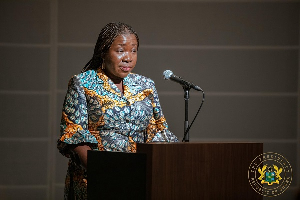
Minister for Trade, Agribusiness and Industry has called on the country to take a leading role in demonstrating the real benefits of the African Continental Free Trade Area Secretariat, stressing that the success of the continent’s flagship trade agreement depends on practical implementation, not just policy commitments.
Hon.Elizabeth Ofosu-Adjare emphasized that Ghana, as host of the AfCFTA Secretariat, carries a unique responsibility to serve as a model for how intra-African trade can drive industrialisation, job creation, and economic transformation.
She noted that while the AfCFTA presents a historic opportunity to unlock a market of over 1.4 billion people, its full potential can only be realized if countries move beyond agreements on paper and focus on building competitive industries, strengthening value chains, and boosting exports.
The minister highlighted that Ghana is already aligning its trade and industrial policies to reflect this ambition, with a renewed focus on value addition, export growth, and reducing dependence on raw commodity exports. She explained that the government is working to ensure that local businesses are positioned to take advantage of duty-free access to markets across Africa.

Central to this strategy is the need to address structural bottlenecks that have historically limited Ghana’s competitiveness. These include high production costs, limited access to finance, and logistical challenges that make it difficult for businesses to scale across borders.
Ofosu-Adjare stressed that Ghana’s leadership in AfCFTA must be demonstrated through tangible outcomes, including increased exports of processed goods, stronger manufacturing capacity, and deeper integration into regional value chains. She added that policies are being implemented to support businesses, particularly small and medium-sized enterprises, which form the backbone of the economy.
Women, youth, and SMEs were identified as critical drivers of the AfCFTA agenda, with the minister noting that they account for a significant share of economic activity and employment. However, she acknowledged that these groups continue to face barriers such as limited access to affordable financing, high trade costs, and difficulties meeting export standards, which must be addressed to ensure inclusive growth.
The minister also pointed to ongoing government initiatives aimed at preparing Ghanaian businesses for continental trade. These include training programmes, export readiness support, and efforts to improve access to financing through partnerships with development institutions. Thousands of entrepreneurs have already been sensitised on AfCFTA opportunities, while targeted interventions are helping startups scale their operations.
In addition, she underscored the importance of investing in both physical and digital infrastructure to facilitate trade. Efficient transport systems, streamlined customs procedures, and digital platforms are seen as essential components for reducing trade barriers and improving competitiveness within the AfCFTA framework.
Ghana’s position as host of the AfCFTA Secretariat gives it a strategic advantage in shaping the direction of continental trade. The minister argued that this advantage must be leveraged to attract investment, promote industrial growth, and position Ghana as a key export hub within Africa.
However, she cautioned that leadership comes with responsibility, noting that failure to deliver measurable results could undermine confidence in the agreement. To avoid this, Ghana must lead by example, demonstrating that AfCFTA can translate into real economic benefits for businesses and citizens alike.

The call reflects a broader push across the continent to accelerate the implementation of AfCFTA, which is widely regarded as one of the most ambitious economic integration initiatives in Africa’s history. While progress has been made, challenges such as infrastructure deficits, regulatory barriers, and limited financing continue to hinder its full rollout.
Ultimately, the minister’s message is clear: Ghana must move beyond rhetoric and prove that the AfCFTA works. By doing so, it can not only strengthen its own economy but also help drive a new era of intra-African trade and economic cooperation.