

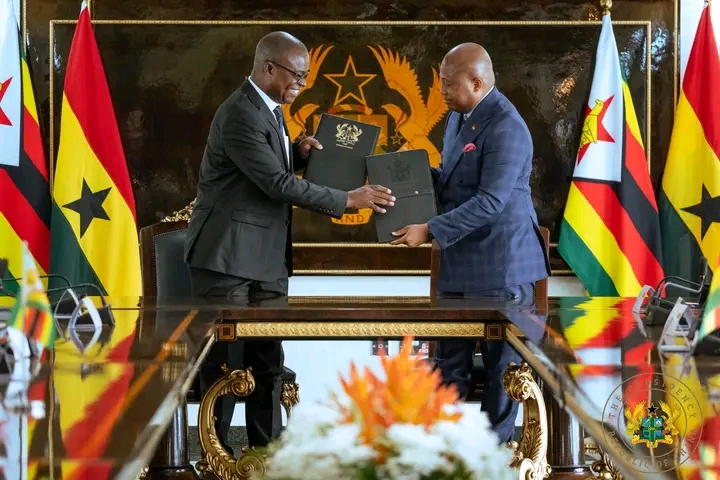
Ghana and Zimbabwe have taken a significant step toward strengthening bilateral relations following the inaugural session of the Permanent Joint Commission for Cooperation, held in Accra as both countries seek to translate decades of diplomatic goodwill into concrete economic and development outcomes.
The meeting marked a renewed effort to institutionalise cooperation between the two nations, creating a structured framework to guide collaboration across multiple sectors. Officials from both sides emphasised that the initiative represents a shift from symbolic ties rooted in shared history to a more pragmatic, results driven partnership focused on delivering tangible benefits to citizens.
Speaking at the session, Ambassador Khadija Iddrisu, Chief Director at Ghana’s Ministry of Foreign Affairs, highlighted the deep historical, political, and cultural connections between Ghana and Zimbabwe, noting that both countries share a legacy grounded in the struggle for independence and Pan African solidarity. She stressed that the joint commission provides a timely platform to transform that shared history into measurable development outcomes.
She further indicated that both countries have identified a wide range of priority areas for cooperation, including trade and investment, agriculture, energy, mining, education, health, tourism, and governance. These sectors, she explained, will form the foundation of joint programmes aimed at driving economic growth, industrial development, and job creation.

Zimbabwe’s Permanent Secretary for Foreign Affairs and International Trade, Ambassador Albert Ranganai Chimbindi, reaffirmed his country’s commitment to strengthening bilateral cooperation, expressing appreciation for the warm reception extended to his delegation. He emphasized that the success of the partnership should not be measured by the number of agreements signed but by the real impact on the lives of citizens in both countries.
The commission is expected to produce concrete outcomes, including the signing of multiple Memoranda of Understanding across key sectors. These agreements are designed to enhance trade, attract investment, and promote knowledge exchange between the two countries, reinforcing a shared vision of sustainable development and economic transformation.
Officials also underscored the importance of implementation, monitoring, and evaluation to ensure that commitments translate into actionable programmes. This reflects a broader recognition that many African bilateral agreements have historically fallen short at the execution stage, despite strong political intent.
The renewed engagement comes at a time when both Ghana and Zimbabwe are seeking to reposition their economies within a rapidly evolving global landscape. By strengthening cooperation, the two countries aim to leverage their comparative advantages, expand market access, and create new opportunities for businesses and investors.

Trade and investment were highlighted as central pillars of the partnership, with both sides acknowledging that economic collaboration has not fully matched the strength of their political relations. The joint commission is therefore seen as a mechanism to bridge this gap and unlock the full potential of bilateral engagement.
The initiative also aligns with broader continental efforts to promote regional integration and intra African trade under frameworks such as the African Continental Free Trade Area. By deepening bilateral ties, Ghana and Zimbabwe are positioning themselves to better participate in regional value chains and enhance their competitiveness within the African market.
The inaugural session represents a pivotal moment in Ghana Zimbabwe relations, setting the stage for a more structured and outcome oriented partnership. As both countries move forward, the focus will be on ensuring that agreements reached under the commission deliver real economic benefits, strengthen institutional linkages, and improve the livelihoods of their citizens.
Ghana and Zimbabwe strengthen bilateral ties with new strategic agreements