

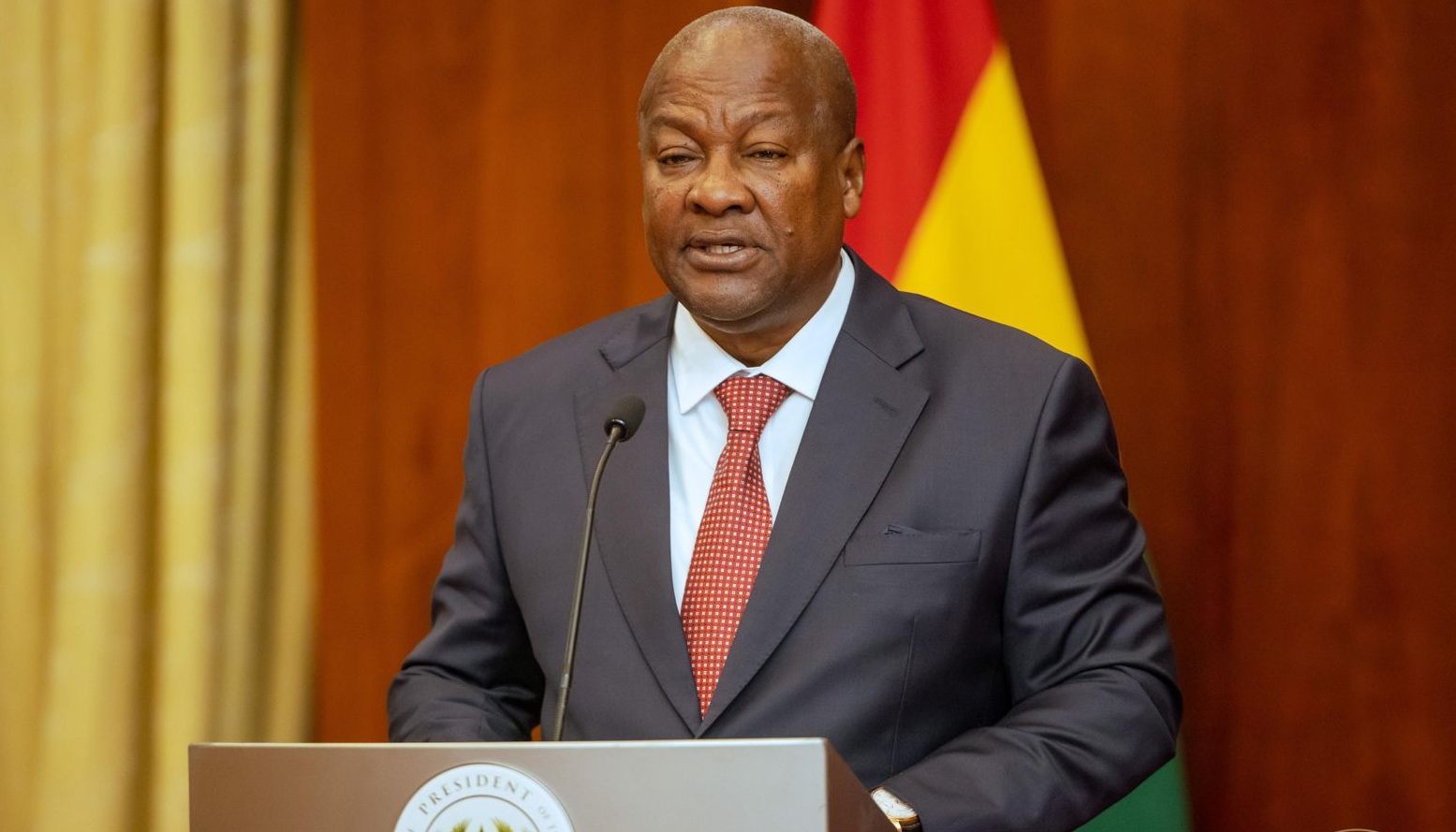
President John Dramani Mahama has indicated that the controversial anti LGBTQ bill is not an immediate priority for his administration, stressing that any future action on the legislation will follow a democratic and consultative process rather than political urgency.
The President’s remarks come amid ongoing national debate over the proposed Human Sexual Rights and Family Values Bill, which has remained one of the most polarising legislative issues in Ghana in recent years. Originally passed by Parliament in February 2024, the bill failed to become law after it was not assented to before the dissolution of the previous Parliament, effectively causing it to lapse.
Since then, the legislation has been reintroduced and debated in various forms, drawing both strong domestic support and significant international scrutiny. Advocates argue that the bill reflects Ghanaian cultural and religious values, while critics warn that it could have serious implications for human rights, freedom of expression and the country’s global partnerships.
Mahama’s latest position suggests a shift away from treating the bill as an urgent political priority. Instead, he has emphasised that such a sensitive issue must be handled through proper democratic channels, including broader stakeholder consultations and parliamentary processes. This approach aligns with his earlier stance that the bill should ideally be government sponsored rather than driven solely as a private member’s initiative, in order to ensure wider consensus and legitimacy.

The President’s comments also reflect the complexity of balancing domestic expectations with international realities. Ghana has faced warnings from global financial institutions and development partners over the potential economic consequences of passing the bill in its current form. Analysts have noted that concerns about foreign investment, international aid and economic cooperation have increasingly become part of the national conversation surrounding the legislation.
At the same time, public sentiment within Ghana remains largely conservative on issues related to LGBTQ rights, placing political leaders in a difficult position as they attempt to navigate competing pressures. Mahama has previously reiterated that his government’s values align with widely held societal beliefs about family and marriage, while also maintaining that due process must be respected in handling the bill.
By stating that the bill is not a priority, the administration appears to be signalling a more measured and strategic approach, potentially allowing time for further dialogue, legal clarity and political consensus before any decisive action is taken. This could also be seen as an effort to reduce immediate political tension around the issue while focusing on other pressing national priorities such as economic recovery, job creation and governance reforms.
The broader legislative context remains uncertain. The bill, if reintroduced and passed again by Parliament, would still require presidential assent to become law. However, Mahama’s emphasis on democratic handling suggests that any future decision will be influenced by parliamentary debate, stakeholder engagement and constitutional considerations rather than executive action alone.

The development highlights the ongoing evolution of Ghana’s policy direction on socially sensitive issues, where leadership must balance constitutional democracy, cultural values and international obligations. It also underscores the importance of legislative process in shaping outcomes, particularly on matters that carry both domestic and global implications.
As discussions continue, attention will remain on Parliament and the executive to determine the next steps for the bill, and whether the current approach will lead to a revised version that reflects broader consensus or a prolonged delay in legislative action.
Lincoln University cancels Honorary Doctorate for president Mahama amid LGBTQ+ controversy