

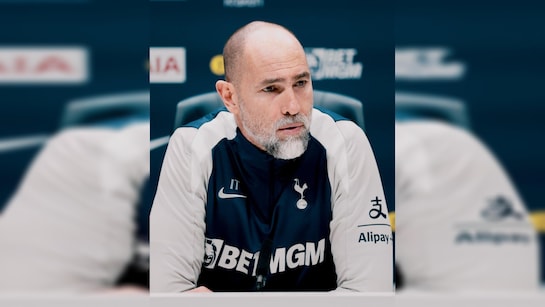
Tottenham Hotspur have reportedly ended their short lived managerial experiment with Igor Tudor, bringing his tenure to an abrupt close after just 44 days in charge of the North London club. The decision, according to multiple reports circulating within English football media circles, comes after a turbulent spell that failed to stabilise results or restore consistency in performances.
Tudor’s brief stint is understood to have included seven matches across all competitions, producing one win, one draw and five defeats. That record has placed immediate pressure on the club’s leadership, with growing dissatisfaction among supporters and internal concern about the team’s direction. The early termination of his role highlights the increasingly unforgiving environment at elite Premier League level, where managerial patience is often limited when results fail to meet expectations.
Sources close to the situation suggest that Tottenham’s hierarchy had been monitoring performances closely since his appointment, with concerns emerging not only from the results but also from tactical coherence and squad confidence. The team reportedly struggled to maintain defensive structure and attacking rhythm during his short tenure, with recurring issues in game management and second half performances contributing heavily to dropped points.

The final decision is understood to have been reached after internal discussions involving senior club executives, who concluded that a change was necessary to protect the remainder of the season. While the club has not yet released an official detailed explanation beyond confirming a managerial departure, the move reflects a broader trend in modern football where clubs act quickly to prevent prolonged downturns in form.
Tudor’s appointment had initially been seen as a bold shift in direction. Known for his intense coaching style and disciplined tactical approach, he arrived with expectations of injecting structure and aggression into a squad that had struggled with inconsistency. However, adapting those methods to the demands of the Premier League appeared to take longer than anticipated, and results did not improve quickly enough to secure his position.
The statistics surrounding his tenure have been widely circulated as a key factor in the decision. Seven matches, five defeats, one draw and one win represent one of the shortest and least successful managerial spells in recent Tottenham history. For a club with ambitions of competing at the top end of the Premier League and qualifying consistently for European competition, such a return was deemed insufficient to justify continuation.
Player response during the period is also believed to have influenced the outcome. While there has been no public criticism from the squad, reports suggest that adaptation to training methods and match day instructions varied across the team, with some players struggling to fully adjust to the tactical demands imposed by the coaching staff. In high performance environments, such misalignment often accelerates decision making at board level.
The timing of the decision also reflects Tottenham’s need to stabilise quickly amid a congested fixture schedule. With league and cup commitments continuing, the club is expected to appoint an interim solution while evaluating long term managerial candidates. Internal discussions are believed to be ongoing regarding whether to promote from within the coaching structure or bring in an external caretaker manager to guide the team through the immediate period.
Supporters have reacted with a mix of frustration and resignation, with many pointing to the recurring cycle of managerial changes at the club over recent years. The latest departure adds to a growing list of short tenures that have raised questions about long term planning and structural stability within the football department. For some fans, the rapid dismissal of Tudor reinforces concerns that deeper systemic issues remain unresolved.

Football analysts have also weighed in on the situation, noting that while results were undeniably poor, the extremely short timeframe raises broader questions about expectations and project building in modern football. A 44 day spell offers limited opportunity for tactical systems to fully develop, yet the Premier League’s competitive pressure often leaves little room for patience when early signs are negative.
Attention now turns to Tottenham’s next steps. The club is expected to prioritise stabilising results and restoring confidence within the squad. The identity of a permanent successor will be a key decision, as it will likely define the next phase of the club’s sporting direction. Whether they opt for an experienced Premier League manager or a long term project appointment remains to be seen, but urgency is clearly a factor.
For Igor Tudor, this episode adds another complex chapter to a managerial career that has seen both promising spells and abrupt endings. His reputation for discipline and tactical intensity remains intact in coaching circles, but the Premier League experience will likely be viewed as a reminder of the challenges that come with managing at the highest level of English football.
As Tottenham regroup, the focus shifts from immediate disappointment to long term correction. But the numbers from this brief tenure will remain difficult to ignore, and the search for stability continues.
Tottenham Express Interest in Ghanaian Striker Antoine Semenyo