

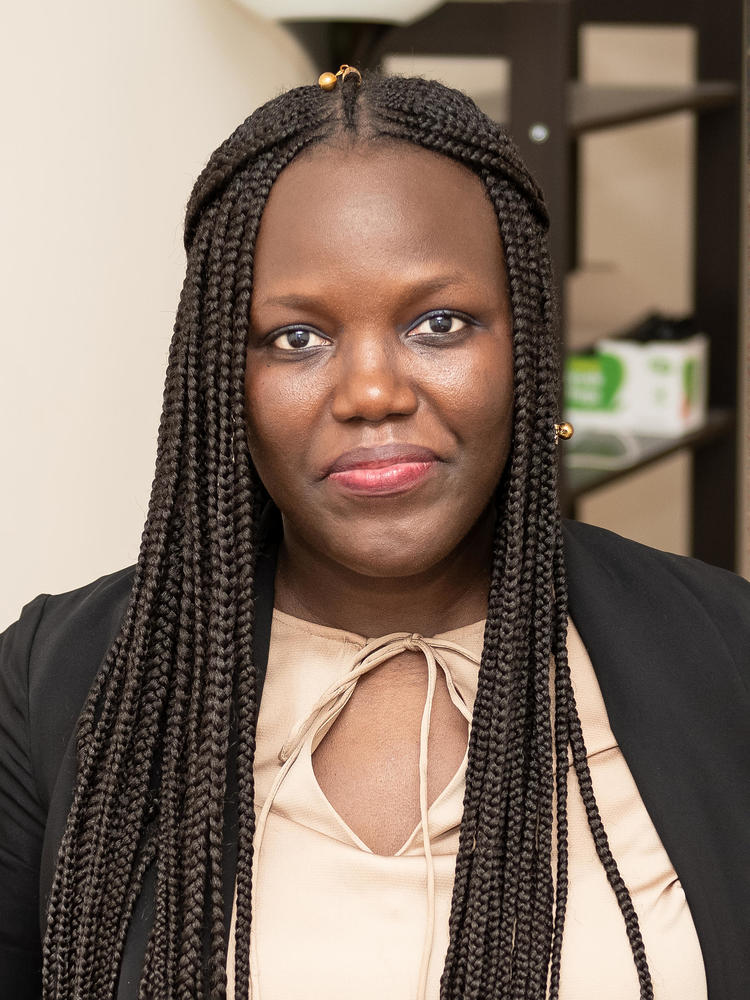
Adji Bousso Dieng has called on countries in the Global South to take control of their technological future by developing their own artificial intelligence systems, warning that over-reliance on foreign-built technologies risks deepening global inequalities and embedding bias into digital tools.
Her remarks come as a newly established United Nations scientific panel on artificial intelligence begins work to assess the global risks, opportunities and governance challenges of the rapidly evolving technology. The panel, composed of around 40 experts from across disciplines and regions, is expected to produce independent guidance for policymakers, in what observers describe as a structure similar to the Intergovernmental Panel on Climate Change but focused on AI.
Dieng, a Senegalese computer scientist and professor at Princeton University, is among the select group chosen from thousands of applicants to contribute to the initiative, reflecting both her global recognition and the growing influence of African voices in shaping emerging technologies.

At the centre of her message is a straightforward but critical point: artificial intelligence systems are not neutral. They are shaped by the data, perspectives and priorities of those who build them. When these systems are developed primarily in Western or Asian contexts, they risk failing to reflect the realities of African and other developing regions.
Dieng has consistently argued that increasing diversity in AI development is not just a moral issue but a technical necessity. Without representation from different regions and cultures, algorithms can reproduce biases, misinterpret local contexts and deliver outcomes that are ineffective or even harmful.
Her advocacy goes beyond critique. Through her nonprofit initiative, The Africa I Know, she is actively working to inspire and equip young Africans to pursue careers in science, technology and artificial intelligence. The goal is to build a pipeline of talent capable of designing solutions tailored to local challenges rather than importing systems that may not fit.
This push aligns with a broader conversation about digital sovereignty in the Global South. As artificial intelligence becomes central to sectors such as healthcare, finance, agriculture and governance, countries that lack domestic expertise risk becoming dependent on external technologies and standards.
Dieng’s call also reflects growing concern about what some analysts describe as a new form of technological dependency. Just as many developing nations historically relied on imports for industrial goods, there is a risk they could become consumers rather than creators in the AI economy.
The implications are significant. AI systems influence decision-making in areas ranging from credit scoring and hiring to medical diagnostics and public policy. If these systems are not designed with local data and context in mind, they can reinforce existing inequalities rather than solve them.
At the same time, the opportunity is equally large. With the right investment in education, research infrastructure and policy frameworks, African and other Global South countries could leapfrog traditional development stages and build competitive digital economies powered by homegrown innovation.

The United Nations panel is expected to play a key role in shaping how countries navigate this landscape. Its mandate includes evaluating not only the technical aspects of AI but also its ethical, social and political implications, providing a foundation for global cooperation and regulation.
For Dieng, however, global governance must go hand in hand with local capability. Her position is clear: participation in international discussions is important, but real influence will come from building systems, training talent and owning the technological tools that shape the future.
As artificial intelligence continues to redefine industries and societies, her message lands at a critical moment. The question is no longer whether AI will transform the world, but who will shape that transformation and whose realities it will reflect.
AI boom hits reality check as OpenAI shuts down Sora and Meta faces courtroom setbacks