

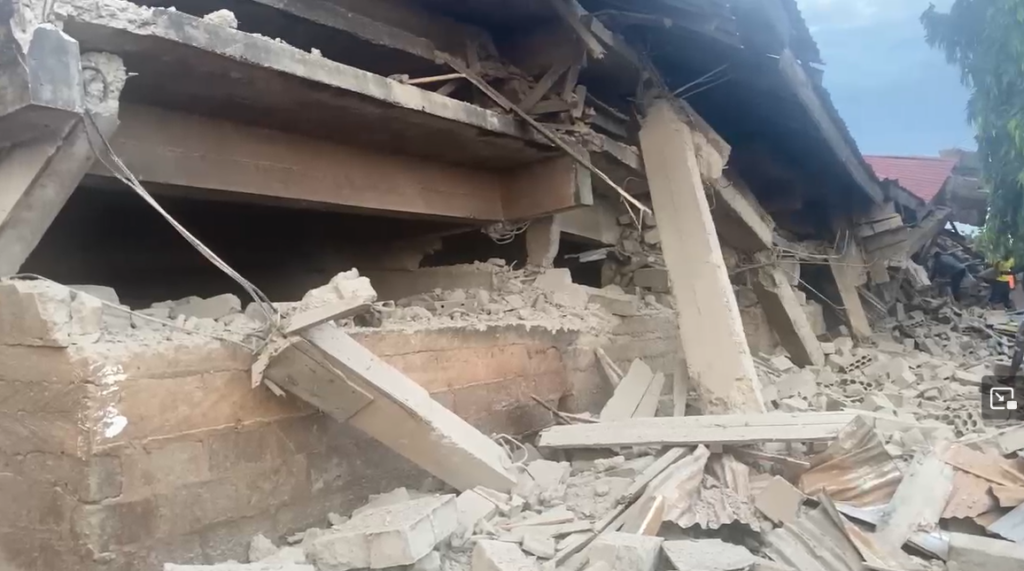
The Ghana Education Service,GES, is set to hold an emergency meeting following a tragic building collapse at the Accra Newtown Experimental D/A School that has left three people dead and several others injured, intensifying concerns over structural safety around school environments.
The incident occurred on Sunday, March 29, when an uncompleted multi storey structure located within or near the school premises suddenly gave way. The building, which had reportedly been repurposed as a makeshift place of worship, collapsed while a congregation was gathered for a church service, trapping dozens beneath the rubble.
Emergency response teams, including the Ghana National Fire Service, the National Disaster Management Organisation and other security agencies, were quickly deployed to the scene. Rescue operations extended for hours as personnel worked under difficult conditions to pull survivors from the debris. Out of approximately 23 people trapped, 20 were rescued and rushed to nearby health facilities, while three fatalities were later confirmed after verification across hospitals.

In the immediate aftermath, the Ghana Education Service ordered the suspension of academic activities at the school, directing students to stay away until safety assessments are completed. Officials say the precautionary measure is necessary to prevent further risk, as concerns mount over the structural integrity of buildings within and around the school compound.
Director General of the Ghana Education Service, Professor Ernest Kofi Davis, indicated that the planned emergency meeting will bring together key stakeholders, including technical experts and estate management teams, to evaluate the situation and determine the next course of action. The meeting is expected to assess whether remaining structures are safe for continued use or if more drastic measures such as demolition or relocation will be required.
Authorities have stressed that no student will be allowed to return to the school until a comprehensive safety clearance is issued. “Students should not report to school until we are sure that the environment is safe,” the GES leadership emphasised, underscoring the seriousness of the situation and the need for thorough inspections.
The collapse has reignited longstanding concerns about the presence of abandoned or poorly maintained structures within school environments. Reports indicate that the building involved may have been an abandoned project dating back several years, raising questions about oversight, enforcement and the continued use of unsafe facilities for public activities.
Government officials, including representatives from the Ministry of Education and local authorities, have since visited the site to assess the damage and support ongoing response efforts. The incident has also triggered calls from stakeholders, including architects and safety experts, for stricter enforcement of building regulations and routine structural audits, particularly in densely populated urban communities like Accra Newtown.
The tragedy has highlighted a deeper systemic issue where economic pressures and limited infrastructure often lead to the repurposing of incomplete or unsafe buildings. In many cases, such structures are used for informal activities such as worship, posing significant risks to occupants.
Investigations are currently underway to determine the exact cause of the collapse, including whether structural defects, weather conditions or unauthorised modifications played a role. Authorities are also expected to examine whether prior warnings about the building’s condition were issued and ignored.

Beyond the immediate response, the outcome of the Ghana Education Service emergency meeting is expected to shape both short term and long term interventions. These may include stricter guidelines on the use of school premises, improved collaboration with local assemblies on building safety enforcement and a nationwide audit of structures located within or near educational institutions.
For many parents and residents in Accra Newtown, the incident has sparked anxiety about the safety of school environments across the country. It also raises broader questions about accountability and the mechanisms in place to prevent such tragedies.
As rescue operations conclude and investigations continue, the focus now shifts to ensuring that lessons are learned and that similar incidents are prevented in the future. The decisions taken in the coming days will not only affect the immediate school community but could also influence national policy on infrastructure safety in Ghana’s education sector.
Advans Ghana honours clients for consistent savings in nationwide promotional awards