

Ghana and the United Kingdom have initiated high level discussions to establish a digital trade finance corridor aimed at tackling one of the most persistent barriers to Africa’s economic growth, limited access to trade finance for businesses, particularly small and medium enterprises.
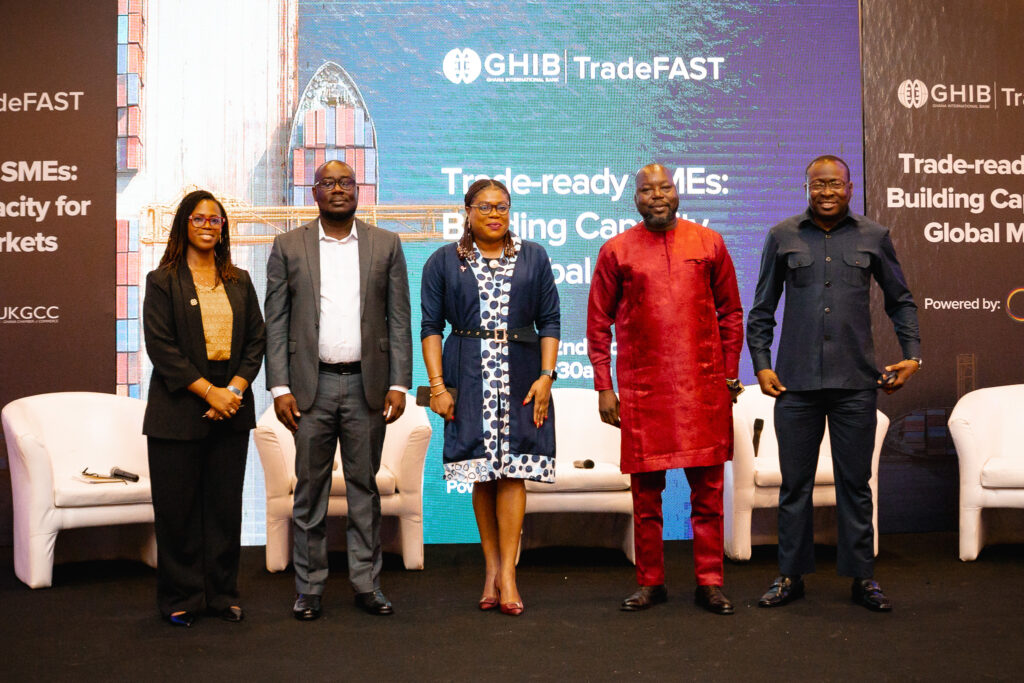
The initiative, known as Neofingo, is designed to address Ghana’s estimated US$7 billion annual trade finance gap, part of a much wider shortfall across sub Saharan Africa that continues to restrict export capacity and participation in global trade. The concept was unveiled at a joint forum held simultaneously in Accra and London, bringing together policymakers, fintech firms, regulators, and development institutions to shape the framework of the proposed system.
At its core, the proposed corridor seeks to build shared digital infrastructure that connects Ghanaian exporters directly to global financing systems. This would allow businesses, especially smaller firms, to access financial instruments such as digital letters of credit without relying heavily on traditional banking intermediaries that often limit access due to risk concerns.

The move reflects a growing recognition that Africa’s trade finance gap is not just about lack of capital, but also about weak financial trust systems and declining correspondent banking relationships. Many African exporters struggle to secure guarantees or financing, even when they have viable goods ready for international markets. By digitising documentation, compliance processes, and financial instruments, the corridor aims to reduce friction, improve transparency, and rebuild trust within the system.
The Neofingo framework is expected to leverage global standards such as ISO 20022 for financial messaging and align with digital trade rules under the African Continental Free Trade Area, headquartered in Accra. Analysts say this alignment could significantly boost Ghana’s position as a digital trade hub within Africa’s emerging single market.
Ghana’s strong fintech environment and regulatory framework provide a foundation for such innovation. The country has already made significant progress in digital payments and financial services, with rising adoption of mobile money and electronic transactions helping to reduce transaction costs and expand access to financial tools. These developments make it easier to integrate new digital trade systems at scale.
Officials involved in the discussions argue that the corridor could have a transformative economic impact. Research cited at the forum suggests that effective implementation of digital trade systems linked to AfCFTA protocols could increase Ghana’s GDP by up to $3 billion over time and create hundreds of thousands of jobs.
From the UK’s perspective, the initiative represents a strategic extension of long standing economic ties with Ghana, adding a financial technology layer to existing trade relationships. Both countries have been deepening cooperation in trade, investment, and infrastructure, with digital finance emerging as a new frontier for collaboration.
The corridor is also expected to integrate UK based neobanks with African fintech platforms, creating a more seamless pipeline for cross border transactions. This could significantly reduce the time and cost involved in trade financing, which has traditionally been slowed by paperwork, compliance checks, and fragmented systems.

However, the project is still in its exploratory phase. Key issues such as governance structures, legal frameworks, interoperability standards, and institutional responsibilities are yet to be finalised. Stakeholders are expected to continue consultations before moving toward implementation.
If successfully developed, the UK Ghana digital trade finance corridor could serve as a prototype for similar systems across West Africa, helping to scale intra African trade and reduce reliance on external financial intermediaries.
More broadly, the initiative signals a shift in how trade finance is being reimagined in the digital age. Instead of relying solely on traditional banking networks, countries are beginning to build interconnected digital ecosystems that make financing more accessible, transparent, and efficient.
For Ghana, the stakes are clear. Bridging the trade finance gap is not just about supporting businesses, it is about unlocking the country’s full export potential and positioning it as a central player in Africa’s digital trade future.
IFC weighs US$30m trade finance facility to boost Angola’s cross border trade capacity