

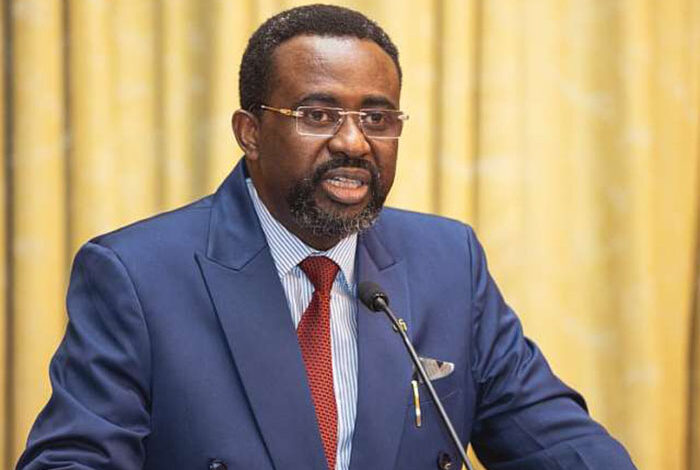
The Governor of the Bank of Ghana has cautioned that escalating tensions involving the United States, Israel, and Iran could pose fresh risks to Ghana’s financial stability, particularly in the area of liquidity, even as authorities insist the country is better prepared than in previous crises.
Speaking amid rising geopolitical uncertainty, Governor Dr. Johnson Asiama highlighted that the ongoing conflict in the Middle East could disrupt global economic conditions in ways that directly affect Ghana’s economy. According to him, the most immediate transmission channel is through rising crude oil prices and tightening global financial conditions, both of which have historically placed pressure on Ghana’s inflation and currency stability.
The warning comes at a time when Ghana has been making gradual progress in stabilising its economy after a prolonged period of high inflation and currency volatility. Since mid-2025, inflation has been easing, supported by tighter monetary policy and improved external balances. However, the central bank now fears that external shocks could reverse these gains if the conflict persists or intensifies.

Ghana’s vulnerability stems largely from its dependence on imported refined petroleum products. Analysts have consistently noted that any disruption in global oil supply, especially from the Middle East which accounts for a significant share of global production, tends to feed quickly into domestic fuel prices. Higher fuel costs then cascade into transport fares, food prices, and overall inflation.
Beyond energy prices, the governor also pointed to the risk of capital flow volatility. In times of global uncertainty, investors often move funds toward safer assets in developed markets, reducing liquidity in emerging economies like Ghana. This can put pressure on foreign exchange reserves and the cedi, potentially tightening domestic liquidity conditions and increasing borrowing costs.
Despite these concerns, the central bank maintains that Ghana is not entering this period of uncertainty unprepared. Dr. Asiama emphasised that the country has built stronger macroeconomic buffers in recent years, including improved foreign reserves, better fiscal discipline, and a more stable inflation trajectory. These buffers, he explained, are designed to absorb external shocks and reduce the likelihood of severe economic disruption.

He also stressed that the Bank of Ghana is closely monitoring global developments and stands ready to implement proactive measures if necessary. These could include policy adjustments to stabilise inflation, interventions to support the foreign exchange market, and coordination with international partners to maintain financial stability.
Interestingly, while the conflict presents clear risks, it may also offer a limited upside for Ghana. As Africa’s largest gold producer, the country could benefit from rising global gold prices, which tend to increase during periods of geopolitical tension. Higher gold export revenues have already played a significant role in strengthening Ghana’s current account, nearly doubling earnings in 2025 compared to the previous year.
However, economists warn that any gains from gold could be offset by sustained increases in oil prices. The net impact will depend largely on how long the conflict lasts and whether it leads to significant disruptions in global energy supply chains.
The broader concern is that Ghana’s recovery remains fragile. While macroeconomic indicators have improved, the economy is still exposed to external shocks, including commodity price swings and global financial tightening. The central bank’s caution reflects an understanding that even well-managed economies can face setbacks when global conditions shift rapidly.

For businesses and households, the message is clear. A prolonged conflict could translate into higher living costs, tighter credit conditions, and renewed economic uncertainty. For policymakers, the challenge will be to maintain stability while navigating an increasingly unpredictable global environment.
As tensions continue to evolve, Ghana’s economic resilience will be tested not just by domestic policy decisions, but by forces far beyond its borders. The Bank of Ghana’s assurance of preparedness offers some confidence, but the path ahead remains uncertain in a world where geopolitical risks are once again reshaping economic realities.