

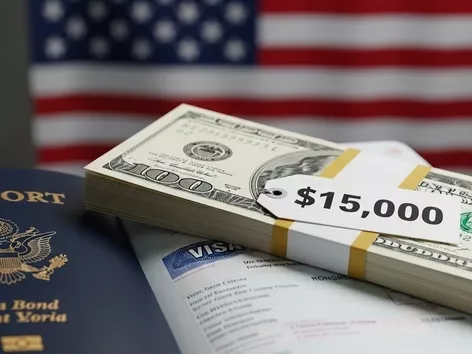
The United States is broadening its controversial visa bond program, adding 12 more countries to a list of nations whose citizens must pay a refundable bond, potentially up to US$15,000, before their visa applications can even be processed. The move, slated to take effect on April 2, 2026, marks a significant expansion of immigration policy under the Donald Trump administration, which introduced the visa bond requirement last year as part of efforts to curb irregular migration.
Under the updated policy published by the U.S. Department of State, passport holders from Cambodia, Ethiopia, Georgia, Grenada, Lesotho, Mauritius, Mongolia, Mozambique, Nicaragua, Papua New Guinea, Seychelles, and Tunisia must now post a bond before the State Department will proceed with their visa applications.
The amount of the bond varies between $5,000 and $15,000 and is determined on a case‑by‑case basis by the consular officer handling the application. Importantly, the bond is not a fee; it is a refundable security deposit. If an individual’s visa is denied, the bond is returned. If the visa is granted, the bond is refundable provided the visa holder complies fully with the terms of their stay in the United States, meaning they maintain legal status and depart the country on time.

The controversial policy is part of a broader crackdown on immigration and irregular stays. Officials from the State Department have defended the program, pointing to early data suggesting that it has reduced the number of visitors who overstay their visas and remain in the United States illegally. The department noted that nearly 97 percent of the approximately 1,000 individuals who have posted bonds so far have not overstayed their visas.
When first introduced, the visa bond program was framed as a targeted tool to discourage non‑immigrant visa holders from becoming undocumented immigrants by providing a financial incentive to comply with departure requirements. However, it has also drawn criticism from human rights groups, immigration advocacy organisations, and affected governments, who argue that the policy places undue financial burdens on applicants and can disproportionately impact citizens of developing nations.
With the latest expansion, the total number of countries subject to the program will rise to 50, reflecting the administration’s broader push to tighten immigration controls. Many of the newly added countries are in Africa, Latin America, and the Pacific islands—regions that have been identified by U.S. officials as having higher than average rates of visa overstays in the United States.
Critics argue that requiring bonds of up to $15,000 could effectively price many potential travellers out of the visa process, creating a two tier system where only those with sufficient financial means can afford to risk such deposits. For families, students, and business travellers from lower income countries, the bond requirement can be prohibitively expensive and may deter legitimate travel for education, commerce, or tourism.
Supporters of the program counter that the financial deterrent is necessary to enforce compliance and reduce the costs associated with undocumented immigration. They argue that traditional enforcement mechanisms have been insufficient, and that tying a refundable financial guarantee to visa issuance provides a stronger incentive for visitors to respect the terms of their visas.
The controversy surrounding the policy also intersects with broader debates over U.S. immigration priorities, border security, and international mobility. While some lawmakers and immigration officials have applauded the expansion as a tough but necessary measure, others have called for more nuanced approaches that address root causes of irregular migration rather than penalising entire nationalities.
Diplomatic tensions have also emerged. Countries whose citizens are newly subject to the bond requirement are grappling with the diplomatic implications of being added to the list. Government officials in affected nations may face pressure from constituents who feel unfairly targeted by U.S. policy, potentially straining bilateral relations.
The Trump administration has maintained that the program will continue to be evaluated and adjusted based on data and enforcement outcomes. Officials have suggested that further expansions to the list of covered countries are possible if patterns of overstays and irregular migration persist.
As the April 2 start date approaches, consular sections of U.S. embassies and consulates will begin implementing the new requirements and advising applicants accordingly. Visa applicants from the newly listed countries will need to prepare for additional documentation and financial arrangements, adding another layer of complexity to an already rigorous process.
Ultimately, the expansion of the visa bond program underscores the evolving landscape of U.S. immigration policy, where financial guarantees are now being used alongside legal and administrative tools in efforts to regulate migration. Whether the approach will achieve its intended outcomes without imposing undue hardship on legitimate travellers remains a topic of intense debate within policy circles and across international forums.