

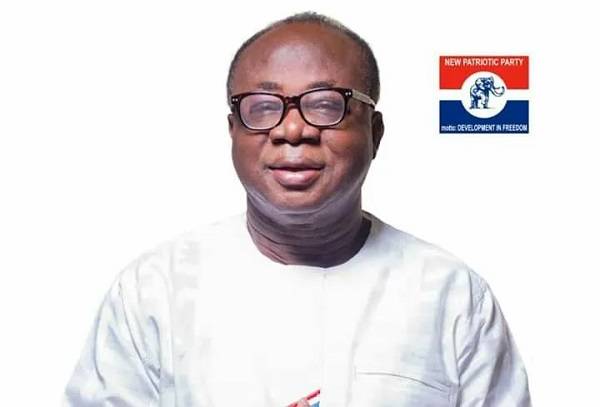
Former National Chairman of the NPP, Freddie Blay has been granted bail in the sum of GH₵800,000 by the Koforidua High Court, following his recent remand in connection with a disputed demolition case at Kitase in the Eastern Region. The court’s decision marks a significant development in a case that has drawn public attention due to the profile of the accused and the legal questions surrounding land ownership and enforcement.
The bail conditions require Mr Blay to provide two sureties, both of whom must be residents in Accra and possess valid Ghana Cards. The ruling effectively ends a brief period of detention that began after his arrest earlier this week, allowing him temporary release while investigations continue.
Mr Blay had initially been remanded by the Akropong Circuit Court after police executed a bench warrant for his arrest on March 16, 2026. The warrant, according to authorities, had been issued as far back as April 2025 after he allegedly failed to honour multiple invitations to assist with investigations and did not appear before the court for his scheduled arraignment.
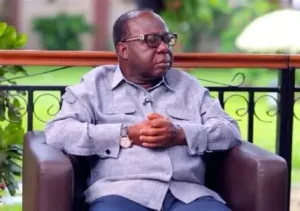
The case itself centres on allegations that the former ruling party chairman ordered the demolition of a house under construction on a parcel of land at Kitase. The complainant, who claims ownership of the land, reported the incident to the police, triggering investigations that eventually led to criminal charges being filed.
However, the defence has strongly challenged the prosecution’s narrative, arguing that the matter is fundamentally civil rather than criminal. According to sources close to Mr Blay, the land in question was acquired by him in 1994 and has since been the subject of protracted litigation. His legal team maintains that he did not order the destruction of any building, but instead directed that a bare piece of land be cleared in early 2026 to prevent it from becoming a breeding ground for dangerous animals, including reptiles.
They further contend that although a High Court ruling had previously favoured the complainant, that decision is currently under appeal, complicating the legal status of the property. Attempts to serve the complainant with court processes related to the appeal, according to the defence, have also proven unsuccessful, adding another layer of complexity to the dispute.
The High Court’s intervention, led by Justice George Krofa Addae, followed an application by Mr Blay’s lawyers, who sought to challenge both the bench warrant and the earlier remand order. The granting of bail suggests that the court found sufficient grounds to allow the accused temporary freedom while ensuring his continued cooperation with the judicial process.
Mr Blay is expected to reappear before the Circuit Court on April 9, 2026, as the case proceeds. His legal team is also expected to continue pushing for the matter to be treated as a civil dispute rather than a criminal offence, a distinction that could significantly influence the direction and outcome of the case.
The incident has also sparked broader discussions about land disputes in Ghana, which remain a persistent source of legal conflict and social tension. Cases involving contested ownership, overlapping claims, and enforcement actions such as demolitions are common, often blurring the line between civil litigation and criminal liability. This particular case underscores the challenges within Ghana’s land administration system, where unresolved disputes can escalate into high profile legal battles involving prominent individuals.
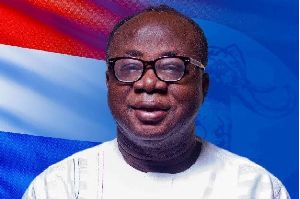
Beyond the legal arguments, the case has also raised concerns about procedural fairness and enforcement practices. Questions have emerged regarding the issuance and execution of bench warrants, particularly in situations where defendants claim they were unaware of court proceedings. At the same time, authorities have emphasised the importance of compliance with legal processes, noting that failure to respond to court summons can trigger enforcement actions regardless of the individual’s status.
For Mr Blay, the immediate priority will be to meet the bail conditions and prepare for the next phase of the case. For observers, the proceedings will likely serve as a test of how Ghana’s judicial system navigates complex land disputes involving influential figures while maintaining the rule of law.
As the April court date approaches, attention will remain fixed on how the competing claims over the Kitase land are resolved and whether the case ultimately shifts from a criminal prosecution to a civil matter, as argued by the defence. The outcome could have wider implications not only for the parties involved but also for how similar disputes are handled within the country’s legal framework.
NPP denies involvement in alleged bee attack on NDC supporters