

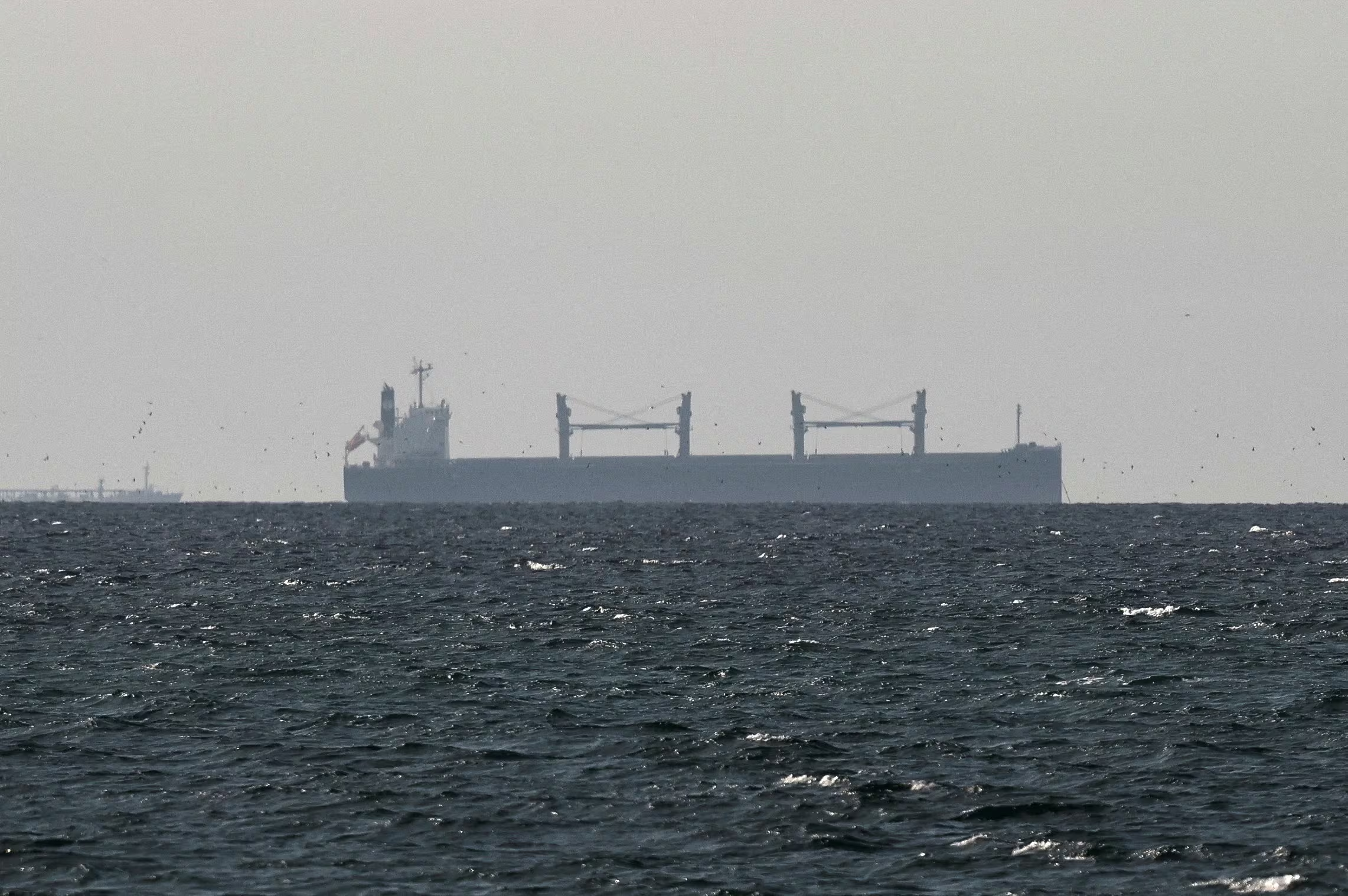
Two key U.S. allies, Japan and Australia, have said they currently have no plans to deploy naval vessels to the Strait of Hormuz, despite growing pressure from U.S. President Donald Trump for allied nations to help secure the strategic waterway amid escalating tensions with Iran.
The decision by Tokyo and Canberra reflects a cautious response to Washington’s calls for international military support to protect shipping through the narrow Gulf passage, which has been severely disrupted by the ongoing conflict between the United States, Israel and Iran.
Trump pushes for coalition to secure oil route
Donald Trump has been urging multiple countries to form a naval coalition aimed at safeguarding commercial vessels traveling through the Strait of Hormuz, one of the world’s most critical energy chokepoints. The strait connects the Persian Gulf to the Gulf of Oman and is responsible for transporting nearly one-fifth of global oil shipments.
Speaking to reporters, Trump said the United States had approached about seven countries to participate in a multinational effort to escort oil tankers and ensure safe navigation through the waterway. He argued that many nations rely heavily on energy supplies passing through the strait and therefore should share the responsibility of protecting it.
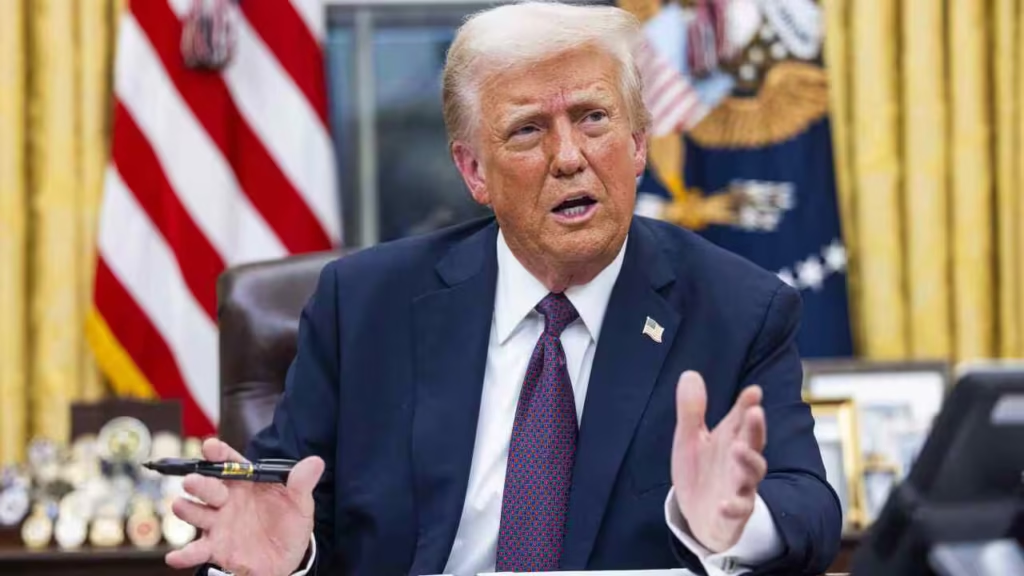
Trump has also warned that the North Atlantic Treaty Organization could face serious consequences if its members fail to support Washington’s efforts to reopen and secure the strategic route.
The pressure campaign comes as the United States and Israel continue military operations against Iran following the outbreak of a broader regional conflict in late February. Iranian forces and allied groups have responded with missile and drone attacks across the region, raising fears of a prolonged war that could destabilize global energy markets.
Japan cites legal and constitutional constraints
Japan’s government said it is not currently considering sending naval escorts to the Strait of Hormuz. Prime Minister Sanae Takaichi told parliament that Tokyo is still assessing the situation and has not yet made any decision regarding a potential military deployment.

Officials emphasized that Japan faces significant legal and constitutional limitations on overseas military operations due to the country’s pacifist post-war constitution. Deploying the Japan Maritime Self-Defense Force in a combat or deterrence role outside Japanese territory would require complex legal justification and political approval.
Japan is particularly sensitive to developments in the region because it relies heavily on Middle Eastern oil imports, much of which passes through the Strait of Hormuz. Despite this dependency, Japanese officials indicated that no formal request for naval deployment had been received from Washington and that Tokyo would carefully evaluate any future proposal.
To mitigate potential disruptions to energy supplies, Japan has reportedly begun drawing on strategic oil reserves while monitoring the evolving security situation in the Gulf.
Australia rules out warship deployment
Australia has also declined to send naval forces to the region, with government officials stating that there are currently no plans to deploy warships to the Strait of Hormuz.
Australian Defence Minister Catherine King confirmed that Canberra remains committed to its alliance with the United States but will not contribute naval assets to the Gulf at this stage.
Instead, Australia has focused on other forms of support, including the deployment of military aircraft and logistical assistance to regional partners. The government has also taken steps to prepare for potential fuel disruptions by releasing a portion of its strategic fuel reserves.

Australian authorities have emphasized that fuel shipments to the country remain on schedule and that the government is monitoring global supply chains closely as tensions continue to affect international energy markets.
Limited international response so far
The response to Trump’s call for a multinational maritime coalition has been largely muted so far. While Washington has reached out to several countries, including European allies and major Asian economies, few have publicly committed to sending naval forces.
Some countries have instead considered alternative forms of support, such as intelligence sharing, surveillance operations or minesweeping capabilities aimed at protecting commercial shipping without escalating the conflict.
The United Kingdom, for example, has reportedly explored the possibility of deploying minesweeping technology rather than combat warships to reduce the risk of further escalation in the region.
Meanwhile, international organizations and energy agencies are closely monitoring the impact of the crisis on global markets. Oil prices have surged amid fears that prolonged disruptions in the Strait of Hormuz could trigger a wider energy shock affecting economies worldwide.
Strategic significance of the Strait of Hormuz
The Strait of Hormuz has long been considered one of the world’s most strategically important maritime passages. Approximately 18 to 19 million barrels of oil move through the channel each day, representing a major share of global energy consumption.
Any prolonged closure or disruption could have severe consequences for the global economy, driving up energy prices and intensifying geopolitical tensions.
Iran has repeatedly threatened to use the strait as leverage during periods of conflict with the United States and its allies. In the current crisis, shipping activity has already been disrupted as commercial vessels avoid the region amid security concerns.
Uncertain path forward
With tensions still escalating and diplomatic negotiations stalled, the question of whether an international coalition will emerge to secure the Strait of Hormuz remains unresolved.
For now, the reluctance of key U.S. partners such as Japan and Australia to deploy naval forces highlights the delicate balance many governments are trying to maintain between supporting Washington and avoiding deeper involvement in a potentially wider regional war.
As the conflict unfolds, the coming weeks may determine whether additional allies join U.S. efforts or whether Washington will largely shoulder the responsibility of protecting one of the world’s most critical energy corridors.