

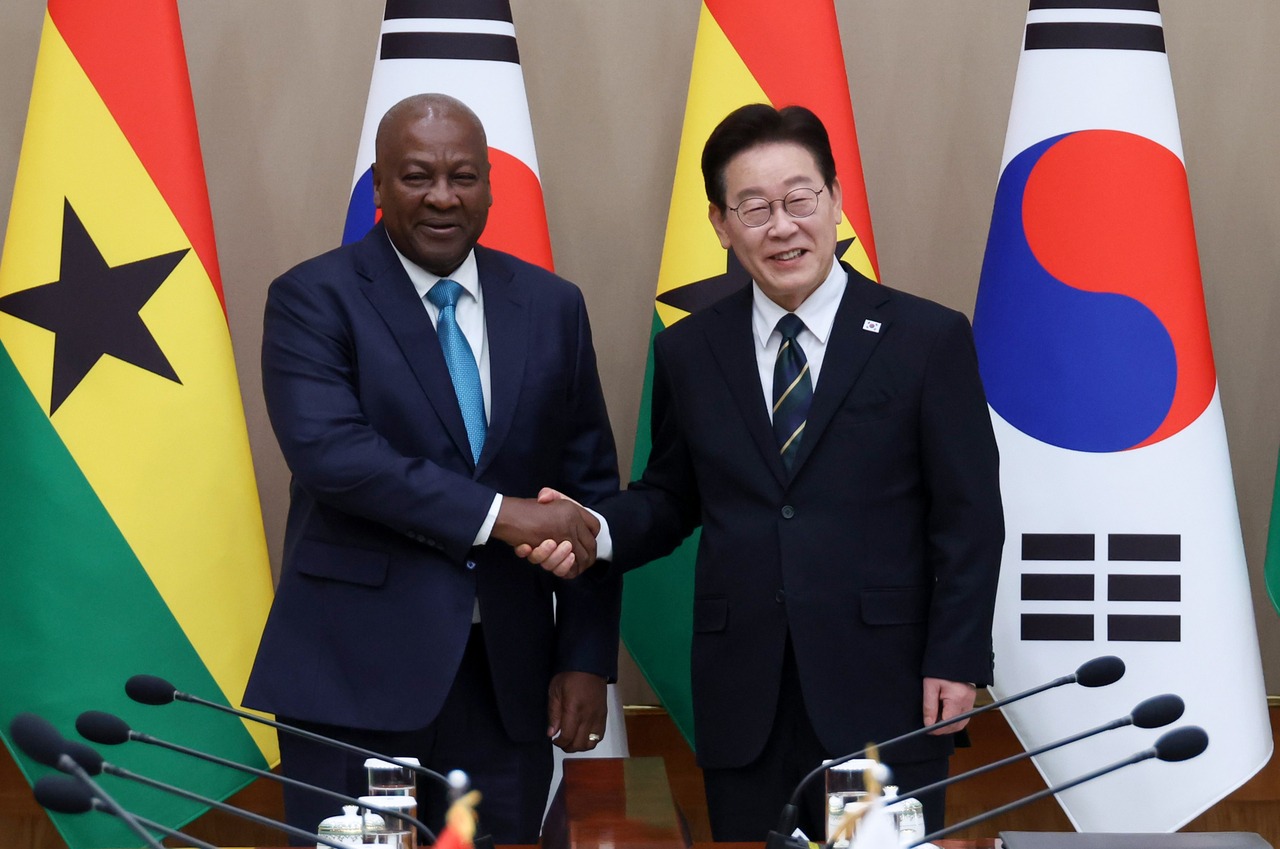
John Dramani Mahama and Lee Jae Myung have agreed to expand strategic cooperation between Ghana and South Korea, focusing on climate action, digital innovation and maritime security following high level talks in Seoul.
The agreement was reached during President Mahama’s official visit to South Korea, where both leaders held bilateral discussions aimed at strengthening ties between the two countries and deepening collaboration in areas critical to economic development and regional security.
Climate cooperation and green development
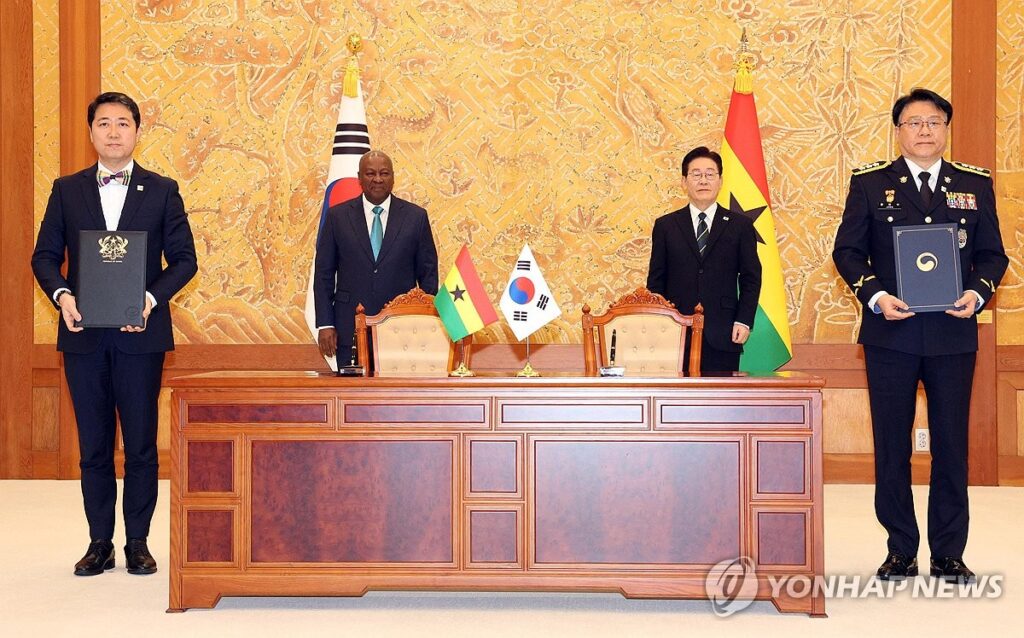
One of the key outcomes of the summit was the signing of a climate cooperation agreement aligned with the Paris Agreement. The framework will allow the two nations to collaborate on emissions reduction strategies, climate research and technology transfer.
Under the agreement, Ghana and South Korea will explore mechanisms that allow them to cooperate on greenhouse gas reduction projects and climate mitigation initiatives under international carbon trading systems. Such arrangements enable countries to share emissions reduction outcomes to help meet their national climate commitments.
Officials from both countries said the partnership will support climate resilience projects and sustainable development initiatives while promoting innovation in renewable energy and environmental technologies.
Boosting digital and technological collaboration
Beyond climate cooperation, the two governments signed a memorandum of understanding on digital technology and innovation. The agreement aims to promote joint projects in emerging fields such as artificial intelligence, digital infrastructure and youth technology training.
South Korea, known globally for its advanced technology sector, is expected to support Ghana’s digital transformation initiatives by sharing expertise in innovation ecosystems, digital access and advanced technology development.
President Mahama emphasised that Ghana’s natural resources and South Korea’s technological capabilities could create strong economic synergies, particularly in areas such as critical minerals exploration, including lithium and nickel used in modern technology and renewable energy systems.
Strengthening maritime security in the Gulf of Guinea
A major component of the cooperation package is a maritime security agreement between the Korea Coast Guard and the Ghana Navy.
The agreement establishes a framework for intelligence sharing and operational coordination aimed at tackling maritime crimes such as piracy, drug trafficking and arms smuggling in the Gulf of Guinea, one of the world’s most piracy prone shipping regions.
The partnership will also support joint training, maritime safety initiatives and search and rescue cooperation involving vessels and aircraft operating in West African waters.
South Korean officials highlighted Ghana’s role in protecting international shipping routes and ensuring the safety of foreign nationals operating in the region. The Gulf of Guinea is a key global trade corridor for energy shipments and commercial vessels, making maritime security a priority for both countries.
Growing strategic partnership
The latest agreements build on decades of diplomatic relations between Ghana and South Korea, which established formal ties in 1977. Bilateral trade between the two countries has steadily grown over the years, while cooperation has expanded into agriculture, education, infrastructure and technology.
Both leaders emphasised the shared democratic values and historical experiences of the two nations, noting that their partnership is built on mutual trust and cooperation.
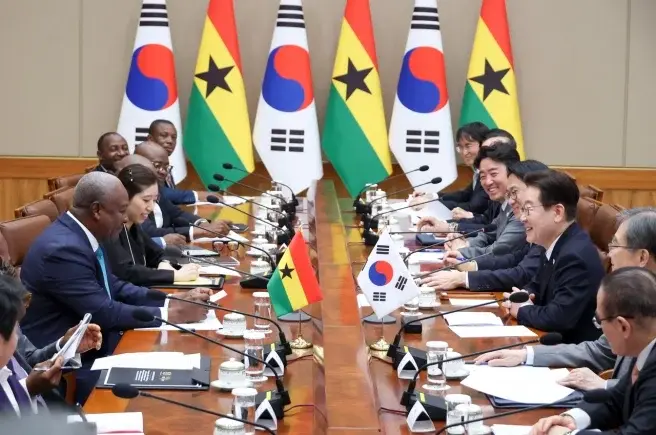
President Lee described Ghana as an important gateway for South Korea’s engagement with African markets and praised the country’s leadership role in promoting stability in West Africa.
The visit is also expected to strengthen broader economic collaboration, including potential partnerships in agriculture and food security initiatives such as South Korea’s “K Ricebelt Project,” which seeks to boost rice production in African countries.
The new agreements signal a deepening of diplomatic and economic ties between Ghana and South Korea as both countries seek to strengthen cooperation in areas that address global challenges.
By combining Ghana’s strategic position in West Africa with South Korea’s technological and industrial expertise, both governments aim to build a partnership that supports sustainable development, regional security and innovation.
Analysts say the collaboration reflects a growing trend of cross regional partnerships as countries work together to address climate change, technological transformation and evolving security threats.
If fully implemented, the agreements could position Ghana as a key technology and maritime security partner for South Korea in Africa while supporting Ghana’s broader development and modernization agenda.