


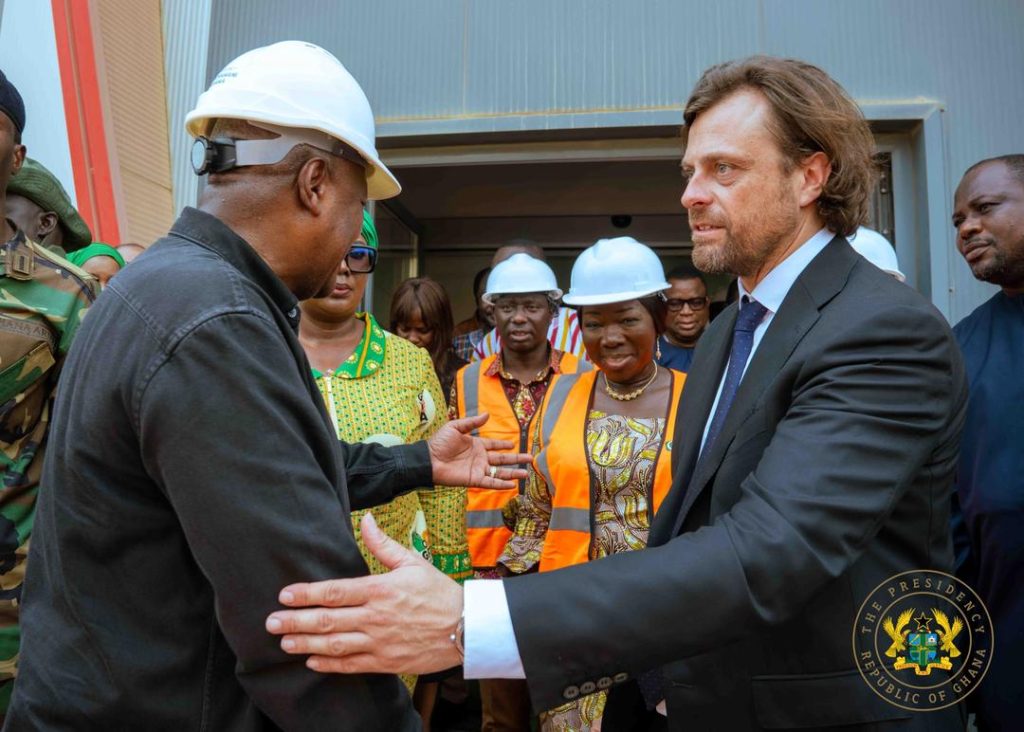
Ghana is intensifying efforts to transform its industrial base, with President John Dramani Mahama setting an ambitious target to increase the contribution of manufacturing to the country’s Gross Domestic Product (GDP) to at least 15 percent by 2030. The initiative forms part of a broader strategy to accelerate industrialisation, expand exports and create large-scale employment opportunities for Ghanaians. The president announced the goal during the commissioning of a calcined clay processing plant operated by Supacem Cement in Tema. Addressing industry leaders, investors and policymakers, Mahama said strengthening the manufacturing sector would be a critical pillar for Ghana’s long-term economic transformation.
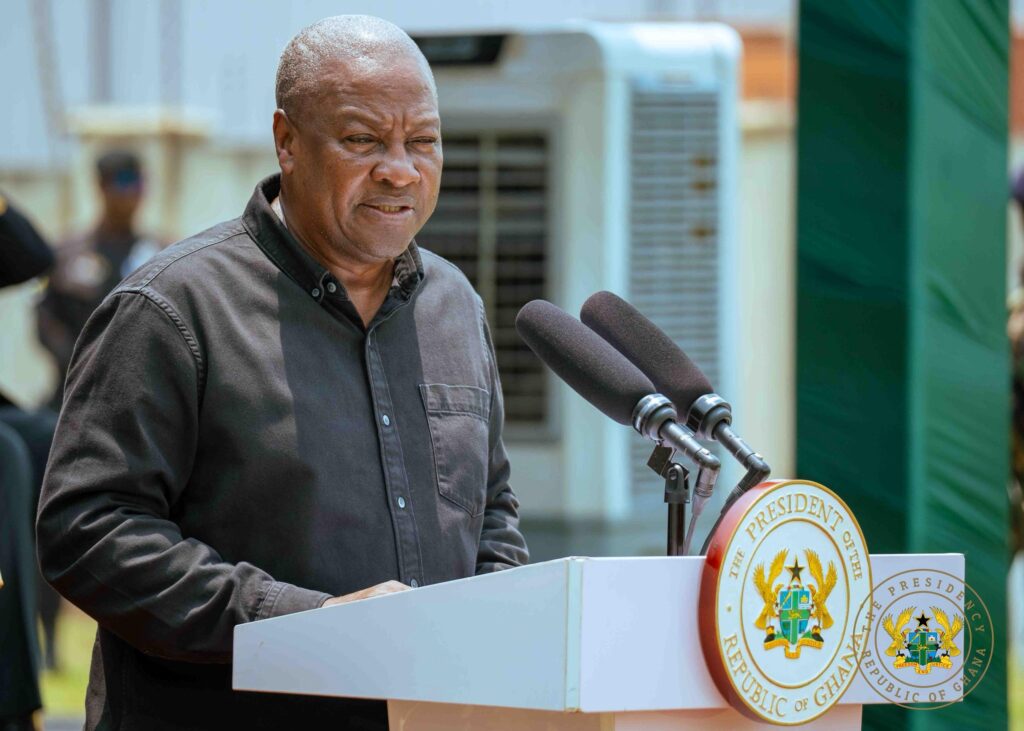
“My government has set an ambitious target of increasing the share of manufacturing in our GDP to at least 15% by 2030. We believe that this will create an additional half a million decent jobs for our people. I am confident that we can attain this,” he said.
Driving industrial transformation
The government believes that expanding the manufacturing sector will help diversify Ghana’s economy, which has historically relied heavily on commodity exports such as gold, cocoa and crude oil. By boosting domestic production, policymakers aim to reduce the country’s dependence on imports while strengthening its export capacity.
According to the president, the strategy is designed to move Ghana from a consumption-driven economy toward one that produces and exports finished goods. This shift is expected to improve economic resilience and strengthen the country’s position within regional and global supply chains.
Currently, Ghana’s manufacturing sector contributes roughly 10 percent to national GDP, a figure that has remained relatively stagnant for decades. The government’s new target therefore represents a significant expansion that could reshape the country’s industrial landscape.
Mahama emphasised that achieving the 15 percent target will require coordinated reforms across several sectors of the economy, including energy, finance, trade and infrastructure.
Addressing key Challenges facing industry
Despite its potential, Ghana’s manufacturing sector continues to face several structural challenges that limit its growth. Industry stakeholders frequently cite high electricity costs, inconsistent power supply, taxation pressures and limited access to affordable financing as major barriers to investment.
The president acknowledged these constraints and outlined plans to address them through a series of policy interventions aimed at reducing production costs and improving the overall business environment.
“No industrial nation thrives under structurally high costs of power,” he said, stressing the need to restructure the energy sector and improve efficiency within electricity generation and distribution systems.
The government is also considering measures to expand renewable energy production, introduce special electricity tariffs for manufacturers and strengthen transmission infrastructure to support industrial zones.
Expanding industrial financing and investment
Another major focus of the strategy is improving access to capital for manufacturers. Many local companies struggle to secure affordable financing to expand production capacity or invest in modern technology.
To address this challenge, the government plans to collaborate with the Bank of Ghana and development finance institutions to create specialised funding mechanisms for industrial projects. These initiatives will support both existing manufacturers and new investors seeking to establish factories in Ghana.
The administration also aims to strengthen partnerships with the private sector and attract foreign direct investment into key manufacturing industries such as textiles, steel processing, pharmaceuticals, agro-processing and cement production.
Strengthening industrial zones and free trade opportunities
The development of special economic zones and export-oriented industrial parks is expected to play a major role in achieving the government’s manufacturing targets. These zones provide investors with tax incentives, modern infrastructure and simplified regulatory procedures designed to encourage large-scale production.
Ghana’s free zones programme, managed by the Ghana Free Zones Authority, allows businesses operating within designated zones to benefit from reduced taxes and other incentives in exchange for producing goods primarily for export markets.
Authorities believe these incentives will attract new manufacturing firms and encourage multinational companies to establish production facilities in the country.
Creating jobs and building skills
One of the central objectives of the manufacturing expansion plan is job creation. The government estimates that the sector could generate up to 500,000 new industrial jobs by 2030 if the strategy is successfully implemented.
These employment opportunities are expected to focus on both skilled and semi-skilled workers, particularly young people entering the labour market. To support this objective, the government plans to strengthen technical and vocational education and training programmes to ensure that the workforce has the skills required by modern industries.
The president also emphasised the importance of enforcing fair trade practices to protect local manufacturers from unfair competition caused by smuggling, counterfeit goods and under-declared imports.
Building a competitive industrial economy
Economic analysts say expanding manufacturing will be essential if Ghana is to achieve sustainable economic growth and remain competitive within the West African region.
Industry in Ghana already contributes significantly to the economy and continues to grow as government policies promote industrialisation and local production. The sector includes industries such as food processing, cement manufacturing, textiles, metal fabrication and chemical production.
However, experts note that stronger policy coordination and consistent implementation will be necessary to reach the ambitious 2030 target.
For the government, the broader vision is to build a modern industrial economy capable of producing high-value goods for both domestic and international markets.
“Our goal is not just growth,” Mahama said. “It is transformation, building an industrial economy that produces, exports and creates sustainable jobs for our people.”