


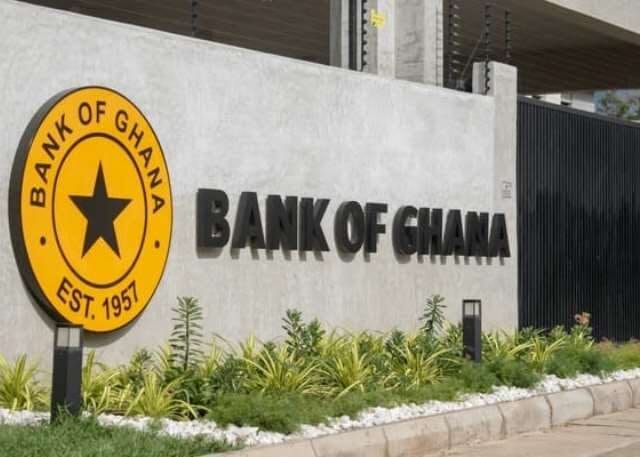
The Governor of the Bank of Ghana, Dr Johnson Asiama, has attributed Ghana’s historically low inflation levels to disciplined economic management, particularly within the country’s monetary policy framework. According to him, a combination of deliberate policy interventions and favourable currency movements has played a central role in stabilising prices and restoring confidence in the economy.
In an explanatory note on recent economic developments shared with JoyBusiness on March 4, 2026, the Governor outlined several factors that have contributed to the sharp decline in inflation. Among them were the significant appreciation of the Ghanaian cedi and the implementation of strategic sterilisation measures by the central bank. These measures, he explained, helped absorb excess liquidity in the financial system while maintaining price stability.
Dr Asiama emphasised that the recent drop in inflation was not accidental but the result of carefully implemented monetary policies designed to stabilise the economy. Ghana’s inflation rate fell to 3.3 percent in February 2026, down from 3.8 percent recorded in January and far below the 23.1 percent recorded during the same period in the previous year. The steep decline reflects the effectiveness of the central bank’s policy interventions aimed at controlling price pressures and strengthening the country’s macroeconomic fundamentals.
The Governor noted that the central bank has consistently prioritised inflation targeting as one of its core responsibilities. Over the past year, the institution has deployed several monetary policy tools to curb inflation and stabilise the economy. Analysts monitoring Ghana’s economic performance have also acknowledged the Bank of Ghana’s role in restoring relative stability to the foreign exchange market and reducing inflationary pressures.
According to the Bank’s January Monetary Policy Report, inflation is expected to continue trending toward the lower boundary of the medium term target range of 8 percent, plus or minus two percentage points, during 2026. This outlook is supported by ongoing fiscal consolidation efforts, a carefully calibrated monetary policy stance, and the strengthening of the country’s external reserves.
Despite these positive developments, Dr Asiama acknowledged that achieving such gains has not come without financial costs. He pointed to the Bank of Ghana’s sterilisation operations and other policy initiatives as areas that have required substantial financial resources. Sterilisation involves the central bank absorbing excess liquidity from the banking system to prevent it from fuelling inflation. While effective, this process can impose significant costs on the central bank’s balance sheet.
The Governor also addressed questions surrounding the Gold for Reserve Programme, which has attracted public debate due to concerns about its financial implications. He revealed that the fees and charges associated with the programme have been reduced significantly, cutting previous costs by about half. The initiative, which aims to strengthen Ghana’s foreign reserves through gold purchases, had previously contributed to financial losses recorded by the central bank.
While acknowledging the losses recorded by the Bank of Ghana in 2024 and the financial position reported in 2025, Dr Asiama urged observers to consider the broader economic context. He argued that the benefits of stabilising the economy, strengthening the cedi, and achieving historically low inflation should be weighed against the short term financial costs incurred by the central bank. According to him, these losses represent part of the price paid for resetting the economy and restoring macroeconomic stability.
One of the most notable achievements highlighted by the Governor is the performance of the Ghanaian cedi, which has appreciated by more than 40 percent, marking the strongest performance in the currency’s history. The strengthening of the cedi has significantly reduced imported inflation and contributed to the overall decline in price levels across the economy.

Looking ahead, Dr Asiama expressed confidence that the financial pressures experienced by the central bank in recent years will not persist. He indicated that the Bank of Ghana is unlikely to record similar losses in 2025 and 2026, partly because the cedi is not expected to experience another sharp appreciation of the magnitude seen previously.
He also explained that sterilisation costs are likely to decline as inflation continues to fall and the monetary policy rate is gradually reduced. Lower inflation typically allows central banks to ease policy measures, thereby reducing the need for expensive liquidity management operations. These developments are expected to improve the Bank of Ghana’s financial position in the near term.
In addition, the Governor noted that losses related to the Goldbod initiative will ultimately be absorbed by the government after the associated charges were reduced. This arrangement is expected to ease pressure on the central bank’s balance sheet while ensuring that the broader objectives of the programme are maintained.
Overall, Dr Asiama maintained that the financial losses currently being discussed should be viewed as a temporary and one time cost associated with stabilising the economy. He reiterated that such losses are unlikely to recur in 2026, expressing optimism that the Bank of Ghana’s policy measures will continue to strengthen economic stability and support sustainable growth in the years ahead.