

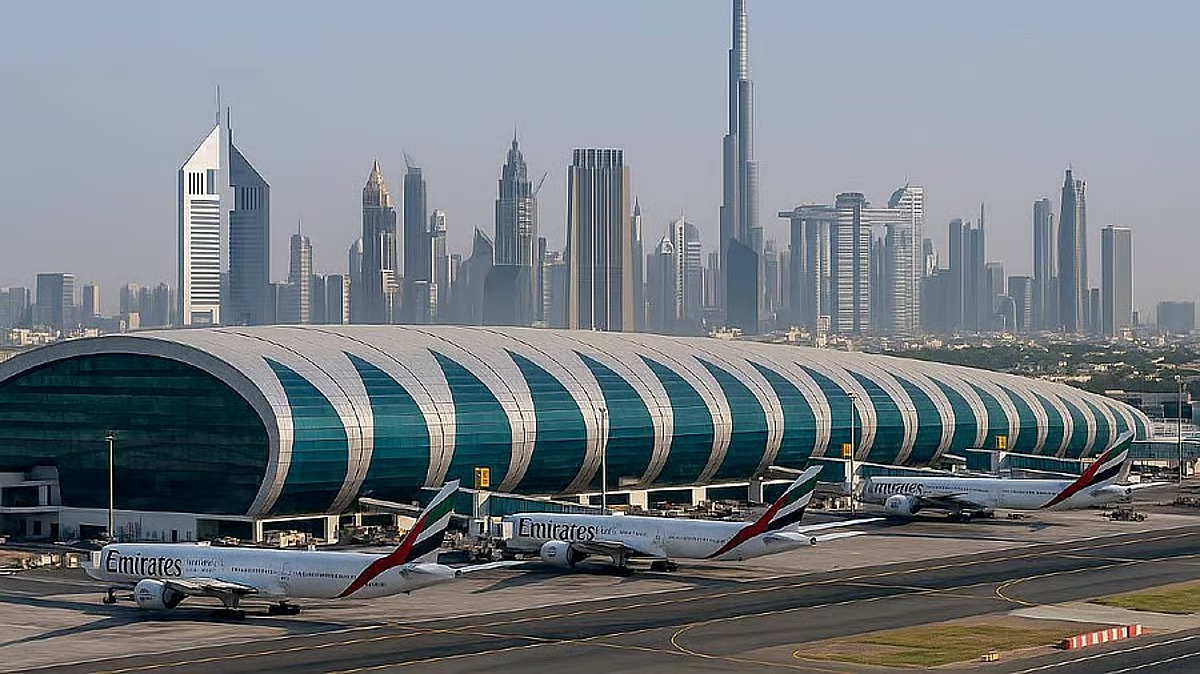
Dubai International Airport (DXB), one of the world’s busiest aviation hubs, sustained minor structural damage and saw four airport staff members injured on Saturday, February 28, 2026, amid a wave of missile and drone attacks launched by Iran across the Gulf region. The incident occurred during a period of intense escalation following cross-border military actions involving the United States, Israel, and Iran.
According to official statements from Dubai Airports and the Dubai Media Office, the concourse area that was damaged sustained only limited impact, and emergency response teams quickly brought the situation under control. Authorities emphasized that contingency safety measures were already in place, and most passenger areas had been cleared of travellers before the incident unfolded, significantly reducing the risk of casualties.
The airport authority confirmed that the four injured staff received immediate medical treatment and their conditions were being monitored. The event did not result in any reported fatalities at the Dubai airport itself, though separate reports indicate casualties elsewhere in the UAE linked to the broader assault.
Context of the strikes
The strike on DXB was part of a larger offensive by Iran in retaliation to a US-Israeli military campaign that targeted key Iranian military and governmental infrastructure earlier in the week. These operations included air strikes in Iranian territory that reportedly resulted in the death of senior Iranian officials, dramatically intensifying an already volatile regional conflict.

In response to that offensive, Iran launched ballistic missiles and drones toward several states in the Gulf, including the United Arab Emirates, Qatar, Bahrain, Kuwait, Jordan, and others. UAE air defence systems intercepted a large number of incoming projectiles, with official sources reporting that over 130 missiles and more than 200 drones were detected and engaged. Although most were successfully neutralised, falling debris caused collateral damage in multiple locations, including at airports, hotels, and port facilities.
Operational disruption and airport shutdown
In the aftermath of the incident, DXB suspended flight operations alongside other UAE airports, including Al Maktoum International and Zayed International Airport in Abu Dhabi. Regional airspace closures were enacted as a safety precaution, forcing tens of thousands of travellers to cancel or postpone plans, and prompting airlines worldwide to reroute flights or suspend services.
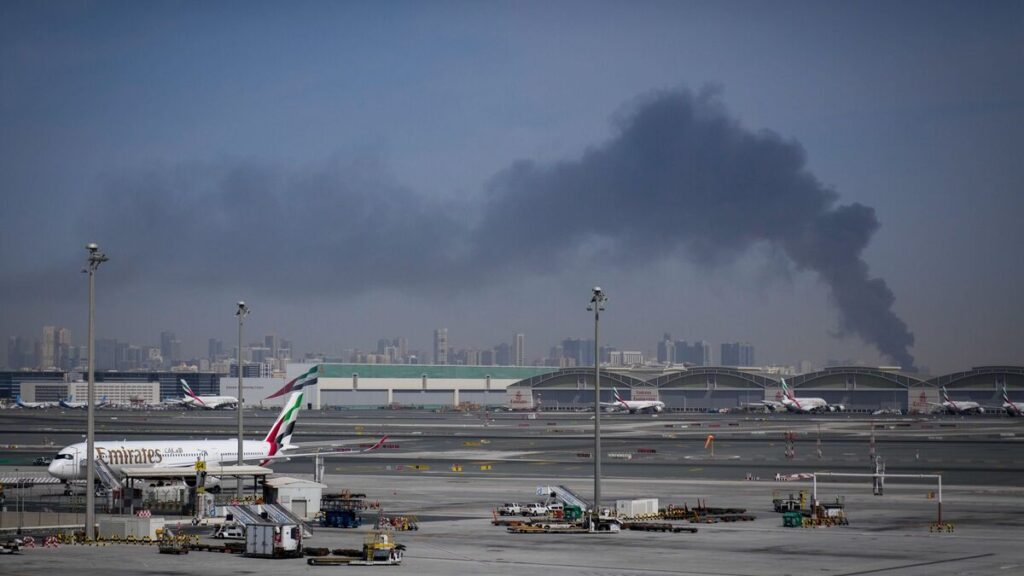
Data from aviation trackers showed that major carriers such as Emirates, Etihad Airways, and other regional and international airlines grounded aircraft or adjusted schedules to avoid the airspace over the Gulf. The volume of cancellations and diversions represented one of the most significant disruptions to Middle East flight operations since the COVID-19 pandemic.
The impact rippled across global aviation networks, with airlines from Europe, Asia, and North America rerouting long-haul services that typically transit through Dubai or Abu Dhabi. Governments issued travel advisories and emergency alerts urging passengers not to travel to affected airports and to contact their carriers for updated information.
Broader regional impact
The missile and drone strikes did not only affect airports. Infrastructure across the UAE took hits, with reported incidents including fires near luxury hotels on Palm Jumeirah, damage to Dubai’s iconic Burj Al Arab hotel, and disruptions at Jebel Ali Port, one of the region’s largest maritime facilities.
Authorities also implemented precautionary measures beyond aviation. The UAE’s General Civil Aviation Authority suspended flight permits for drones and other small aircraft to reinforce airspace safety, and educational institutions shifted to remote learning as a preventive step.
Meanwhile, national and international leaders have called for restraint and de-escalation, even as the situation remains fluid and unpredictable. The strikes have strained diplomatic relations and raised concerns about prolonged instability in the Gulf, which is critical to global trade, tourism, and energy markets.