

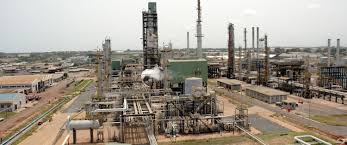
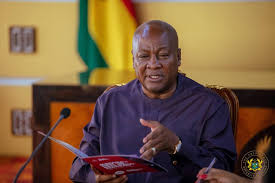
President John Dramani Mahama has officially announced that the Tema Oil Refinery (TOR) has resumed the processing of crude oil into petroleum products, marking a major turning point for Ghana’s energy sector. The development, disclosed during the 2026 State of the Nation Address to Parliament, represents the first time the state owned facility has produced refined products domestically since 2018.
President Mahama highlighted that the refinery’s comeback stems from comprehensive turnaround maintenance carried out on its Crude Distillation Unit (CDU). The successful rehabilitation has enabled the facility to return to operation and position itself as a critical contributor to national energy stability.
“I’m pleased to inform this August House that for the first time since 2018, the refinery has commenced processing crude oil into petroleum products once more,” the President stated, emphasizing that this achievement aligns with his administration’s commitment to revitalizing Ghana’s energy infrastructure and advancing energy security goals.
Strategic significance of TOR’s revival
The restart of refining activities at Tema Oil Refinery comes after years of inactivity due to maintenance challenges and financial constraints that had constrained domestic refining. Restart operations began in December 2025, with regulatory clearance granted by the National Petroleum Authority (NPA) following rigorous inspections to ensure safety and compliance with international operational standards.
Industry stakeholders have welcomed the development as a significant milestone in reducing Ghana’s dependence on imported refined petroleum products. Historically, Ghana has imported the bulk of its fuel needs, contributing to a high national import bill and exposing the economy to foreign exchange risk. Experts anticipate that a fully operational TOR will curb these costs, support local fuel supply, and cushion Ghana’s economy against global price volatility.
Long term energy security and economic impact
The revival of TOR is seen as a strategic step toward strengthening Ghana’s energy security. Domestic refining capability enables the country to produce essential petroleum products locally, thereby reducing reliance on imports and enhancing self sufficiency. Industry sources note that the refinery is being brought back online gradually with a phased approach designed to stabilise systems and optimise performance before returning to full capacity.
In addition to stabilising energy supply, the resumption of refining operations has broader economic implications. Increased domestic production is expected to create jobs, stimulate ancillary industries, and generate revenue that was previously spent on imported fuels. Local participation and employment in the downstream energy sector are anticipated to grow as systems scale up.
Support and endorsement from stakeholders
Civil society and industry groups have expressed support for the refinery’s restart. Organizations such as the Institute for Energy Security and the Legal Green Association have commended the government and TOR management for facilitating the refinery’s return to operation and reinforcing confidence in Ghana’s energy infrastructure.
The Legal Green Association in particular described the revival as a “major milestone” for the energy sector that reflects decisive leadership and renewed focus on long term national interests. The association praised the political will demonstrated by the government and highlighted the example set by technical leaders and young professionals involved in the turnaround process.
Future prospects and operational sustainability
Management at TOR and government officials alike have emphasised that structures are being put in place to prevent future shutdowns. Recent statements from refinery leadership indicate that new agreements and operational procedures, including Memoranda of Understanding (MOUs) for reliable crude supply, are intended to ensure that the refinery can operate consistently and sustainably.
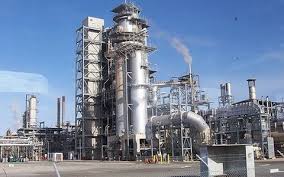
The phased approach to restarting operations also includes plans to integrate upgraded infrastructure such as a newly installed furnace (F 61) to improve efficiency and eventually restore refining capacity closer to its original design. Medium term expansions could further enhance capacity, positioning TOR not just as a domestic supply source but potentially as a regional refining hub.
Government commitment and policy direction
President Mahama reaffirmed that revitalising the energy sector remains a cornerstone of his administration’s policy agenda. In the State of the Nation Address, he reiterated his commitment to strengthening the entire energy value chain to deliver reliable, affordable, and sustainable energy across Ghana.
The resumption of operations at TOR thus represents more than a technical restart it underscores a broader strategy to enhance national resilience, reduce foreign dependency, and support economic growth through energy sector reform and infrastructure development.