

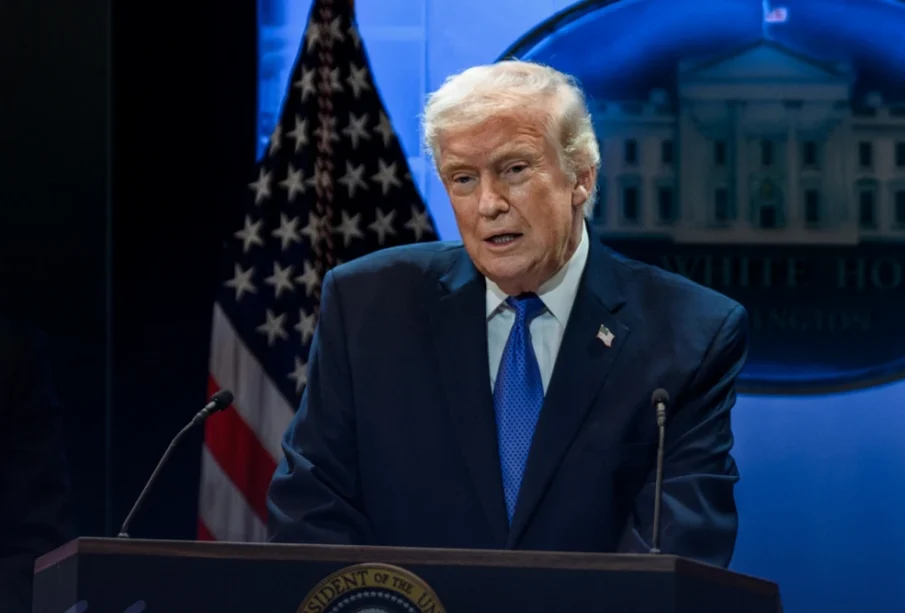
President Donald Trump has announced a new initiative aimed at strengthening America’s global influence in artificial intelligence by leveraging one of its most enduring diplomatic institutions, the Peace Corps. The program, branded as “Tech Corps,” is designed to promote the adoption of American developed AI systems in partner countries as strategic competition with China intensifies.
The announcement, made by the White House, positions artificial intelligence not just as a commercial or technological priority but as a central pillar of US foreign policy and soft power. The initiative seeks to deploy American technology expertise abroad, helping governments and institutions integrate advanced AI tools into sectors such as education, agriculture, healthcare, infrastructure and public administration.
The Peace Corps, established in 1961 to send American volunteers overseas in support of development and cultural exchange, has long symbolized US diplomatic outreach rooted in grassroots engagement. By embedding a technology focused branch within the organization, the administration is signaling that AI is now considered as strategically important as traditional development assistance programs.
According to administration officials, the Tech Corps initiative will recruit specialists with backgrounds in artificial intelligence, data science, cybersecurity and digital systems implementation. These volunteers will work alongside host country institutions to provide training, technical guidance and implementation support for AI driven solutions. The objective is to ensure that emerging economies have access to what US officials describe as secure, transparent and democratic technology standards.
The move comes amid growing concern in Washington that China’s expanding digital footprint across Africa, Latin America and parts of Asia could translate into long term geopolitical leverage. Chinese firms have been active in providing telecommunications infrastructure, surveillance technologies and digital governance tools to developing countries. US policymakers increasingly view AI infrastructure as the next frontier in this strategic competition.
By channeling AI expertise through the Peace Corps framework, the administration appears to be blending hard strategic interests with soft power outreach. Rather than focusing solely on export controls or restrictions, Tech Corps emphasizes proactive engagement. The approach suggests that influence in the AI era will depend not only on who develops the most advanced systems but also on who helps shape global standards and norms around their use.
Critics of aggressive export restrictions have argued that limiting access to advanced chips and systems could push other nations closer to Chinese suppliers. The Tech Corps initiative offers an alternative narrative, one centered on partnership rather than exclusion. By providing training and support for American AI platforms, the program aims to create long term technological alignment between the US and participating nations.
Details regarding funding, deployment timelines and target regions have not been fully disclosed. However, officials indicated that the program will begin with pilot deployments in select countries where digital infrastructure projects are already underway. Collaboration with local universities, government ministries and private sector entities is expected to form a core component of the initiative.
Supporters argue that positioning AI within the Peace Corps framework reinforces democratic governance principles. They contend that American AI systems emphasize transparency, data protection and accountability, contrasting with what US officials frequently characterize as more centralized and state aligned digital governance models promoted by China.
Skeptics, however, question whether the Peace Corps, historically focused on education and community development, can effectively integrate advanced technology missions without fundamentally reshaping its identity. Some policy analysts warn that blending development work with overt strategic competition risks politicizing a program that has traditionally maintained a humanitarian image.
The administration maintains that the initiative aligns with the Peace Corps’ original mission of fostering mutual understanding and technical exchange. Officials emphasize that volunteers will operate at the invitation of host governments and in accordance with local laws and priorities.
The unveiling of Tech Corps reflects a broader shift in how governments view artificial intelligence. No longer confined to research labs or private sector innovation hubs, AI is increasingly treated as a tool of national power. Diplomatic outreach, development aid and technology policy are converging, with AI at the center of the equation.
As the global AI race accelerates, initiatives like Tech Corps highlight the evolving role of diplomacy in shaping technological ecosystems. Whether the program succeeds in expanding American influence or faces operational and political hurdles will depend on execution, funding and the willingness of partner nations to align with US led AI frameworks. What is clear is that the competition for global technological leadership is moving beyond export restrictions and into the realm of direct international engagement.
Trump revokes landmark ruling that greenhouse gases endanger public health