

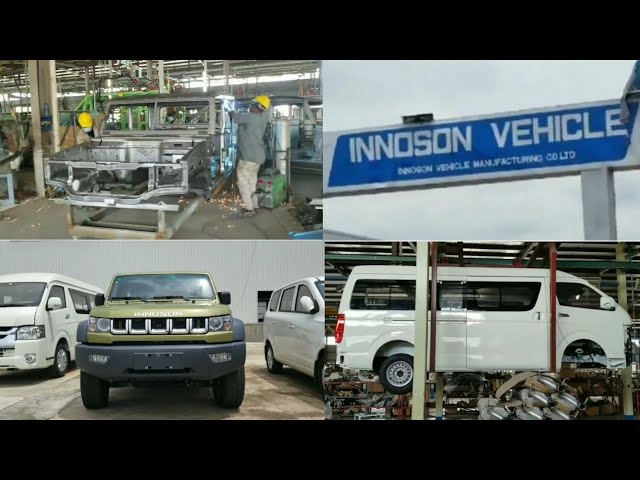
Nigeria’s indigenous automotive champion Innoson Group is rapidly emerging as one of the country’s largest industrial employers, with Chief Executive Officer Innocent Chukwuma confirming that the company now directly employs around 8,000 workers and plans to hire an additional 2,000 as part of a major factory expansion. The growth marks a rare wave of job creation in Nigeria’s manufacturing sector at a time when many producers struggle with forex shortages, high energy costs and competition from cheaper imported vehicles.
Speaking during a tour of the company’s expanding vehicle production facilities in Nnewi, Anambra State, Chukwuma said the planned new factory will absorb the additional workforce once fully operational, significantly boosting Innoson’s manufacturing footprint. The expansion comes as part of a broader strategy to deepen Nigeria’s industrial base and reduce dependence on imports for automobiles and machinery. “Our vision has always been to make youths productive and self-reliant by providing jobs and building local capacity,” he said, reflecting a strong localisation agenda in the transport and manufacturing sectors.
Innoson’s growth story is particularly notable in an economy where manufacturing has often been overshadowed by oil revenues and constrained by structural challenges. The Bank of Industry, a long-standing financier of Innoson’s equipment acquisition and production scaling efforts, has been a vocal supporter of the company’s development. Omar Shekarau, Executive Director of Large Enterprises at the Bank of Industry, said the company’s evolution from a small vehicle assembler into a national industrial brand highlights the potential of local enterprise when backed by targeted institutional support. He also urged Nigerians to “patronise locally made vehicles” to strengthen domestic production and stimulate broader economic growth.

Despite facing headwinds that have seen many manufacturers downsize in recent years, Innoson’s performance underscores a resilient business model focused on local production, skills development and market diversification. The automaker’s product line includes passenger cars, buses, trucks and utility vehicles, many of which are partly locally fabricated with about 70 per cent of parts produced domestically, while the rest are imported from international suppliers. This blend of local and global inputs allows Innoson to balance cost, quality and production volume in a competitive market.
Beyond automobiles, the company is branching into agricultural machinery with the establishment of a tractor manufacturing plant at the University of Nigeria, Nsukka. This initiative is designed to improve farmers’ access to essential equipment and support Nigeria’s agricultural productivity, which has long been held back by limited mechanisation. Chukwuma told reporters that producing tractors locally will help reduce reliance on expensive imports and make modern farming more accessible to rural producers.
The expansion and diversification also tie into broader national and regional efforts to strengthen industrial capacity and deepen integration. In 2025, the Economic Community of West African States (ECOWAS) endorsed Innoson’s role in regional automotive development as part of the implementation of Nigeria’s National Automotive Industry Development Plan, a development that has helped raise the company’s profile beyond national borders and signal potential for export growth to neighbouring West African markets.

Innoson’s workforce strategy also places emphasis on inclusivity and skills development. Chukwuma has publicly noted the company’s deliberate assignment of women to precision-driven production roles, citing discipline and adherence to operational standards as key reasons for their deployment in sensitive areas of the manufacturing process. This approach aligns with broader goals of empowering youth and women through industrial employment and technical education, complementing Nigeria’s broader youth empowerment agenda.
The company’s ambitions do not stop with the current Nnewi expansion. Earlier industry plans have included potential new manufacturing plants in other states like Owerri, Imo State, which would further enhance capacity and likely add to both employment and annual production volumes. Expansion to new locations and increased automation could see Innoson’s annual output grow dramatically in the coming years, positioning it as a leading vehicle manufacturer on the African continent.
In a country where manufacturing’s share of GDP has often lagged behind services and oil, Innoson’s growth represents a rare but welcome example of industrial progression and job creation. If the company continues on its current trajectory, it could play an increasingly central role in shaping Nigeria’s economic diversification, addressing structural employment challenges and fostering innovation in Africa’s automotive and agricultural machinery industries.
