

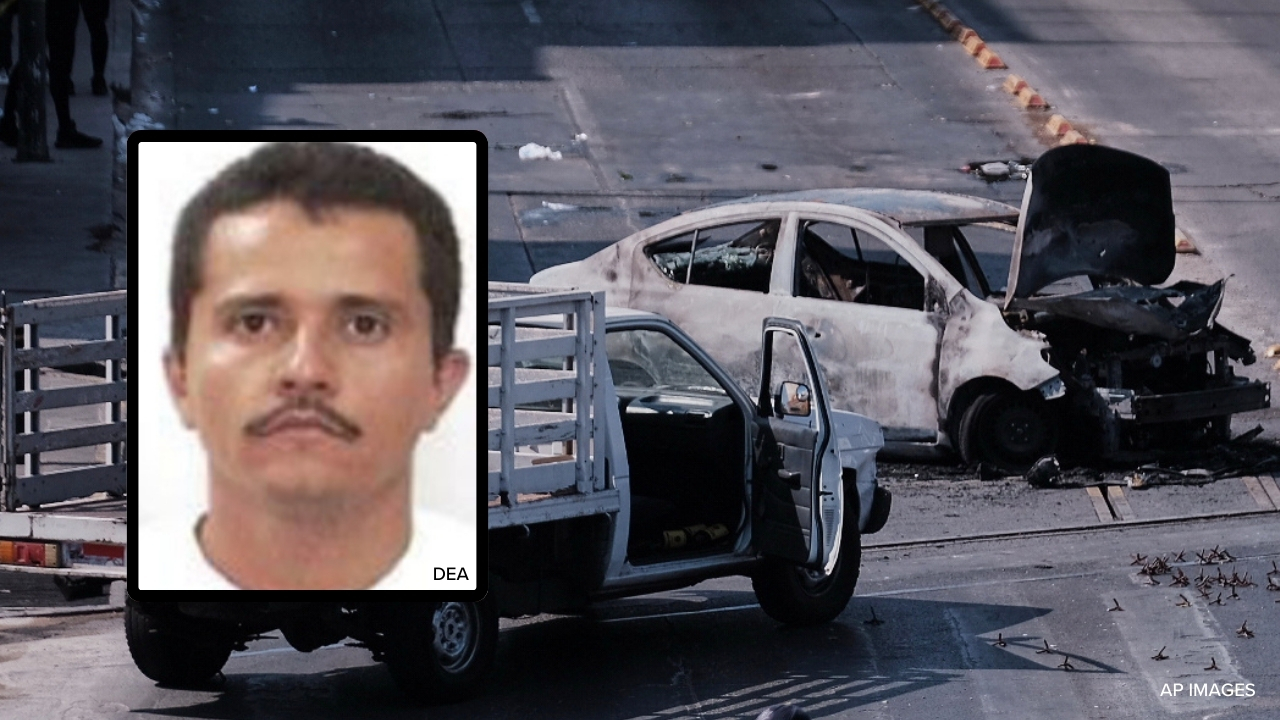
Mexican security forces have reportedly killed one of the country’s most notorious drug cartel leaders, Nemesio Oseguera Cervantes, better known as El Mencho, in a major operation that has set off intense violence and public alarm across multiple states. The government says the operation targeted the head of the Jalisco New Generation Cartel (CJNG) a syndicate implicated in widespread drug trafficking and violent conflict across Mexico and beyond.
Officials from Mexico’s Secretariat of National Defence stated that Oseguera Cervantes was wounded during a raid in the western state of Jalisco and later died of those injuries while being transported for medical care. The operation, conducted by army and security forces, formed part of a broader campaign against organised crime groups that have long challenged state authority and contributed to sustained instability in parts of the country.
Following the announcement of his death, chaotic scenes unfolded in several regions believed to be under CJNG influence. Armed individuals reportedly blocked key highways using burning vehicles, and clashes erupted in cities such as Guadalajara and the resort town of Puerto Vallarta, prompting schools and businesses to close temporarily and authorities to issue heightened security warnings. The unrest led to the cancellation of flights and travel advisories from foreign governments, including those of the United States and Canada, which urged their citizens to avoid non-essential travel to affected areas.
Oseguera Cervantes, who was in his late 50s, had been among Mexico’s most wanted criminals for years. He rose from relatively humble beginnings to lead the CJNG, transforming it into one of the most powerful and violent drug trafficking organisations in Mexico. The CJNG is known for its involvement in the production and distribution of illicit narcotics such as cocaine, methamphetamine and fentanyl many of which are smuggled into the United States. Under his leadership, the cartel gained a reputation for both tactical sophistication and brutal reprisals against rivals and security forces.

The reported killing of El Mencho represents a significant development in Mexico’s protracted conflict with organised crime. For decades, successive administrations have deployed varied strategies from military operations to community policing initiatives to reduce the influence of drug cartels. Nonetheless, criminal networks have often demonstrated resilience, adapting their operational structures and maintaining extensive trafficking routes.
Security analysts warn that eliminating a high-profile leader does not necessarily dismantle the organisation he led. The CJNG operates through a network of regional commanders and affiliates that could seek to fill the power vacuum left by Oseguera Cervantes’s death. Such transitions have the potential to spark internal rivalries or clashes with other cartels, potentially leading to further instability in certain areas.
The Mexican government has sought to reassure the public, with officials stressing ongoing efforts to secure affected regions and prevent further violence. Additional National Guard and army units have been deployed to reinforce local police and protect critical infrastructure. Authorities have also emphasised the need for coordinated action at federal, state and municipal levels to maintain order and support communities impacted by the unrest.

International partners have responded with concern, highlighting the broader implications for regional security. Several countries reevaluated travel advisories following the violence, and diplomatic officials urged restraint and continued cooperation with Mexican authorities. The United States, which has provided intelligence and logistical support to Mexico’s security operations, reiterated its commitment to working with Mexican institutions to curb drug trafficking and associated violence.
The reported death of El Mencho marks a potentially pivotal moment in Mexico’s ongoing struggle against organised crime, one that may alter the operational landscape of the CJNG and other criminal groups. However, the immediate backlash underscores the complex dynamics at play when a dominant figure in transnational crime is removed. The effectiveness of state responses in the coming weeks will likely shape the security trajectory in regions long affected by cartel activity.

As Mexico navigates the aftermath of this high-profile operation, questions remain about how criminal networks will adjust and whether renewed violence can be contained. The government’s capacity to manage these transitions, protect civilians and uphold the rule of law will be central to restoring stability and advancing long-term security objectives.