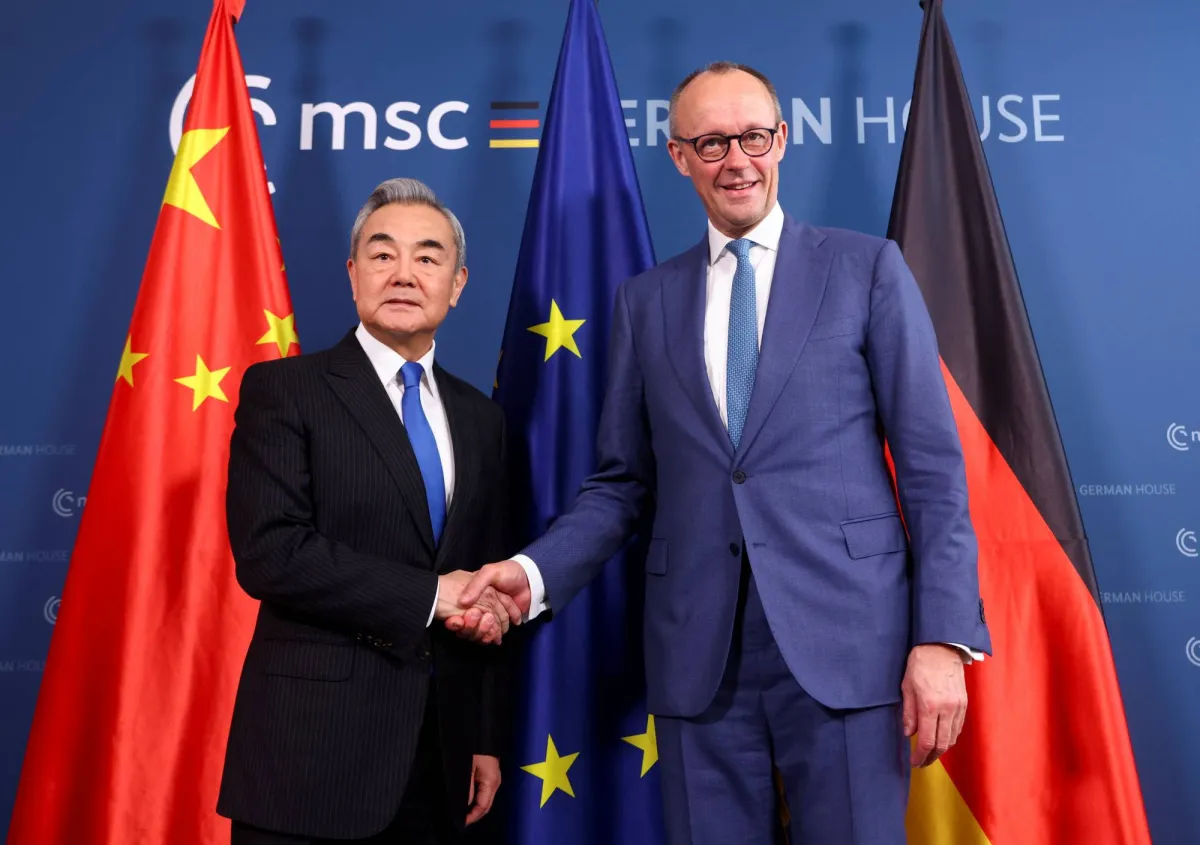
China has surpassed the United States to become Germany’s largest trading partner, with bilateral goods trade reaching €251 billion (around $270 billion) in 2025, according to official data cited ahead of German Chancellor Friedrich Merz’s first visit to Beijing since taking office. The shift marks a significant realignment in Europe’s biggest economy and underscores China’s enduring importance for German exporters.
Merz is scheduled to meet Chinese leaders during his multi‑day trip to the capital. He will be welcomed with full military honours in Beijing by Prime Minister Li Qiang before later holding talks and a formal dinner with President Xi Jinping. German officials say the visit is focused on cementing economic cooperation and addressing strategic issues in the bilateral relationship.
The latest figures reflect a broader trend in global trade patterns, where China continues to consolidate its role as a central hub in global supply chains. German industrial giants and medium‑sized exporters alike rely heavily on Chinese demand for machinery, vehicles and industrial inputs, while Germany imports a wide array of consumer and intermediate goods from China.

For years, the United States and European Union debated whether geopolitical tensions and diversification strategies would reduce dependence on Chinese markets. However, the sheer scale of trade flows, and China’s role in key industrial sectors, has kept it at the centre of Germany’s external economic ties.
Analysts say the shift does not necessarily signal a fundamental departure from transatlantic economic ties, but it does highlight the pragmatic realities faced by Germany’s export‑oriented economy. US exporters remain important partners in areas such as aerospace, services and defence technology, while longstanding political and security cooperation continue to anchor transatlantic relations.
Merz’s visit comes as both Berlin and Beijing seek to balance cooperation with competition. German industry has pressed for clearer frameworks on market access, intellectual property, and investment rules in China, while Beijing is looking to bolster foreign direct investment and high‑tech cooperation amid slowing domestic growth.
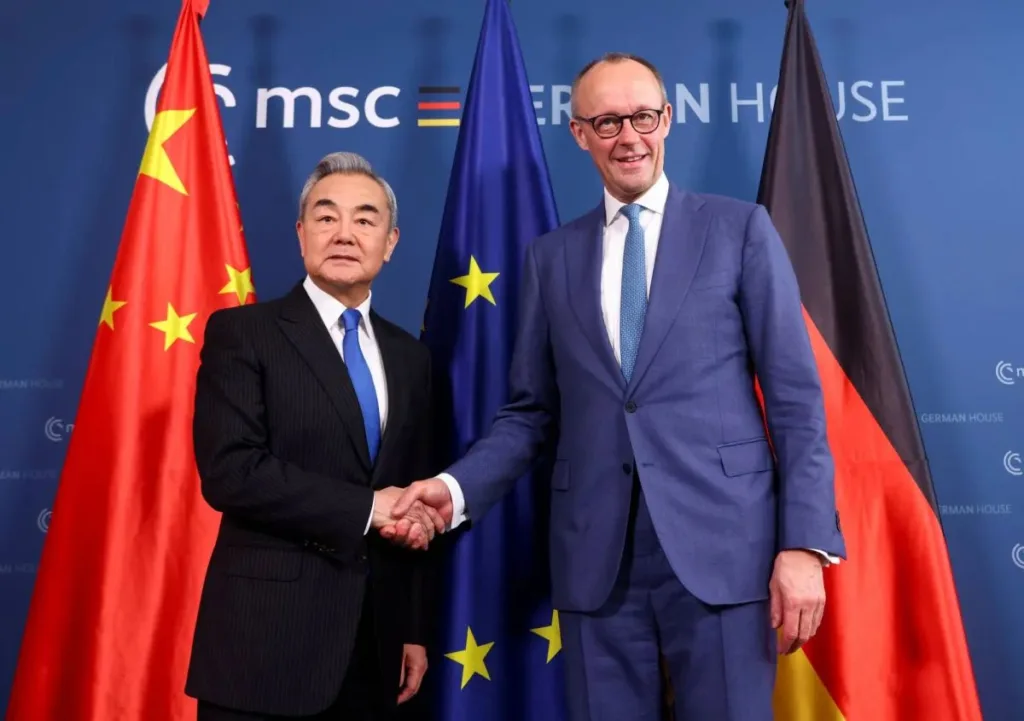
Trade in goods between Germany and China hit €251 billion in 2025, outpacing the total with the United States, according to government figures cited ahead of the visit. The data combined exports and imports in manufactured goods, machinery and automotive components, all sectors where German firms maintain deep commercial ties in China.
During the high‑profile visit, discussions are expected to cover not only trade but also climate cooperation, technology partnerships and global economic governance. Germany and China have cooperated on climate projects, including renewable energy deployment and industrial decarbonisation, even as strategic competition shapes broader geopolitical rivalries.
European Union officials will be watching the talks closely, as Germany’s economic relationship with China often sets the tone for broader EU–China engagement. Brussels has been working to balance critical engagement on trade and investment with concerns about market access barriers, state subsidies and human rights issues.
The overtaking of the US as Germany’s top trading partner does not mean that economic ties with Washington are diminishing in absolute terms. Trade volumes remain substantial, and German companies continue to invest heavily in the United States. But the record figures with China illustrate where commercial flows have grown most rapidly, driven by decades of integration into regional and global value chains.
Merz’s trip also reflects a desire to reset and deepen dialogue after several years of diplomatic and economic headwinds, including geopolitical tensions over Taiwan, supply chain disruptions and sanctions regimes linked to conflicts in Europe and the Middle East.
As global economic powers recalibrate their relationships, Germany’s strong commercial linkages with China will continue to be a defining feature of European trade dynamics. The outcomes of Merz’s discussions, particularly on market access, investment protection and climate cooperation, may shape the direction of Sino‑German ties for years to come.