

Nigeria’s Federal Government has announced that it will review the controversial six-month ban on the export of raw shea nuts after significant feedback and pushback from industry stakeholders concerned about the policy’s implications for producers, exporters, foreign exchange earnings, and wider economic participation. The review, which was confirmed during a federal engagement session in Abuja, marks a potential shift in policy direction following months of debate around the merits and drawbacks of the export suspension imposed in August 2025.
The export ban, initially approved by President Bola Ahmed Tinubu in late August 2025, was introduced with the aim of transforming Nigeria’s shea industry from a primary producer of raw nuts into a global hub for refined shea products. The government’s rationale centered on encouraging local processing, adding value to the national economy, increasing domestic employment, and boosting foreign exchange earnings by capturing a larger share of the global shea market which is valued at more than US$6.5 billion annually.

However, as the six-month mark approached, concerns from various corners of the shea value chain prompted the Ministry of Industry, Trade and Investment to host a stakeholders’ validation session to assess the ban’s impact and gather industry perspectives on its continuation or modification. The session brought together a wide range of participants, including large and small-scale processors, exporters, aggregators, and women involved in rural shea production reflecting the government’s stated commitment to inclusive policymaking.
Policy objectives and implementation challenges
The export ban was framed as a “pro-value addition” policy designed to compel processors within Nigeria to utilise local raw materials, thereby strengthening the domestic processing industry and generating increased revenue from refined products rather than unprocessed nuts. Government projections have suggested that such an initiative could generate up to US$300 million annually in the short term, with even higher potential revenue by 2027 and beyond if value addition is successful.
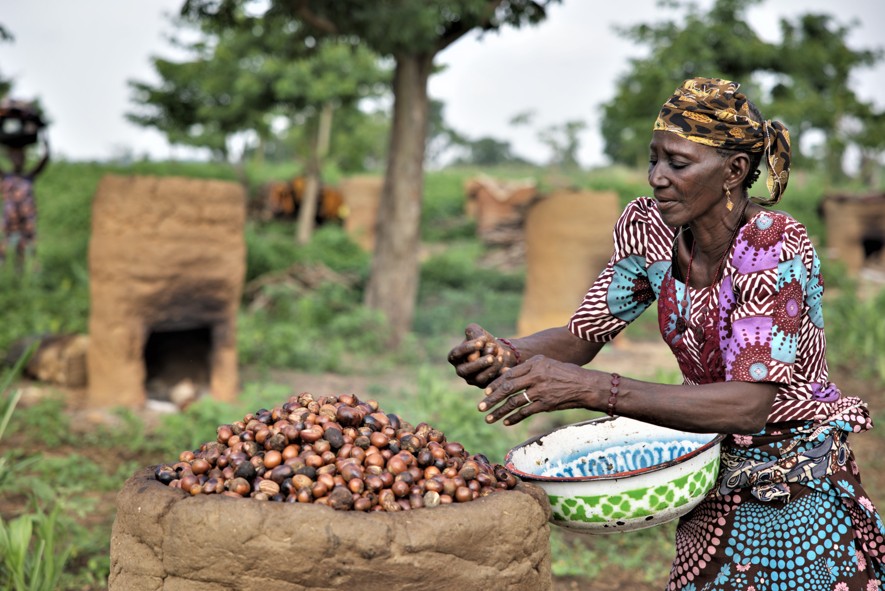
Despite these ambitions, many industry players have expressed concern about the policy’s timing, implementation framework, and tangible benefits. Critics argue that Nigeria currently lacks the requisite processing capacity to absorb the full volume of raw shea nuts produced domestically a situation that could undermine farmers’ incomes, disrupt existing commercial contracts, and lead to lost export opportunities. In some rural areas, shea nut collection and initial processing serve as vital sources of livelihood, particularly for women, who dominate this segment of agricultural production.
These concerns were echoed during the stakeholders’ session, where various participants highlighted how the export ban has affected their businesses, with some calling for clearer policy guidance, better infrastructure support, and more robust processing capacity before such restrictions are enforced. Responding to these grievances, Minister Jumoke Oduwole assured attendees that all submissions would be examined thoroughly and that policy decisions would be grounded in evidence, transparency, and a balanced understanding of market realities.
Government response and next steps
According to the Federal Government, the review will involve an objective briefing to President Tinubu, incorporating insights gleaned from the stakeholder consultations. The government’s assessment will determine whether the ban should be extended, modified, or allowed to lapse as scheduled. Minister Oduwole emphasised that the review process is intended to ensure that decisions reflect the needs and interests of all shea value chain actors, including producers, processors, and exporters, without undermining broader development goals.
The Minister of State for Industry, Trade and Investment, John Enoh, underscored the need for policy consistency to sustain investor confidence and support industrial growth. He noted that tightening policy frameworks should be accompanied by efforts to expand processing capacity and align strategic goals with practical market conditions. Meanwhile, the Minister of Agriculture and Food Security highlighted the importance of evidence-based policymaking and the protection of jobs and rural livelihoods as key considerations in the ongoing review.
Industry implications and broader debate
The review comes amidst broader debate about how best to develop Nigeria’s non-oil export sectors without inadvertently harming the very stakeholders the policies are intended to benefit. While the export ban aimed to shift profits from raw material sales to value-added processing, critics argue that without sufficient processing infrastructure, the policy may instead disadvantage smallholder farmers and rural women, who depend on exports for income and lack alternative market opportunities.

As Nigeria deliberates next steps, the shea industry’s future will likely hinge on balancing industrialisation goals with the realities of market capacity, rural livelihoods, and global trade dynamics. A successful policy will need to foster investment in processing facilities, ensure fair pricing mechanisms for farmers, and build market linkages that enable Nigeria to compete effectively in the refined shea products segment without undermining existing income streams or discouraging stakeholders from participating in the formal economy.
The government’s commitment to reviewing the export ban signals a willingness to adapt and refine policy in response to stakeholder feedback. How this process unfolds over the coming months will be closely watched by industry players, development partners, and investors alike as Nigeria strives to unlock the full economic potential of one of its most promising agricultural exports.