

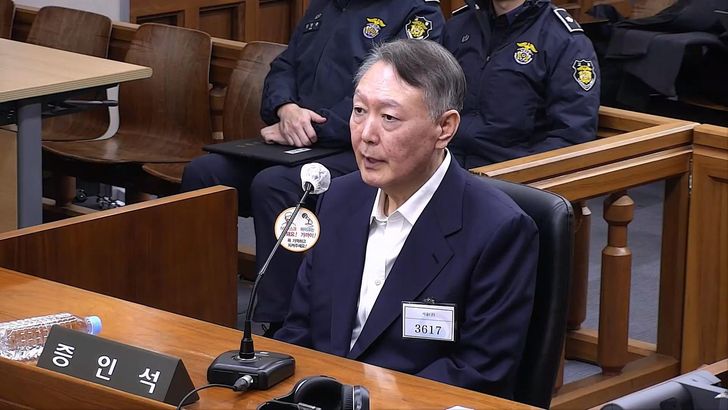
In a momentous judicial ruling that has sent shockwaves through South Korea and resonated globally, former President Yoon Suk-yeol was sentenced to life imprisonment on 19 February 2026 after being found guilty of leading an insurrection tied to his declaration of martial law on 3 December 2024. The verdict, handed down by the Seoul Central District Court, reflects the gravity with which South Korea’s judicial system viewed Yoon’s actions and underscores the country’s robust constitutional framework that limits abuse of executive power.
The ruling represents a dramatic fall from grace for Yoon, 65, a former prosecutor turned politician who was elected president in 2022 with a platform rooted in conservative principles but swiftly became one of the most polarising figures in modern South Korean politics. His path from the pinnacle of power to a life sentence marks an extraordinary chapter in the nation’s democratic evolution and highlights the constitutional safeguards built into South Korea’s political system.
Background to the insurrection charges
The pivotal event leading to Yoon’s conviction was his declaration of martial law on the night of 3 December 2024. Citing intense political paralysis and accusing the opposition controlled National Assembly of obstructing his policy agenda, Yoon issued a televised decree ordering the deployment of military and police forces to surround the legislature and restrict its operations. The decree also appeared to authorise the potential detention of lawmakers and key political figures.

While martial law was short lived, lasting only a few hours before an emergency parliamentary resolution lifted it, the court concluded that Yoon’s actions constituted an unconstitutional attempt to paralyze the National Assembly, subvert the constitutional order, and seize disproportionate power. Lawmakers broke through military barriers to nullify the decree, and the Constitutional Court later upheld the parliament’s impeachment of Yoon, resulting in his removal from office in April 2025.
The declaration of martial law was unprecedented in South Korea’s democratic era, the first since 1980, and evoked memories of authoritarian excess. It triggered nationwide controversy, sustained protests, and a deep political crisis that forced Yoon out of office and into prolonged legal battles.
The court’s verdict
In delivering the ruling, Presiding Judge Ji Gwi-yeon told the court that Yoon’s actions met the legal definition of insurrection because he mobilised security forces with the purpose of impeding the legislature’s functions and exerting control beyond constitutional limits. The judge noted that although no large scale violence occurred, the attempt to undermine democratic institutions inflicted “enormous social costs” and constituted a grave threat to constitutional governance.

Prosecutors had requested the death penalty, arguing that the insurrection severely undermined South Korea’s democratic system and warranted the harshest available punishment. However, the court opted for life imprisonment, considering factors such as the absence of widespread violence, the brevity of the martial law declaration, Yoon’s age, and his prior public service. Under South Korean law, life imprisonment remains the most severe custodial sentence aside from the death penalty, and the nation has observed a de facto moratorium on executions since 1997.
In addition to Yoon’s life term, several senior officials implicated in the martial law episode received substantial prison sentences. Former Defence Minister Kim Yong-hyun was sentenced to 30 years for his role in coordinating the military response. Other defendants, including former senior intelligence and police officials, received prison terms ranging from over a decade to nearly two decades for their involvement in executing Yoon’s martial law directives.

Reactions and national impact
The ruling sparked significant reactions across South Korean society. Outside the Seoul Central District Court, supporters of Yoon staged demonstrations calling for his acquittal and decrying the verdict as politically motivated, while opponents hailed the decision as a triumph of democratic accountability. The intense public response reflected the deep political divisions that have characterised South Korean politics in recent years.
International observers noted the historic nature of the verdict, emphasising that the conviction of a former president for insurrection, particularly one who declared martial law, signals the strength of South Korea’s democratic institutions. Commentators have also highlighted the contrast between this case and the country’s history of authoritarian rule, drawing parallels with past leaders such as Chun Doo hwan and Roh Tae woo, who were similarly convicted for coup related crimes in the late 20th century.

Yoon’s defence team vehemently rejected the verdict as unfair and has signalled its intent to pursue appeals through the higher courts. Yoon himself maintained that his actions were intended to address dysfunction within government and protect the state from what he characterised as obstruction by political opponents, though courts and prosecutors categorically rejected those arguments as without legal merit.
Legacy and wider implications
The life sentence handed down to Yoon is likely to reverberate through South Korea’s political landscape for years to come. It reinforces the principle that even the highest officeholder is subject to the law and underscores the judiciary’s role as a check on executive overreach. Moreover, the case has invigorated public discourse on constitutional limits, civil military relations, and the resilience of democratic governance in South Korea.
As Yoon awaits appeal proceedings, South Korea remains focused on healing political rifts and strengthening democratic norms. The verdict stands as a landmark ruling in the nation’s history, reflecting a legal system determined to uphold the constitutional order and hold powerful figures accountable for actions that threaten the democratic fabric.