


Austrian prosecutors have filed formal terrorism charges against a 21-year-old man for allegedly planning a violent attack on a Taylor Swift Eras Tour concert in Vienna, an incident that led authorities to cancel three scheduled shows in August 2024 in the interest of public safety. The case has revived global scrutiny of the thwarted conspiracy, which Austrian officials say was linked to extremist ideology and early preparations to build a bomb and acquire weapons.
According to statements from Vienna public prosecutors, the unnamed individual identified by Austrian media as Beran A declared allegiance to the Islamic State IS group and disseminated propaganda promoting the extremist organisation through various messaging services. Prosecutors allege that he not only shared and endorsed extremist material but also took concrete steps to plan a large-scale terror attack targeting Swift’s concert audience.
One of the most alarming aspects of the investigation, officials say, was the suspect’s efforts to obtain detailed bomb-making instructions online and to produce a small amount of the highly unstable explosive triacetone triperoxide TATP, a substance frequently used in attacks by IS and other militant groups. In addition to constructing explosive material, prosecutors say he made “several attempts” to purchase weapons illegally outside Austria with the intent to bring them into the country for use in the planned assault.

The plot was disrupted in late July and early August 2024 after intelligence shared by the United States and its international partners alerted Austrian authorities to the threat. Security agencies moved quickly, arresting the suspect and two other teenagers who were allegedly connected to the plan. Immediate concern for public safety prompted the cancellation of Swift’s sold-out shows at Ernst Happel Stadium, where tens of thousands of fans had been due to attend performances from 8–10 August 2024.
Austrian investigators have stated that the suspect’s alleged involvement in terror activity extended beyond the Vienna plot. Prosecutors claim he was also linked to other planned attacks, including alleged schemes targeting locations in Dubai and Istanbul, although these did not progress to active threat stages. The Vienna office has indicated that these additional plans were part of his broader engagement with extremist contacts and activities across Europe and the Middle East.
In the earlier phase of the investigation, a 16-year-old Syrian national connected to the network was convicted in a German court in 2025 for his role in supporting extremist violence, resulting in a suspended 18-month sentence, reflecting participation in facilitating contacts and translating bomb-building instructions from IS sources.
The suspect charged this year has been in custody since his arrest in August 2024. Current proceedings indicate that if convicted on the terrorism and related offences, he could face up to 20 years in prison, as prosecutors pursue a comprehensive case in the district court in Wiener Neustadt, near Vienna.
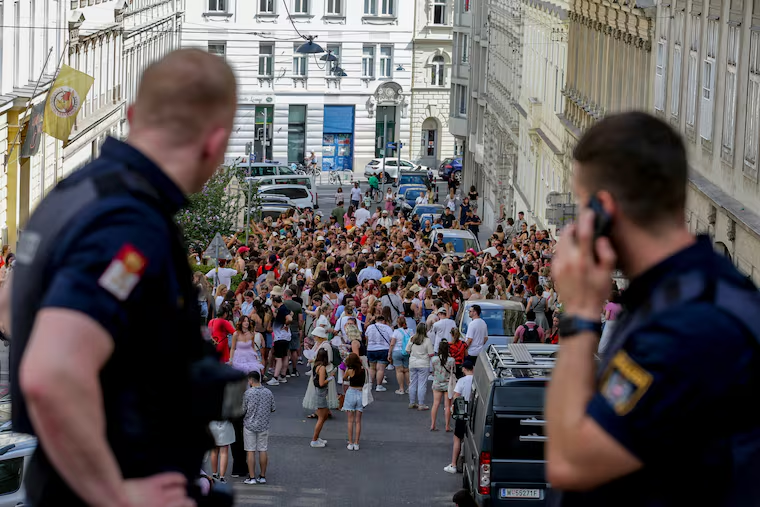
The foiled plot cast a long shadow over what was anticipated to be a celebratory cultural moment for Swift and her fans. The Eras Tour dates in Vienna were among the most highly anticipated in Swift’s European leg, and local organisers were forced to issue refunds and restructure plans following confirmation of the apparent threat. Many fans expressed relief that authorities intervened in time to prevent potential loss of life, while others voiced disappointment at missing the performances.
In statements following the cancellations in 2024, Swift herself described the decision as “devastating” but said she was profoundly grateful that safety concerns were addressed before more events could unfold, emphasising that “we were grieving concerts and not lives.” Her remarks highlighted both the emotional impact on her and her audience and the broader reality that security concerns have become an unavoidable consideration in large-scale entertainment events.

Security experts note that the case underscores how international cooperation between intelligence agencies and law enforcement remains critical in detecting and disrupting sophisticated terror plots before they reach fruition. The Austrian prosecutor’s office specifically acknowledged that shared intelligence was instrumental in uncovering potential threats, preventing what could have been catastrophic outcomes at one of Europe’s biggest music events.
As the trial unfolds, it will likely prompt further discussion about concert and event security, radicalisation pathways in Europe, and the mechanisms by which extremist individuals are identified and stopped before they can act on violent intentions. The Vienna case involving a globally recognised pop culture figure and one of the world’s biggest touring acts illustrates how complex and serious modern terror investigations can be, and how vigilance from security services continues to play a central role in safeguarding public gatherings.