

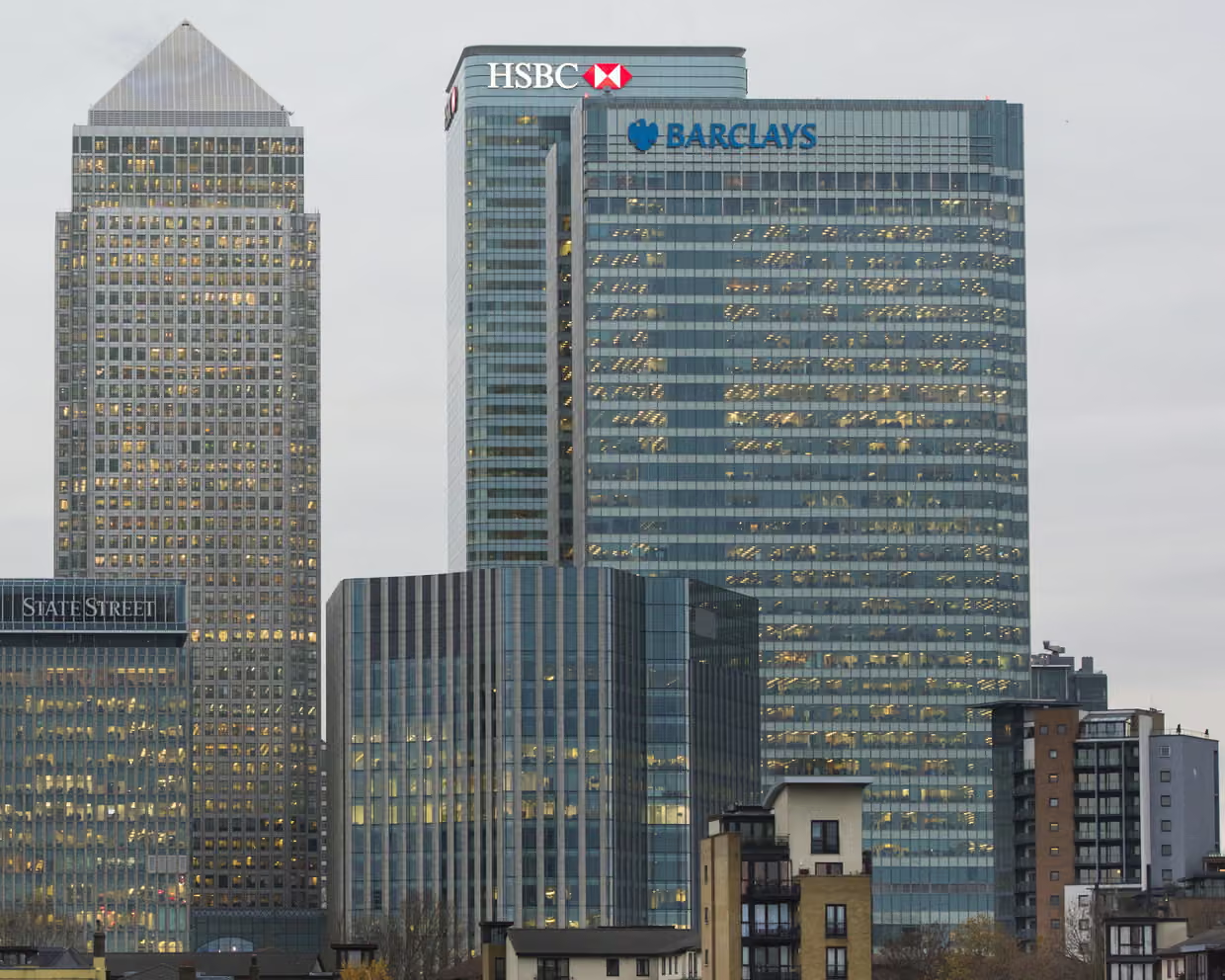
Senior leaders from major British banks are preparing to meet this week to launch plans for a homegrown alternative to Visa and Mastercard, a bold move aimed at reducing the United Kingdom’s heavy reliance on US-controlled payment infrastructure. The initiative reflects rising concern among banking executives about the impact of geopolitical uncertainties on critical financial systems and seeks to build long-term resilience into the UK’s payment network.
The proposed new payments company, informally referred to by city insiders as DeliveryCo, will be developed with backing from key players across the UK financial sector. The group includes Barclays, Santander UK, NatWest, Lloyds Banking Group and Nationwide Building Society, along with other industry stakeholders. The first formal meeting of funders is scheduled for Thursday, where discussions will centre on planning, financing and early governance structures for the venture.
Barclays UK chief executive Vim Maru has been appointed to chair the initial meeting and provide strategic leadership for the project. According to people familiar with the talks, Maru and his peers see the plan as a proactive measure to safeguard the UK economy against the risk of foreign-controlled networks being disrupted by political or economic tensions.
At present, around 95 per cent of card transactions within the UK are processed through Visa and Mastercard systems, according to the latest data from the country’s Payment Systems Regulator. That dominance reflects decades of market consolidation in which the two American payment giants established themselves as the primary infrastructure for debit and credit card payments across retail, online, and contactless channels.

The idea of a domestic payments network has been discussed intermittently within the UK banking community for several years, but momentum around the concept has grown as geopolitical tensions have intensified. In particular, recent statements from US political leaders and concerns over the potential for American authorities to disrupt access to US-owned payment networks in crisis scenarios have amplified those discussions. Some UK executives privately say scenarios once considered theoretical are now being treated as practical risks to financial stability.
While much about DeliveryCo remains at an early stage, key elements appear to be taking shape. The plan envisions a government-supported but privately funded payment infrastructure designed to ensure that electronic card payments in the UK can continue even in the event of systemic disruption to global card network operations. The Bank of England is reportedly involved in advising on technical design and long-term strategy, although it is not expected to take on direct operational responsibility.
Officials involved in the planning have emphasised that the initiative is not intended to antagonise Visa and Mastercard. Both companies have been invited to participate in discussions and are reportedly supportive of broader resilience efforts while reaffirming their commitment to the UK market. Representatives from both firms have been quoted as welcoming constructive collaboration on payment innovation and competition.

Market analysts observing the development have pointed out that creating a payment network of comparable scale to Visa or Mastercard will be complex and costly. It requires extensive technological infrastructure, robust security frameworks, regulatory approvals and interoperability arrangements with merchants, banks and international partners. Despite these challenges, proponents of the plan believe that a domestic system could initially operate in parallel with existing global networks, gradually building acceptance and usage over time.
In addition to geopolitical concerns, the move also resonates with broader debates about competition and market concentration in the UK payments industry. Regulators and industry groups have previously flagged the lack of effective competition in core payment services, noting that the near-duopoly of Visa and Mastercard places pressure on merchants and limits consumer choice. The Payment Systems Regulator has explored potential reforms to encourage more competitive infrastructure, including greater transparency on fees and access terms.
Critics of the new initiative warn that domestic alternatives must be carefully integrated with international payment systems to avoid fragmentation, reduced cross-border acceptance, and operational inefficiencies. They argue that international card networks benefit from deep global adoption and extensive partner ecosystems that will be difficult to replicate. Supporters counter that a sovereign system could be designed to interoperate seamlessly with global schemes while giving the UK a fallback mechanism in an era of unpredictable geopolitics.
As the plans progress, stakeholders in the UK fintech and banking community are expected to weigh in on the project’s design, commercial viability, and competitive implications. Additional meetings involving industry leaders, technical experts and policymakers are likely in the coming months, with ambitions to have core infrastructure operational by the end of the decade.
The drive toward a domestic payments system marks a significant shift in the UK financial sector’s approach to strategic risk and sovereign capability. Whether DeliveryCo will succeed in establishing a viable alternative to Visa and Mastercard remains to be seen, but the initiative reflects an evolving mindset among British banks about the need to future-proof critical economic infrastructure amid an uncertain global landscape.