


The Automobile Dealers Union of Ghana (ADUG) has announced an average 15 percent reduction in vehicle prices nationwide, citing recent exchange rate stability and the government’s decision to abolish the COVID-19 levy as key drivers behind the move.
In a statement issued in Accra on February 15, 2026, the Union said the price adjustment reflects a commitment it made earlier to Ghanaians: that any meaningful stabilization of the Ghana cedi against the US dollar would be passed on to consumers rather than absorbed as excess margins.
According to ADUG, vehicle prices over the past months were heavily influenced by exchange rate volatility, elevated import duties, shipping costs and lingering global supply chain pressures. Dealers had repeatedly explained that fluctuations in the cedi significantly increased the cost of importing vehicles, particularly brand-new and hybrid models priced in foreign currency.
With the recent relative stability of the cedi and improved predictability in the foreign exchange environment, the Union says members have now reviewed prices downward across a broad category of vehicles. These include brand-new vehicles, hybrid and electric models, as well as home-used vehicles that make up a significant portion of Ghana’s auto market.

The abolition of the COVID-19 levy has also contributed to easing cost burdens within the import value chain. Industry players note that while taxes and port-related charges remain substantial components of final vehicle pricing, the removal of the levy has created room for moderate downward adjustments.
ADUG described the decision as one taken in “good faith and national responsibility,” emphasizing that organized automobile dealers are committed to fair pricing practices and long-term market stability. The Union also expressed appreciation to consumers for their patience during a period marked by macroeconomic uncertainty.
The announcement could have wider implications for Ghana’s automotive ecosystem. Lower prices may stimulate demand in a market that has faced slowed purchasing power due to inflation and tight credit conditions. Analysts say sustained currency stability will be crucial if the reductions are to hold over time.
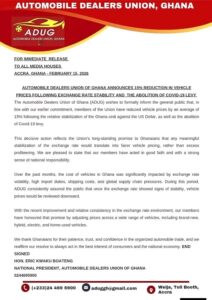
The statement was signed by Hon. Eric Kwaku Boateng, National President of ADUG, who reaffirmed the Union’s resolve to act in the best interest of consumers and the national economy.
Industry observers will now be watching whether competing importers outside the Union mirror the reductions, and whether continued macroeconomic stability allows for further adjustments in the months ahead.