

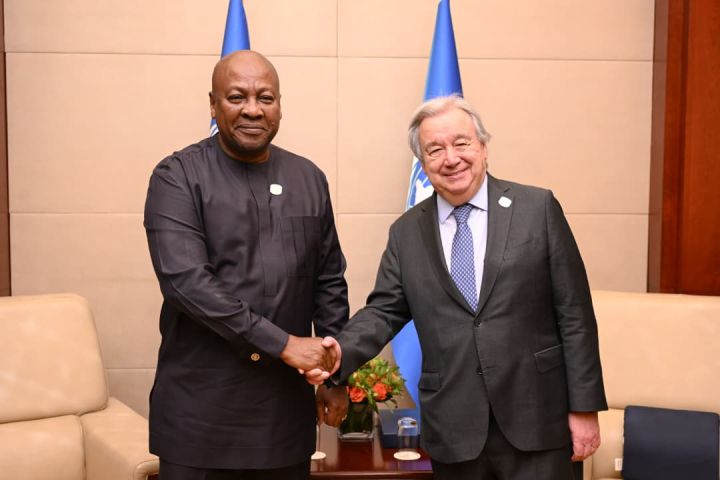
Ghana’s President John Dramani Mahama held a high level meeting with United Nations Secretary General António Guterres on 13 February 2026 in Addis Ababa, Ethiopia, where discussions focused on pressing issues affecting Africa, including regional security, democratic governance, constitutional reform, and strengthening cooperation between the United Nations and African states. The encounter highlighted shared concerns over peace and stability on the continent as well as Ghana’s role in promoting democratic values and security cooperation in the region.
The discussions took place on the sidelines of a broader international engagement, reflecting the importance of multilateral dialogue in addressing complex challenges on the continent. Mahama’s meeting with the UN Secretary General reaffirmed Ghana’s ongoing diplomatic engagement with global institutions to tackle governance, security, and economic issues affecting African nations.
Focus on security, democracy and regional cooperation
President Mahama and Secretary General Guterres examined Ghana’s political and economic trajectory, with particular emphasis on sustaining democratic stability and consolidating constitutional reforms. Ghana has long been celebrated as one of West Africa’s most stable democracies, and Mahama used the meeting to underscore the importance of upholding democratic norms and supporting institutions that protect citizens’ rights and freedoms.
The conversation also addressed evolving security challenges across Africa, including cross border threats and the need for enhanced regional cooperation. While global attention has often centred on the Sahel and other conflict affected regions, African leaders have increasingly advocated for comprehensive strategies that combine political solutions with strengthened security architecture. Mahama and Guterres underscored the importance of collaborative approaches in tackling terrorism, violent extremism, and organised crime that transcend national boundaries.
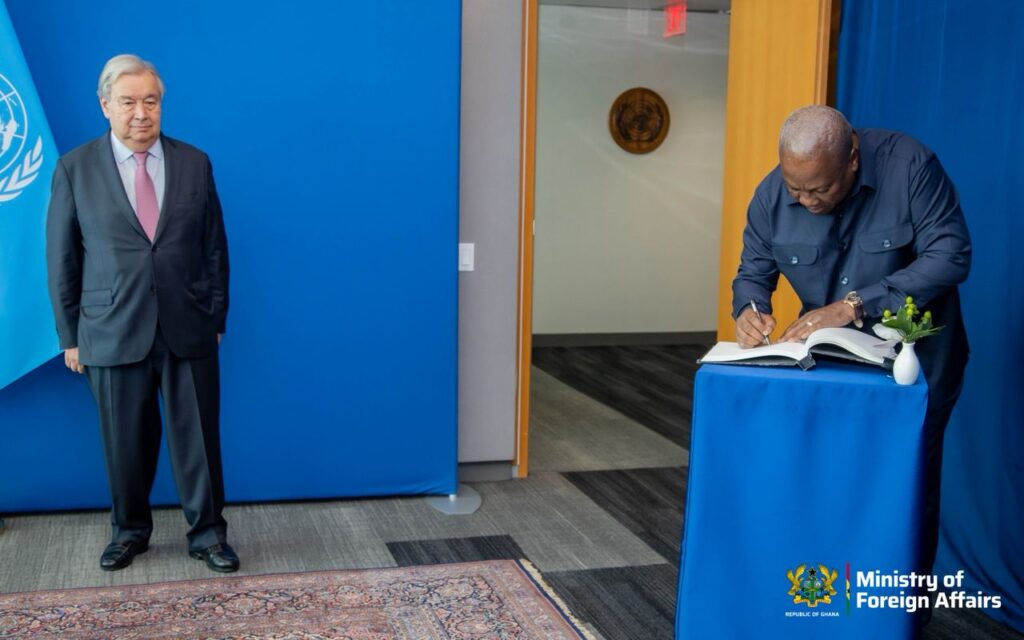
Ghana’s leadership in regional diplomacy has been evident in initiatives such as the recent strengthening of security cooperation frameworks among West African states, aimed at addressing shared threats and fostering coordinated responses. These efforts align with broader continental strategies to promote peace and stability, including frameworks for enhanced cooperation in intelligence, border management, and capacity building for security forces.
In their dialogue, Mahama and Guterres also stressed the need to support peacebuilding and development efforts that create conditions for long term stability. The United Nations reaffirmed its commitment to assisting Ghana and African neighbours in areas of peacebuilding, development, and institutional strengthening, recognising the interconnected nature of security, democracy, and socio economic progress.
Economic recovery and broader global engagement
The meeting between Mahama and Guterres came at a time when Ghana has been pursuing economic reforms designed to stabilise the economy and foster inclusive growth. In international forums such as the United Nations General Assembly, President Mahama has highlighted Ghana’s economic recovery efforts, noting significant progress in reducing inflation and strengthening investor confidence. These achievements underscore the link between economic stability and democratic resilience in Africa.
Mahama also used past engagements at the United Nations to advocate for reforms in global governance structures. In speeches to world leaders, he has called for a recalibration of institutions such as the UN Security Council to better reflect modern geopolitical realities, including Africa’s demographic weight and its contributions to peacekeeping and global affairs.
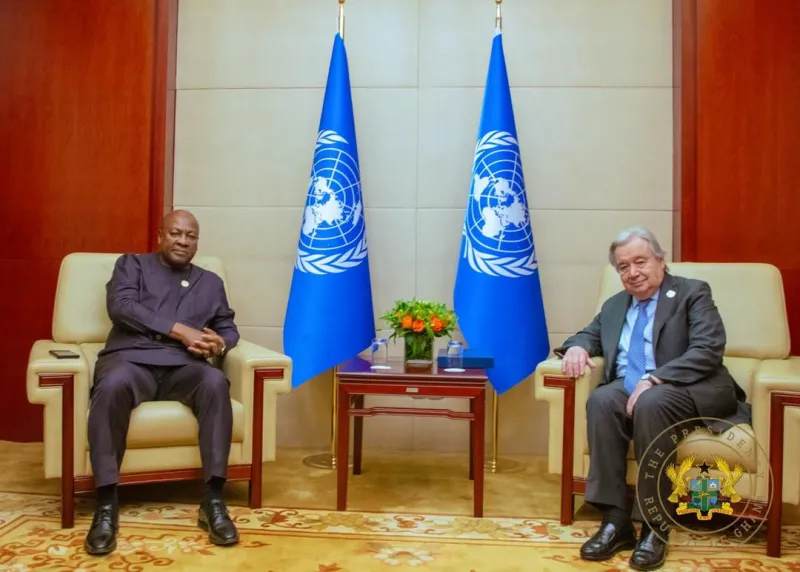
The meeting in Addis Ababa reinforced this broader agenda of constructive engagement, emphasising that sustainable peace and democratic governance depend on strong institutions, effective regional cooperation, and partnerships with global bodies such as the United Nations. Both leaders agreed that continued collaboration would be essential in tackling shared challenges while advancing development and security goals across Africa.
In summary, President Mahama’s talks with UN Secretary General Guterres underscored the importance of multilateral cooperation in addressing Africa’s security and democratic governance challenges. By aligning national reform agendas with international support mechanisms, the discussions highlighted how diplomatic engagement and regional coordination can contribute to a safer, more stable, and more democratic Africa.