

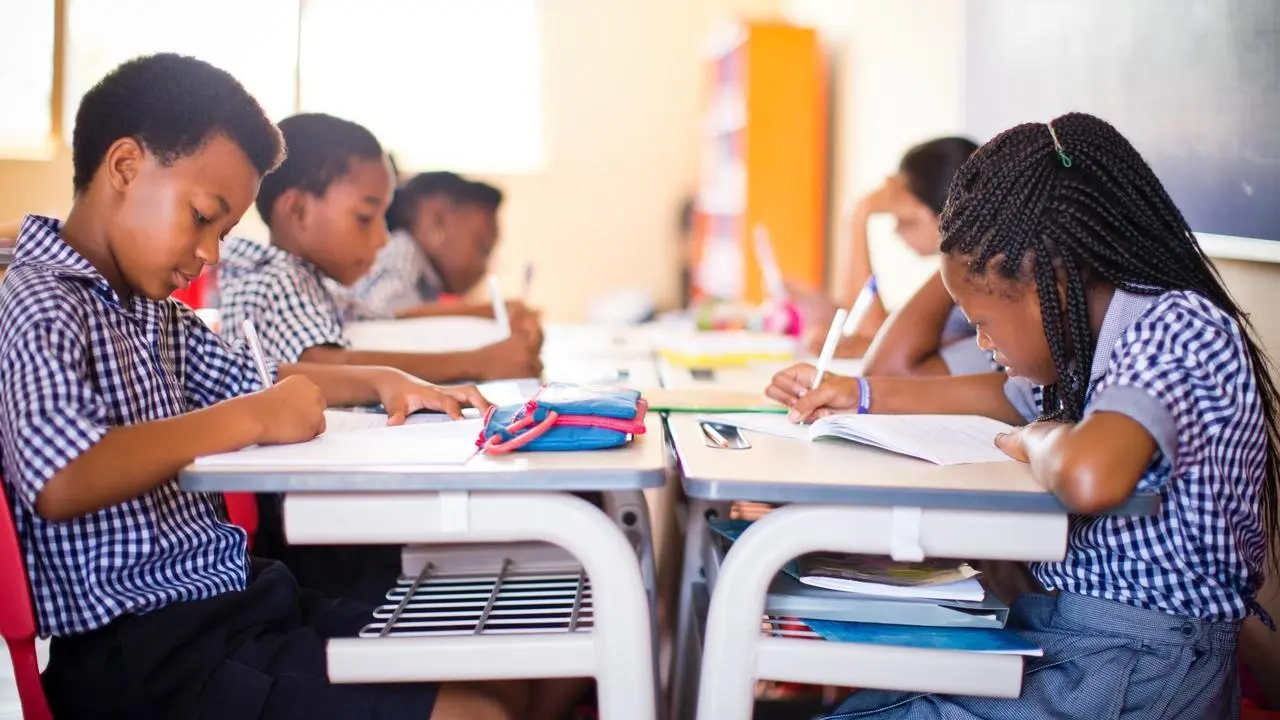
Ghana has long been regarded as a leading education hub in West Africa and is often celebrated for its historical role as one of the earliest British colonies in the region and the first to gain independence. English, inherited from colonial rule, became the country’s official language and has been central to education, governance, commerce and international communication. Despite this legacy and the pride many Ghanaians take in their perceived command of the English language, recent assessments show that the nation’s status as a top English-speaking country in Africa is under strain.
In the 2025 English Proficiency Index, Ghana ranked sixth on the African continent and 36th in the world out of 123 countries, achieving what has been described as its best performance to date with a score of 540. While this places Ghana in the moderate proficiency category globally, it trails several rival countries including Nigeria, Zambia, Kenya, Zimbabwe and South Africa. Nigeria, for example, landed in a higher proficiency bracket at 29th place globally. The ranking highlights a mixed picture: Ghanaian speakers may be competent in English, yet the country has not yet broken into the top tier of English proficiency on the continent.

Proficiency in English has far-reaching implications for economic growth, innovation and national competitiveness. English is not only a tool for communication within Ghana’s multilingual society but also a key driver for international trade, foreign investment and access to knowledge. A workforce capable of effective English communication is generally seen as more flexible, innovative and outward-looking, qualities that are essential for economic progress in a globalised world.
A closer look at the EPI data reveals specific strengths and weaknesses in Ghana’s language skills. Reading emerged as the strongest component of English proficiency in the country, reflecting the influence of Ghana’s exam-oriented education system where emphasis is placed on comprehension and interpretation of texts. Students often perform well in reading tasks that involve understanding written materials and answering structured questions.
In contrast, speaking is Ghana’s most significant weakness. Many learners can understand written English but struggle to use the language confidently in real-time conversation. This gap between receptive and productive language skills underscores a persistent limitation in oral fluency and pronunciation. Limited opportunities for learners to practise speaking in educational settings and in everyday life contribute to this imbalance. Urban areas such as Accra tend to perform above the national average due to more frequent interactions in English and greater resources, while less urbanised regions lag behind.
At the higher education level, Ghana’s universities continue to draw students from across West Africa and beyond, reinforcing the country’s reputation for quality tertiary education. Institutions like the University of Ghana host significant numbers of international students, reflecting confidence in the academic environment and the role of English as the medium of instruction and scholarship.
Despite these strengths, foundational literacy and numeracy issues persist at the basic education level, particularly in rural and underserved communities. Global data suggest that a high proportion of children in low- and middle-income countries, including Ghana, struggle to read and understand simple texts. Experts argue that early literacy challenges can have lasting impacts that extend into higher levels of education and professional life.

The national conversation around English proficiency has been further complicated by recent shifts in language policy. In late 2025, the Minister for Education announced a directive to expand the use of mother tongue languages as the primary medium of instruction in public basic schools, extending this practice through Grade Six. This shift revisits long-standing debates about the role of local languages in early education and how best to support overall language development.
Under existing policy frameworks, learners are typically taught in local dialects during the earliest grades before transitioning to English as the medium of instruction from Grade Four onwards. The new directive seeks to prolong the period in which mother tongue languages dominate classroom instruction, based on arguments that early literacy in a child’s first language can provide a stronger foundation for later English learning. However, critics caution that without careful planning, adequate resources and sufficient teacher capacity, the extension of mother tongue instruction risks widening the existing gap in English speaking skills.
Implementing a language policy that effectively balances local languages and English is inherently complex. A significant challenge lies in equipping teachers with the training and resources necessary to deliver high-quality instruction in multiple languages. In many schools, particularly in rural areas, teacher shortages and high pupil-teacher ratios complicate efforts to deliver consistent education that improves fluency in both local languages and English.
Critics also point out that classrooms with diverse linguistic backgrounds may struggle when a language of instruction shifts, especially if learners do not share the same mother tongue as their teachers. In such situations, confusion and reduced comprehension can hinder learning outcomes.
As Ghana navigates this critical juncture in language development, the real challenge remains how to manage the transition effectively while building lasting English fluency. Ensuring that learners are both literate in their mother tongue and proficient in English requires coordinated policy reform, investment in teacher training, access to relevant learning materials and a clear strategy for implementation and assessment.
Ghana’s experience in the 2025 English Proficiency Index reflects progress but also highlights areas needing urgent attention. Balancing language policy, educational outcomes and global competitiveness will require significant effort and collaboration across government, education institutions, communities and civil society if the nation hopes to move toward higher language proficiency and broader opportunities for its citizens.