

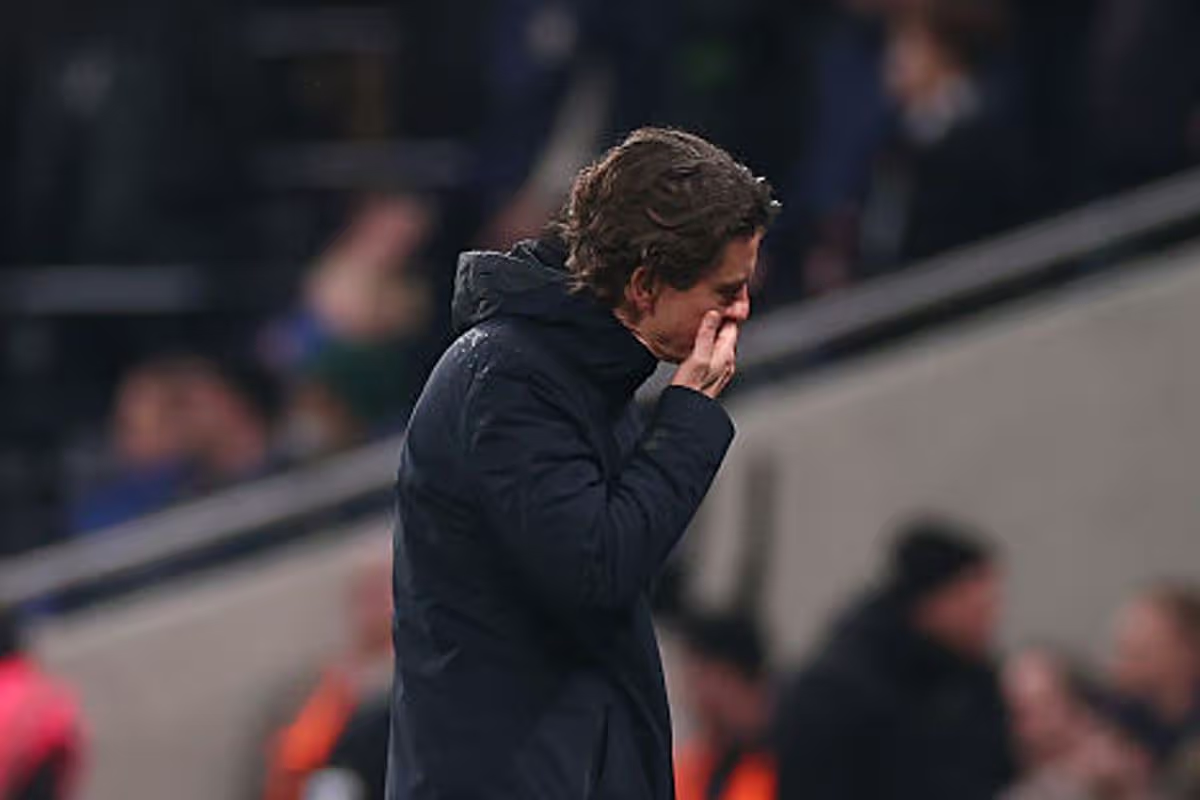
Tottenham Hotspur have sacked head coach Thomas Frank after less than eight months in charge, bringing an abrupt end to a turbulent tenure that failed to deliver the results and spirit expected at one of England’s traditionally elite clubs. The decision marks another managerial departure in Tottenham’s recent history, reflecting the intense pressure and high stakes of Premier League football.
Frank, 52, who joined Spurs in June 2025 on a three‑year deal to succeed Ange Postecoglou, was relieved of his duties following a 2–1 home defeat to Newcastle United that left Tottenham sitting 16th in the Premier League, just five points above the relegation zone. The club had endured a winless run in their last eight league games, with only two victories in 17 matches a dismal run that convinced the board that a change in leadership was necessary.
What led to Frank’s dismissal
Tottenham’s struggles this season were stark. Despite a promising start in the UEFA Champions League, where the team qualified for the knockout stages, domestic form collapsed. Against Newcastle, fans made their frustrations clear, booing the team and chanting for Frank’s dismissal, while also chanting the name of former manager Mauricio Pochettino a sign of nostalgia and dissatisfaction with the current direction.
Overall, Frank leaves with just 13 wins in 38 games in charge equating to a win percentage widely reported as one of the lowest in club history for a manager with more than ten games. The lack of attacking creativity, tactical coherence, and consistent results, especially against lower‑ranked opponents, eroded confidence inside and outside the club.
Was the decision right?
For many supporters and pundits, the decision to relieve Frank of his duties was inevitable. Jamie O’Hara, former Tottenham midfielder, publicly stated that Frank had to go amid fears of a relegation battle, criticising not just results but the team’s lack of belief, strategy, and momentum on the pitch.
Critics argued that the team’s attacking output was stagnant and predictable, with Frank unable to extract consistent performances from high-profile signings and forward talents. Spurs often lacked dynamism in buildup play, and the team’s home form became particularly disappointing, compounding frustration among the fanbase.
However, there are voices suggesting the situation was more complicated. Some analysts highlighted that Tottenham’s injury crisis with key players sidelined throughout the season severely hampered Frank’s ability to field his best team and build continuity. Others noted that the squad imbalance and recent departure of influential figures had contributed to a fragile dressing room.
Frank’s confidence and board support
Interestingly, just days before his dismissal, Frank publicly declared he was confident of keeping his job, insisting he was “1,000 percent sure” he could turn the situation around and fix the team’s form. He urged unity, emphasising that responsibility for results extended beyond him to players, staff, and club leadership alike.

The fact that Frank expressed such confidence raises questions about whether the Tottenham board had fully backed him throughout the crisis. While the club’s hierarchy initially resisted calls for his removal citing the transitional nature of the season and extenuating circumstances such as injuries and fixture congestion mounting pressure from supporters and continued poor results eventually forced their hand.
Fan reactions and public sentiment
The reaction from fans following the news was immediate and intense. Many supporters celebrated the decision, believing it was overdue and necessary to revive Tottenham’s faltering season. Fans pointed to missed opportunities, poor performances at home, and an absence of tactical identity as reasons why Frank’s style did not resonate with supporters.
Others expressed nostalgia for past managerial eras, with chants recalling Pochettino a manager widely admired for tactical balance and player development during his Spurs tenure surfacing both during recent matches and in discussions online. Some fans see his name as synonymous with stability and identity, contrasting sharply with the disillusionment surrounding the current campaign.
Opinions were mixed. A segment of the fanbase acknowledged the contextual challenges Frank faced, including a long injury list and a squad still adjusting from previous regimes. These supporters argued that perhaps more time or greater strategic cohesion might have yielded different results. Others felt that in modern Premier League football, patience has limits — especially when the spectre of relegation becomes real.
The road ahead for Tottenham
With Frank’s departure, Tottenham now face the challenge of appointing their sixth permanent manager in seven years, underlining an ongoing pattern of managerial instability. Interim solutions are likely while the club considers longer-term appointments. Names already circulating include Roberto De Zerbi and in fan discussions Mauricio Pochettino for a potential return.
Whether this managerial change will spark a turnaround remains uncertain, but for many fans and observers, the move signals Tottenham’s urgency to arrest their decline and push back into competitive positions in domestic and European football. The club’s board, led by chief executive Vinai Venkatesham, is expected to address the media and outline the plan ahead as Spurs prepare for upcoming fixtures that could define their season.
In a sport where results are king and momentum is vital, the sacking of Thomas Frank marks both an end and a beginning: a departure from unmet expectations and a search for fresh leadership capable of restoring Tottenham’s aspirations.