

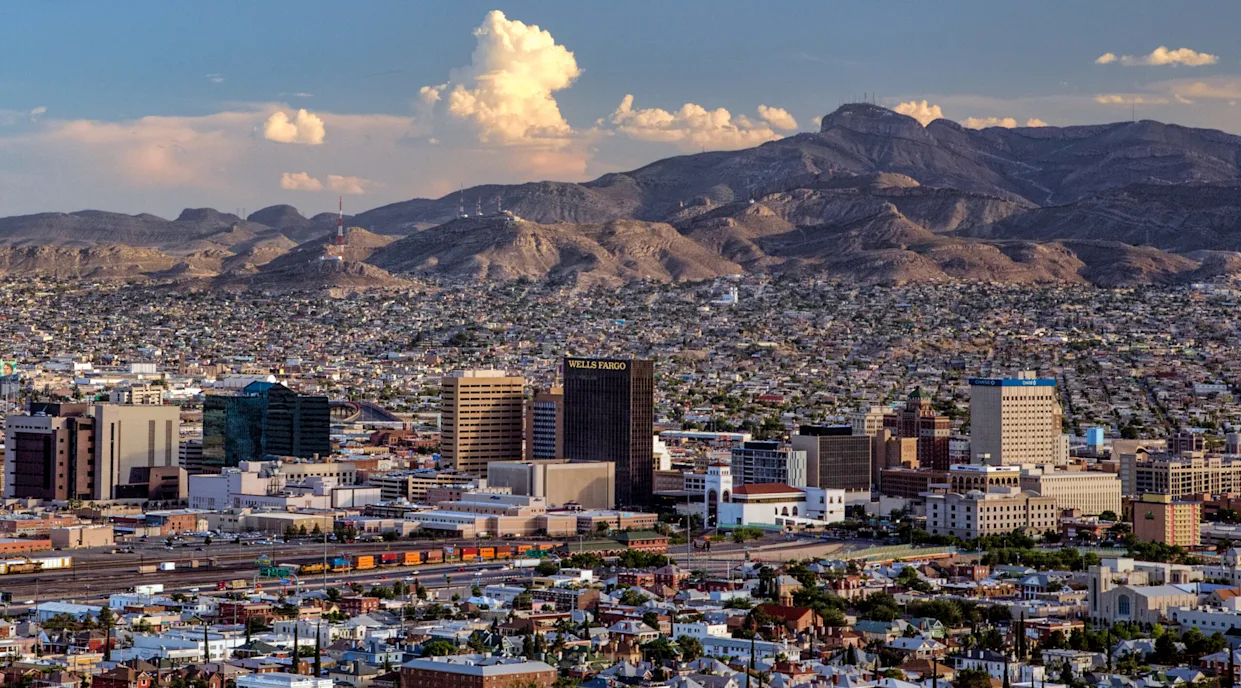
In an extraordinary and highly disruptive action, the U.S. Federal Aviation Administration (FAA) has grounded all flights at El Paso International Airport in Texas for 10 days amid “special security reasons” tied to concerns about cross-border vulnerabilities. The move, effective from late on February 10, 2026, has completely halted commercial, cargo, and general aviation operations at one of the nation’s major border city air hubs, leaving travellers, airlines, and local authorities scrambling for answers amid limited official information.
The decision to close the airspace labelled a Temporary Flight Restriction (TFR) by the FAA is exceptionally rare in the United States, particularly for a period as long as 10 days. The restriction covers roughly a 10-nautical-mile radius up to 18,000 feet over El Paso and extends into neighbouring Santa Teresa, New Mexico, though it explicitly excludes Mexican airspace. The FAA’s public guidance so far cites only “special security reasons” without offering further detail on the exact nature of the threat or vulnerability prompting the closure.
Scope and immediate impact
The grounding affects every flight to and from El Paso International Airport, a facility that handles millions of passengers annually and serves as a key link between west Texas, southern New Mexico, and beyond. With flights suspended until at least February 20, 2026, the FAA’s order has disrupted travel plans for countless passengers and forced airlines to cancel or reroute flights originally scheduled through the border hub.

Airport authorities confirmed that all scheduled operations commercial jets, air cargo movements, and privately chartered flights have been suspended. Travelers have been urged to contact their airlines for updates and have faced uncertainty over rebookings and alternate itinerary planning. The abrupt nature of the restriction, with the FAA issuing the order on short notice, has compounded confusion for both airport staff and passengers.
El Paso, a city of nearly 700,000 residents that forms part of a broader metropolitan area when including neighbouring Ciudad Juárez in Mexico, is acutely affected by the grounding. The closure not only disrupts travel but also interrupts cargo movements tied to regional trade, particularly given the city’s proximity to a busy international border crossing.
Security concerns and speculation
The FAA’s unusual action is rooted in security concerns, according to the agency’s public notice, but officials have stopped short of disclosing specific threats. The language in the TFR explicitly frames the El Paso airspace as national defence territory, warning pilots that failure to comply could lead to interception, detention, or even the use of force if an aircraft is considered a threat.
The lack of publicly available detail has sparked widespread speculation among aviation experts, local officials, and residents. Some early reports suggest that the closure may be tied to cross-border security dynamics, including heightened scrutiny of drone or unmanned aerial threats in the region. Analysts familiar with national defence airspace restrictions noted that language invoking protection against aircraft posing “imminent security threats” is rarely used outside of military operations or on the heels of credible intelligence.
Although the FAA has remained tight-lipped about specifics, other sources linked the move to enhanced counter-drone efforts and broader regional security concerns along the U.S.–Mexico border. These include ongoing law enforcement and possible military engagements targeting illicit aerial activity tied to criminal organisations. Reports also flag that the Pentagon has deployed counter-drone technology along the border, which could intersect with aviation risk assessments in civilian airspace.
Response from officials and local leaders
The sudden airspace closure has drawn criticism from local politicians and leaders, who say they were not adequately warned or provided with substantive explanations for the long grounding period. Congresswoman Veronica Escobar, whose district includes El Paso, publicly questioned the decision’s transparency and timing, noting that there has been no known immediate threat reported to the community. For many residents, the lack of clear communication has only deepened frustration and concern.
Local officials have been forced into reactive mode, fielding inquiries from residents, workers, and businesses affected by the disruption. Many of those stranded at the airport or planning travel through El Paso expressed bewilderment at not receiving more concrete information. Some travellers have been redirected to other major hubs such as Dallas, Phoenix, Denver or Houston as airlines attempt to reconfigure schedules and crew allocations.
Broader aviation and border implications
El Paso International Airport, which normally acts as a vital connector in the regional air network, now stands essentially off-limits for a full business week and more. With the Northern Mexico border operating as a busy corridor for commerce and commute including thousands of vehicles and goods crossing daily the airport’s shutdown underscores the tension between national security priorities and everyday cross-border interaction.
Aviation analysts note that while temporary flight restrictions are not unprecedented commonly used during presidential travel, major sporting events or natural disasters they are extremely rare for extended periods without detailed public explanation. Aimed at safeguarding national airspace, such measures typically involve coordination between the FAA, Department of Homeland Security, Department of Defense, and local enforcement agencies.
Economic and social disruption
Aside from passenger inconveniences, the grounding carries broader economic implications. Regional tourism, business travel, and air freight operations have ground to a halt, potentially costing millions in lost revenue over the 10-day period. Cargo flights, which support local supply chains and cross-border trade routes, are similarly affected, meaning manufacturers, retailers, and logistics firms may face delays and increased costs.
Airlines and travel operators are advising travellers to stay in close contact with carriers for updates on refunds, rebooking options, and travel advisories. Rental car agencies and local transportation services are also adjusting to the sudden shift in demand as passengers seek alternative ways to reach distant hubs like El Paso’s neighbouring airports.
Uncertainty surrounding the duration and aftermath
As the FAA’s 10-day restriction remains in effect through mid-February, uncertainty continues to surround what conditions must be met before flights can safely resume. Aviation officials, security agencies, and border authorities are closely monitoring developments, aware that the El Paso closure may reflect broader national security considerations beyond routine air traffic management.
For now, El Paso International Airport remains grounded a stark reminder of the complex intersection between civilian aviation, border security, and national defence in one of America’s most strategically sensitive regions.