

Fresh frontline enforcement: Arrests and crackdowns
One of the most recent developments involves intensified enforcement actions by national authorities against illegal mining operations.
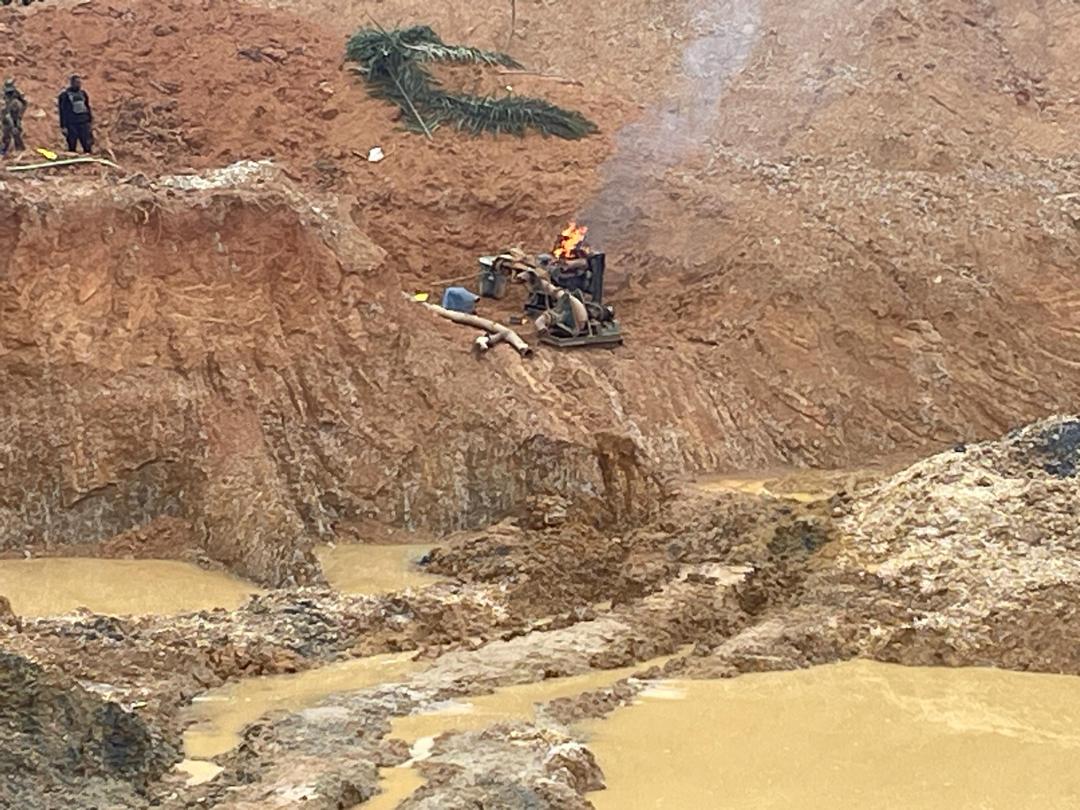
In January 2026, the Forestry Commission’s Aowin Division carried out a targeted operation in the Boin Tano Forest Reserve, leading to the arrest of 13 individuals suspected of engaging in galamsey activities. During the operation, illegal mining camps were dismantled, and excavators, generators, and other equipment were seized and destroyed to prevent continued illegal operations. Authorities described the action as part of a broader strategy to reclaim forest lands and protect ecologically sensitive zones from further degradation.
The operation reflects renewed enforcement pressure amid growing public concern that illegal mining continues to spread into protected forest reserves despite earlier crackdowns.
Public voices and social media reactions
The galamsey issue has once again gained strong traction on Twitter (X), with activists, artists, and ordinary citizens expressing anger, frustration, and urgency over the situation.
A major trigger for the online conversation was a viral freestyle performance by musician Wanlov De Kubolor, in which he openly criticised national leadership over the perceived failure to curb galamsey. In the widely shared clip, the artist linked water shortages in parts of Accra to river pollution caused by illegal mining and called for accountability and long-term solutions, particularly job creation for young people.
The performance generated intense online engagement, with many users praising the boldness of the message, while others debated whether musicians and creatives should take such strong political positions. Regardless, the clip significantly amplified the Stop Galamsey conversation across social media platforms.
Political and institutional responses
Political reactions have been swift and diverse, reflecting the sensitivity of the issue.
Several political figures, particularly within the National Democratic Congress (NDC), have openly expressed concern about the worsening state of the environment. Some MPs and party communicators have shared images and videos from affected communities, highlighting polluted rivers, destroyed farmlands, and encroachment into forest reserves.
Senior judicial officials have also weighed in, warning that the galamsey menace has intensified rather than diminished. Such comments have added institutional weight to public concerns and reinforced calls for stricter enforcement and tougher penalties for offenders.
Meanwhile, government representatives continue to stress that the fight against galamsey is ongoing, acknowledging the scale of the challenge while defending current enforcement measures.
Health, environmental and social impacts driving the debate
Public outrage over galamsey is rooted in its visible and escalating consequences:

- Water contamination: Major rivers and streams used for drinking and farming have turned muddy and polluted, raising fears about long-term public health risks.
- Health concerns: Civil society groups and protesters have linked increased cases of kidney disease and other illnesses to contaminated water sources in mining-affected communities.
- Deforestation and land degradation: Large portions of forest reserves and farmlands have been stripped of vegetation, leaving behind deep pits and unstable land that threaten future agricultural productivity.
- Economic costs: While galamsey provides short-term income for some, the long-term costs — including water treatment, land restoration, and health care continue to burden the state and affected communities.
These effects have become central to online discussions, with many social media users arguing that the country is paying an irreversible price for weak enforcement and political compromise.
Citizen sentiment on X (Twitter)
Twitter users have voiced a range of strong opinions, many of them converging around a few dominant themes:
- Calls for the government to declare a state of emergency on galamsey, citing the scale of environmental destruction.
- Frustration over what is perceived as selective enforcement, where small operators are punished while powerful backers remain untouched.
- Appeals for bipartisan cooperation, with users insisting that galamsey is a national crisis, not a party issue.
- Demands for sustainable alternatives, including skills training and employment opportunities for youth involved in illegal mining.
The hashtag #StopGalamseyNow continues to trend periodically, serving as a rallying point for environmental advocacy and civic engagement.
Why the debate remains intense
The renewed focus on galamsey in early 2026 is driven by several factors:
- Persistent illegal mining despite repeated crackdowns
- Increasing visibility of environmental destruction through social media
- Strong cultural and activist voices amplifying public concern
- Growing fear that water bodies and farmlands may suffer irreversible damage
Together, these elements have kept galamsey firmly at the centre of Ghana’s national conversation.
Conclusion
The galamsey crisis remains one of Ghana’s most urgent environmental and governance challenges. The current wave of social media activism, political commentary, and enforcement actions highlights a nation grappling with how to balance livelihoods, environmental protection, and accountability.
As pressure mounts from citizens, artists, civil society, and institutions, many Ghanaians are demanding that the fight against galamsey move beyond rhetoric to decisive, transparent, and sustained action that safeguards the country’s natural resources for future generations.