

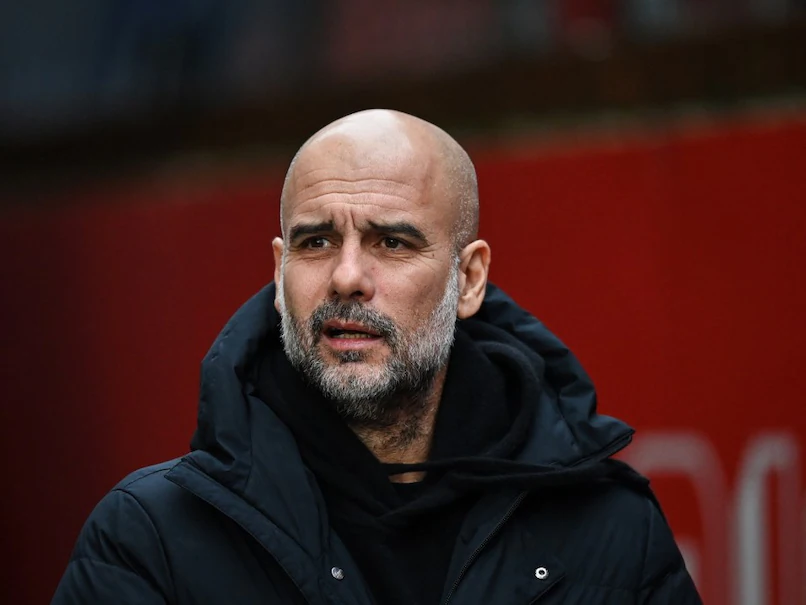
Manchester City manager Pep Guardiola has drawn criticism from leaders of the Jewish Representative Council of Greater Manchester & Region after speaking publicly about humanitarian issues and global conflicts, with the group urging him to “focus on football” rather than international affairs.
The controversy stems from comments Guardiola made both at a charity event in his home city of Barcelona and during a press conference in Manchester, where he reflected on the suffering of civilians caught up in wars in Palestine, Sudan, Ukraine and other conflict zones. Guardiola said the images and reports of innocent people being killed or displaced “hurt” him and left him feeling compelled to speak out about what he described as profound human suffering.
At the press conference, the Spaniard said: “Never, ever in the history of humanity have we had the info in front of our eyes more clearly than now genocide in Palestine, what has happened in Ukraine, what has happened all around the world, in Sudan, everywhere. It hurts me. If it was the opposite side, it would hurt me… wanting harm for another country? It hurts me.”
While Guardiola’s comments were intended to express compassion for civilian suffering, leaders of Manchester’s Jewish community responded with a statement on social media platform X, expressing concern over the manager’s public engagement with geopolitics and its potential impact on local and broader tensions.

The council stated that while Guardiola’s reflections may have been “well-intentioned,” they believed he should refrain from commentary on international issues and concentrate on his role in football. “Pep Guardiola is a football manager. Whilst his humanitarian reflections may be well-intentioned, he should focus on football,” the group said, urging the manager to be more “mindful about the words [he] use[s].” They added that public figures must consider how their language can affect communities that have experienced violence and discrimination.
The statement also criticised Guardiola for what it described as a “total failure” to use his platform to show solidarity with Manchester’s Jewish community after a terrorist attack near Heaton Park Synagogue in October 2025, in which two people were killed. The leaders said they found it “especially galling” that he had not publicly expressed support for local Jewish victims before drawing attention to global issues.
Manchester City has so far not publicly responded to the Jewish Representative Council’s statement.
Guardiola’s supporters, however, argue that his comments reflect a broader humanitarian impulse shared by many athletes and public figures who see their influence as a platform to speak out against suffering, conflict and human rights abuses. This tension between advocating for global issues and sticking to professional roles has become increasingly common as public expectations evolve around the responsibilities of high-profile leaders in sport.
The exchange highlights how deeply polarised discussions around the Israel-Palestine conflict and other global crises have become, with voices on all sides urging caution, empathy and awareness of how words and actions can resonate differently across communities.