

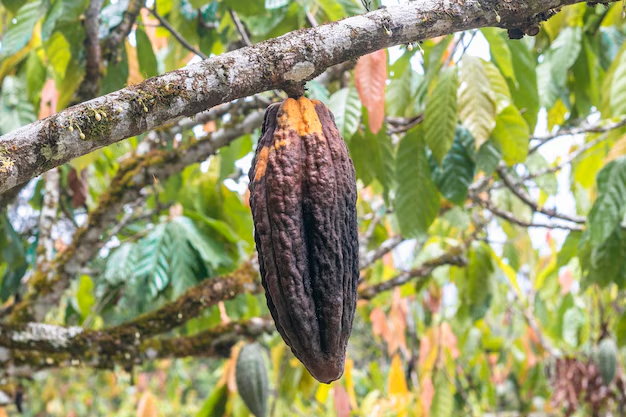
The Cocoa Swollen Shoot Disease (CSSVD), a viral infection long endemic in West Africa’s cocoa belt, is now posing a serious threat to the supply pipeline of one of the world’s largest cocoa producers Côte d’Ivoire. According to a recent study conducted by the non-profit organisation Enveritas, approximately 15% of the country’s cocoa output is at risk due to the rapid spread of the disease.
The study surveyed more than 11,600 cocoa farms across Côte d’Ivoire’s major growing regions during the 2024/25 season, revealing that over 41% of farms showed signs of infection. This high prevalence highlights an escalation in CSSVD’s spread and intensity, raising concerns across the industry about possible disruptions not only to local production but also to the global chocolate supply chain.
Cocoa Swollen Shoot Disease, transmitted primarily by mealybugs, inflicts substantial damage on cocoa trees by causing the swelling of shoots, leaf discolouration, reduced yields, and eventual tree death if left unmanaged. Once a tree becomes infected, there is no cure, and the only reliable method to contain the disease is to remove and destroy affected trees, followed by replanting healthy, disease-free stock. This process is costly, labour-intensive and takes several years before newly planted trees begin producing beans at commercial levels.
Côte d’Ivoire accounts for nearly 40% of the world’s cocoa production, and with Ghana its neighbour and the second-largest producer together supplying a majority of the global cocoa crop, the implications of CSSVD’s spread extend far beyond West Africa. A sustained loss of up to 15% of national output in the Ivory Coast would not only deepen pressure on farmers’ incomes but could also have repercussions on global cocoa prices, supply stability and the operations of chocolate manufacturers worldwide.
The Enveritas report also noted that delayed detection and inconsistent replanting initiatives have exacerbated the situation. In some regions, farmers have been reluctant to remove infected trees due to fears over lost income and insufficient compensation, leading to pockets of persistent infection that serve as reservoirs for further spread. Without coordinated and well-funded intervention strategies, the disease may continue its advance into previously unaffected farms and regions.

In response to rising infection rates, the Ivorian government has already launched campaigns aimed at controlling CSSVD. These efforts include farm mapping exercises, farmer education programmes and subsidised replanting schemes. Despite these interventions, experts argue that the scale of the current outbreak demands stronger collaboration between government bodies, international partners, cocoa buyers and farming cooperatives.
The broader context of the cocoa industry’s challenges adds additional urgency to the situation. Already grappling with ageing farms, climate volatility and rising production costs, West African cocoa producers face multiple pressures that can influence farm productivity and resilience. The spread of CSSVD on top of these structural vulnerabilities threatens to hasten the decline of cocoa yields in regions where agriculture is a primary source of livelihoods for millions of smallholder farmers.
Analysts suggest that without more robust disease monitoring, early detection systems and well-resourced containment efforts, the swollen shoot epidemic could shape the future of cocoa production in West Africa. For many farmers, the crisis is already affecting household incomes, investment in education and access to health services consequences that ripple through rural economies heavily dependent on cocoa revenue.
Greater coordination and investment are seen as critical to controlling CSSVD’s impact, not only to safeguard local production but also to protect the stability of the global chocolate market. As this study shows, failure to rein in the disease’s spread could fundamentally alter the dynamics of cocoa supply and the economic foundation of communities that have long relied on cacao cultivation.
In summary, the latest findings underscore a worsening public-health style threat to one of West Africa’s cornerstone agricultural industries. With a significant portion of Ivory Coast’s cocoa now at risk, proactive disease management, informed policymaking and collective action across public and private sectors will be essential to secure the future of cocoa production in the region.