

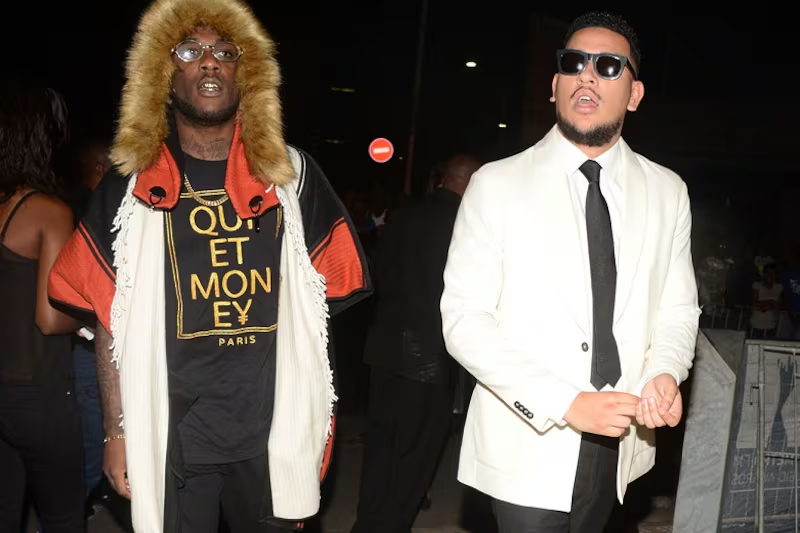
In a heartfelt revelation that has resonated across the African music landscape, acclaimed Nigerian artist Burna Boy has confirmed that he and South African rapper AKA had resolved their long-standing feud before AKA’s tragic death. The disclosure, made public in a recent interview, closes a chapter of one of African hip-hop’s most talked-about disputes and highlights a reconciliation that many fans were unaware had taken place.
The friendship between Burna Boy and AKA had been strained for several years, stemming from a series of public disagreements that saw the two artists exchange barbs on social media and through their music. Their feud, which captivated fans across the continent, often played out like a rivalry between two of African music’s biggest personalities each with his own style, fanbase, and cultural influence.
Despite the intensity of their disputes, Burna Boy’s recent comments paint a very different picture of their final interactions. Speaking candidly, he expressed that the two had met and settled their differences in private. According to Burna Boy, there were no lingering issues between them by the time of AKA’s untimely death in early 2023, which shook the hip-hop community and drew tributes from around the world.

“I want the world to know that we had settled everything,” Burna Boy said, emphasizing that the reconciliation happened quietly, without fanfare or public announcement. “There was no bad blood between us when he passed.”
The South African hip-hop star AKA born Kiernan Forbes was widely respected for his contributions to the genre and had built a legacy that extended well beyond his home country. His passing was a blow to the entire African music fraternity, with tributes pouring in from fellow artists, industry figures, and fans alike.
Burna Boy’s revelation carries particular weight given the emotional nature of their earlier disagreements. What was once a feud fuelled by competitive tension and public commentary had been reframed in its final chapter as a repaired relationship, rooted in mutual respect and shared artistic experience.
In speaking about the reconciliation, Burna Boy framed the resolution as part of his own personal growth journey, suggesting that as artists mature and evolve, so too do their perspectives on conflict and collaboration. He indicated that both he and AKA had taken steps to bridge the divide privately, away from the glare of social media and public scrutiny.
The revelation has stirred reactions from fans and fellow musicians alike. Many followers expressed admiration for the maturity shown by both artists in resolving their differences before it was too late. Others reflected on the impact of public feuds in entertainment, recognizing that personalities on stage and in the studio are often more complex and nuanced off screen.
Music industry observers suggest that reconciliations like this one kept private until after a pivotal moment are a reminder of the human element behind celebrity narratives. What might have appeared externally as a bitter rivalry was, in fact, a relationship that could be salvaged with mutual respect and open dialogue.
Burna Boy’s announcement brings renewed focus on AKA’s legacy and the indelible mark he left on music in South Africa and beyond. By acknowledging that they had resolved their differences, Burna Boy not only honors that legacy but also encourages a more introspective view of how artists navigate conflict, ego, and reconciliation.
For many fans, this revelation is a bittersweet reminder of what could have been a friendship publicly healed only after irreversible loss. Yet it also offers closure, affirming that the two influential artists parted on better terms than many realized.

As the news reverberates across the African entertainment world, it serves both as a tribute to AKA’s memory and as a testament to the power of reconciliation in a space often dominated by headlines, hashtags, and public drama. In the end, Burna Boy’s message is clear: beyond competition and controversy lies the universal possibility of peace, even among those once at odds.