


The United States’ interest in Greenland is not a sudden geopolitical whim but a long-standing strategic calculation rooted in military security, Arctic geography, natural resources and great-power competition. While recent public statements have reignited global debate, Washington’s focus on the world’s largest island reflects deeper realities shaping 21st-century geopolitics.
Greenland’s strategic geography
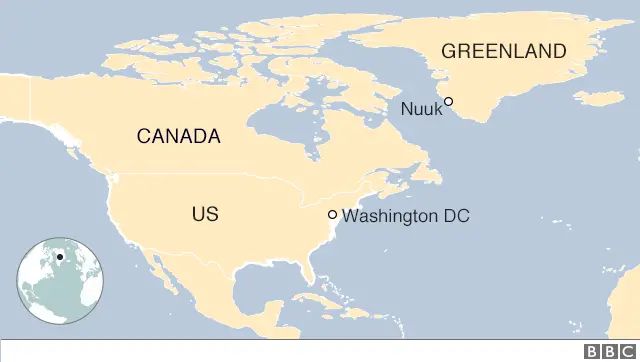
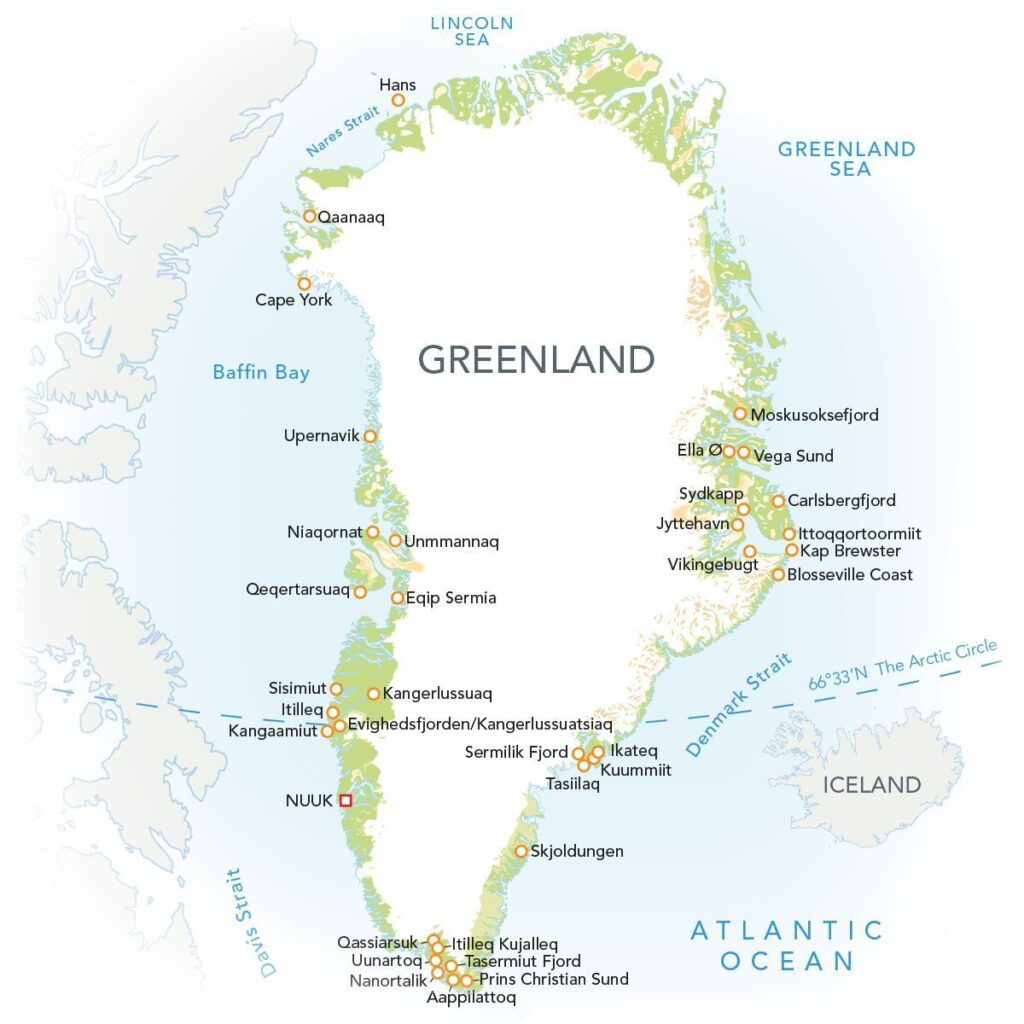
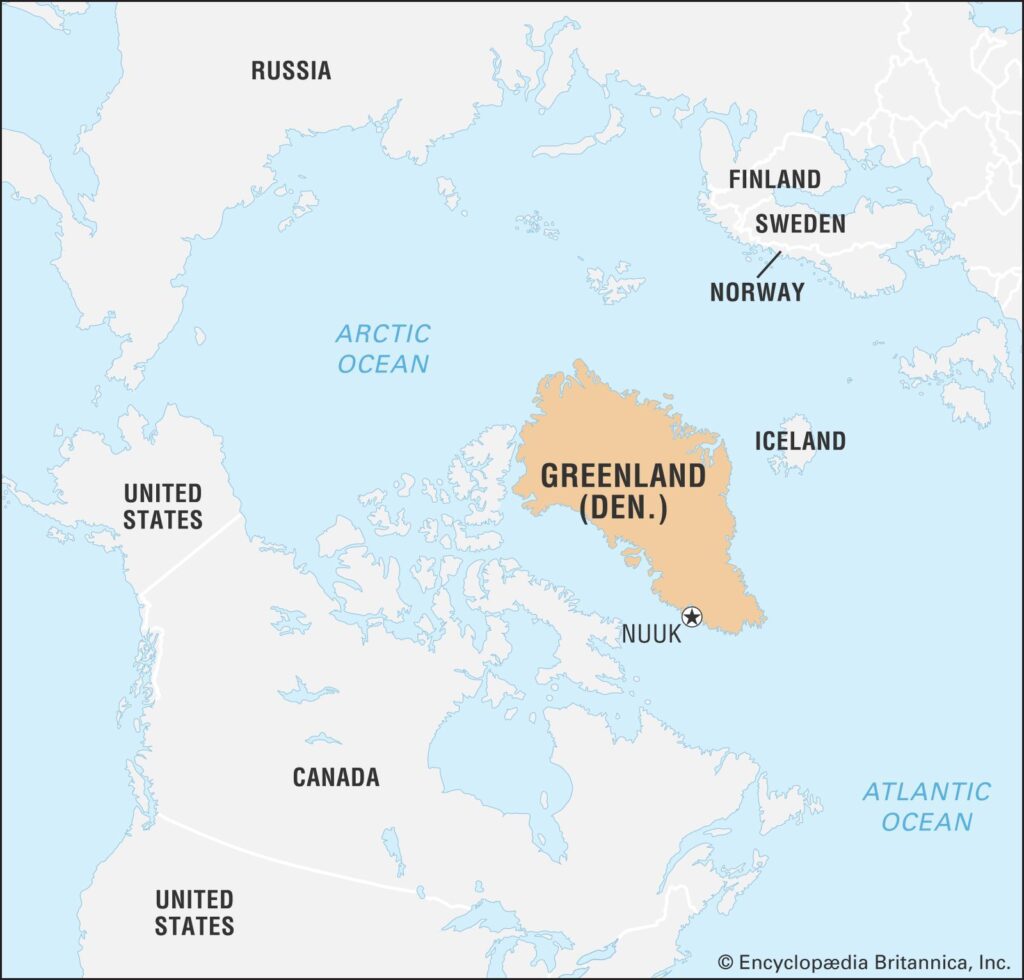
Greenland occupies a critical position between North America and Europe, sitting at the gateway of the Arctic and the North Atlantic. This location makes it central to monitoring air and sea routes linking the Arctic Ocean to the Atlantic, particularly the Greenland–Iceland–UK (GIUK) gap, a long-established military chokepoint.
For the United States, control and surveillance of this corridor are essential to early warning systems and maritime security. During the Cold War, it was a frontline zone for detecting Soviet submarines. Today, it remains just as relevant, especially amid renewed tensions with Russia.
Military and defence significance
The U.S. already maintains a permanent military presence in Greenland through the Pituffik Space Base, operated under a long-standing defence agreement with Denmark. The base plays a vital role in ballistic missile early warning, space surveillance and missile defence operations.
As missile technology advances and threats become more complex, Greenland’s proximity to potential polar missile trajectories reinforces its value to U.S. homeland defence. From Washington’s perspective, Greenland provides strategic depth that cannot be replicated elsewhere.
Great-power competition in the Arctic
The Arctic is rapidly emerging as a theatre of global competition. Russia has expanded its military infrastructure across the high north, reopening Soviet-era bases and increasing Arctic patrols. China, meanwhile, has declared itself a “near-Arctic state” and has shown interest in Arctic shipping routes, infrastructure and research partnerships.
U.S. policymakers view Greenland as a stabilising anchor in this shifting balance. Ensuring that the island remains firmly aligned with Western security structures is seen as essential to preventing rival powers from gaining influence close to North American territory.
Natural resources and critical minerals
Beyond security, Greenland holds significant economic and strategic value due to its mineral wealth. The island is believed to contain deposits of rare earth elements, uranium and other critical minerals essential for defence systems, renewable energy technologies and advanced electronics.
As global supply chains for critical minerals become increasingly politicised, the United States and its allies are seeking alternatives to dominant suppliers. Greenland’s resources, though still largely untapped, represent a potential long-term asset in this race.
Climate change and new shipping routes
Climate change is accelerating the melting of Arctic ice, opening new maritime routes and increasing access to previously unreachable resources. These emerging shipping lanes could significantly shorten travel times between Asia, Europe and North America.
Greenland’s location positions it as a future hub in Arctic navigation and logistics. For the U.S., this raises both economic opportunities and security concerns, particularly around who controls and polices these new routes.
Historical roots of U.S. interest
American interest in Greenland dates back more than a century. In the aftermath of World War II, the U.S. formally offered to purchase the island from Denmark, viewing it as indispensable to Cold War defence. Even earlier, U.S. policymakers in the 19th century considered Greenland alongside Alaska as part of a broader Arctic strategy.
These historical efforts show a consistent theme: Greenland has long been seen in Washington as strategically “too important to ignore.”
Sovereignty and political realities
Despite U.S. interest, Greenland is not for sale. The island is an autonomous territory within the Kingdom of Denmark, and both Copenhagen and Greenland’s own government have repeatedly rejected any notion of a transfer of sovereignty.
Greenland’s population has also grown more assertive about self-determination, prioritising economic development, environmental protection and political autonomy. Any attempt to alter its status without consent would face serious legal, diplomatic and moral resistance.
The bigger picture
The United States does not need to own Greenland to benefit from its strategic value. Existing defence agreements, diplomatic engagement and economic cooperation already provide Washington with significant access and influence.
Ultimately, U.S. interest in Greenland reflects broader global shifts: intensifying great-power rivalry, climate-driven transformation of the Arctic, and competition over future resources. Greenland sits at the intersection of all three, making it one of the most strategically significant territories of the modern era.
Ghana orders 4 advanced Airbus helicopters to boost defence and transport capabilities