


On January 14, 2026, Ghana’s self-styled dancehall king, Shatta Wale, made a powerful statement with the release of Echoes of the Ghetto, an album boldly billed as “The Undisputed Dancehall Album 2026.” More than just a new project, the album arrives as a reaffirmation of identity, resilience, and artistic dominance one that reconnects Shatta Wale to his roots while projecting his voice onto the global stage.
Echoes of the Ghetto is grounded in raw storytelling. Across the project, Shatta Wale leans into unfiltered narratives shaped by pressure, perseverance, and hard-earned victories. The album does not chase trends; instead, it amplifies lived experiences, echoing the streets that forged his journey. This authenticity is central to its appeal, positioning the album as both personal testimony and cultural statement.
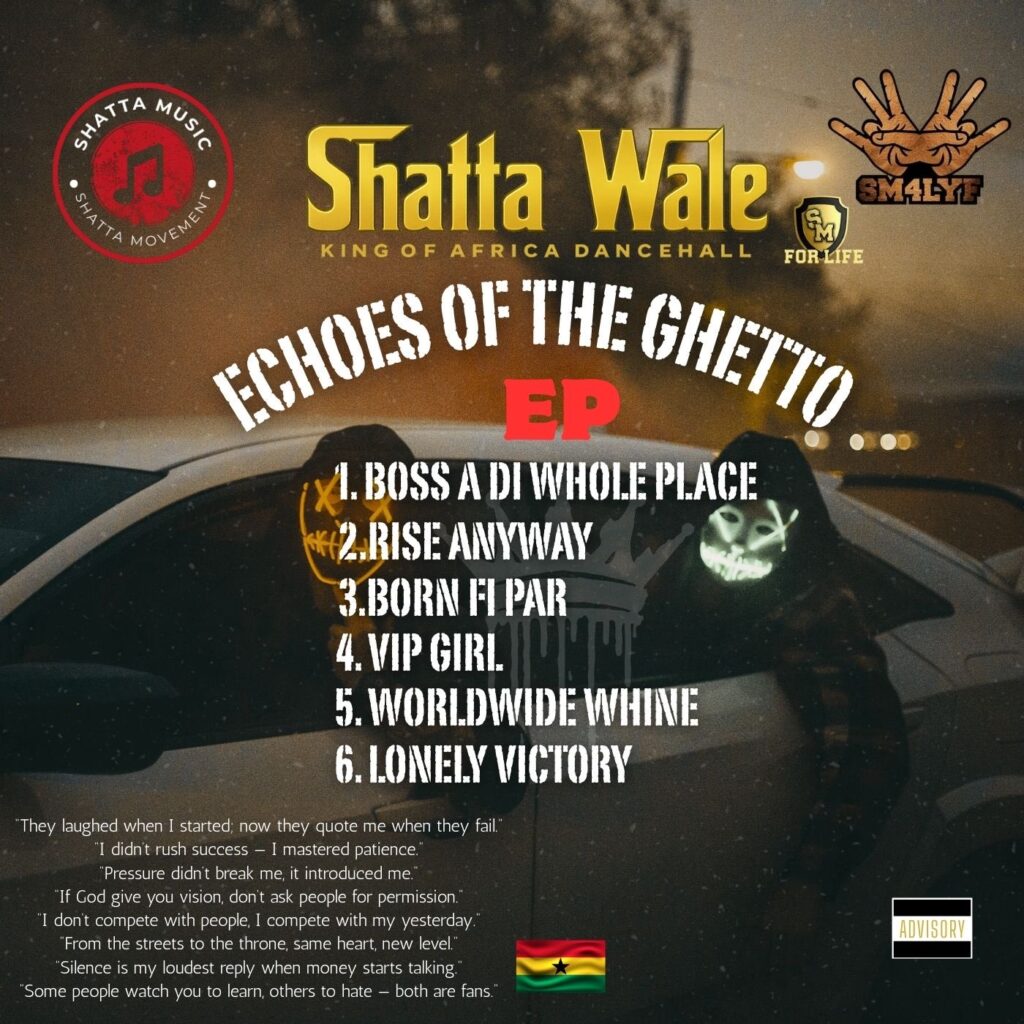
Standout tracks quickly set the tone. “Boss A Di Whole Place” is a commanding anthem that reinforces Shatta Wale’s authority within dancehall, pulsing with confidence and bravado. In contrast, “Rise Anyway” captures the spirit of survival, speaking directly to listeners navigating adversity and self-doubt. Meanwhile, “Lonely Victory” offers a reflective turn an introspective meditation on success, isolation, and the unseen cost of triumph. Together, these songs balance power with vulnerability, a duality that has long defined Shatta Wale’s artistry.
The album’s lead single is already showing promising momentum, surpassing 1,000 views and continuing to climb through organic fan engagement. Rather than relying solely on heavy promotion, Echoes of the Ghetto is spreading through community-driven energy. Fans across continents are sharing audio slides with scrolling lyrics, recreating beachside sing-alongs, and posting street-level hype videos that mirror the album’s raw tone. This grassroots response highlights Shatta Wale’s unique connection with his audience one built on shared experiences rather than polished spectacle.
Beyond the music, Echoes of the Ghetto symbolizes a return to core values. Following his New Year’s single “2026,” the album underscores Shatta Wale’s renewed grounding in his Accra roots. The city’s pulse its struggles, ambition, and relentless energy runs through the project, shaping its sound and message. By centering Accra as both inspiration and foundation, Shatta Wale bridges the local and the global, reminding listeners that authentic African stories continue to resonate worldwide.
Critically, the album reinforces dancehall’s role as a vehicle for truth-telling. Shatta Wale does not sanitize his narrative; instead, he embraces its edges. The result is a body of work that feels urgent and relevant, particularly in a time when many artists lean toward safe formulas. Echoes of the Ghetto stands apart by leaning into conviction, resilience, and cultural pride.
As 2026 unfolds, the album positions Shatta Wale not merely as a hitmaker, but as a cultural force shaping conversations around African dancehall and street-born success. His declaration of Echoes of the Ghetto as “The Undisputed Dancehall Album 2026” reads less like marketing bravado and more like a challenge one rooted in confidence earned through years of consistency and influence.
Ultimately, Echoes of the Ghetto is a reminder of why Shatta Wale remains central to the African music narrative. It captures the echoes of struggle, the noise of victory, and the silence that follows achievement. In doing so, it cements his place at the forefront of dancehall in 2026, carrying Accra’s voice to a world that continues to listen.