

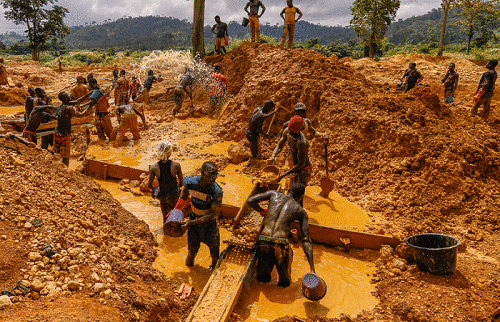
A prominent advocate for environmental protection and mining reform has urged the government to focus on empowering institutions rather than political figures if Ghana is to effectively win the fight against illegal mining popularly known as galamsey. Kokofu a community leader and environmental campaigner said that sustainable solutions require strong enforcement frameworks institutional independence and community involvement.
In calls for action, he explained that the galamsey problem is deeply rooted in economic hardship weak sanctions poor governance and lack of clear accountability. Kokofu said that while political attention can raise awareness temporary crackdowns often fail to deliver long term results if institutions charged with enforcement lack the tools training and autonomy they need.
Illegal small-scale mining continues to destroy forests pollute water sources and undermine livelihoods in several regions of Ghana. Toxic chemicals used in unregulated operations have contaminated rivers and farmlands leading to health risks and reduced crop yields for communities dependent on agriculture.
Kokofu argued that strengthening local enforcement agencies equipping them with modern monitoring technology and improving legal penalties for offenders would create real deterrence. He said that corruption or political interference in law enforcement efforts often allows perpetrators to resume operations shortly after national anti galamsey campaigns wind down.
Community education was also highlighted as a critical component of long-term success. Kokofu stressed the need for public awareness programmes that explain mining laws highlight environmental impacts and promote alternative livelihoods for youth who might otherwise be drawn to illegal mining due to limited economic opportunities.
Civil society organisations working in environmental protection have echoed similar views saying that independent institutions with mandate clarity and adequate resources are essential. They said that collaborative efforts between government bodies local leaders and international partners would be more effective than episodic enforcement actions driven by political cycles.
Government representatives have acknowledged these calls emphasising that galamsey remains a priority and that reforms to regulatory frameworks are underway. They noted that legislative measures increasing penalties and clarifying land use rights are being considered.
As debate continues public opinion appears to be coalescing around the idea that institutional empowerment and systemic reform could offer a pathway to more sustained progress against illegal mining. Many believe that protecting Ghana’s environment and natural resources requires long term strategy not short-term symbolic actions.