

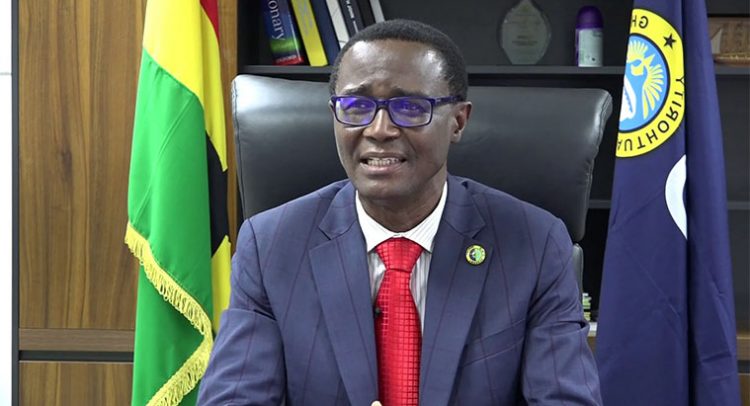
The Accra High Court has approved bail totalling GH₵50 million for Rev. Dr. Ammishaddai Owusu-Amoah, the former Commissioner-General of the Ghana Revenue Authority (GRA), and four other individuals and entities facing charges in the controversial Strategic Mobilisation Ghana Limited (SML) prosecution.
The bail order, which requires each of the five accused to provide two sureties to be justified, was handed down on Thursday, December 11, 2025. The court stipulated that the terms of the bail would take full effect beginning Monday, December 15, 2025, when the accused are expected to return to complete the necessary procedures. Until that time, they remain bound by their previous bail conditions issued by the Office of the Special Prosecutor (OSP).
Accused and Charges
Aside from Dr. Owusu-Amoah, the individuals and entity granted bail are: Emmanuel Kofi Nti, Isaac Crentsil, Evans Adusei, and Strategic Mobilisation Ghana Limited itself. The accused are being tried alongside former Finance Minister Ken Ofori-Atta and his Chief of Staff, Ernest Akore, on a multi-count indictment that alleges serious breaches of public procurement and misuse of public office.
Prosecutors allege that the defendants conspired to influence the procurement process and secure unfair advantage for SML in securing state contracts, resulting in financial losses to the government estimated at over GH₵1.4 billion. The charges also include accusations of wilfully causing financial loss and improperly using public office for personal or institutional benefit.
Bail Conditions and Compliance
Under the bail conditions set by the High Court, all five accused must deposit their passports and any travel documents with the court registry. This measure is intended to prevent any attempt to abscond while the case remains pending. In addition, the court ordered that each of the accused must report weekly to the Office of the Special Prosecutor to confirm their compliance with the bail terms and facilitate ongoing monitoring by law enforcement.
The court also directed all the accused to report to the Office of the Special Prosecutor on Friday, December 12, to begin the process of fulfilling the bail requirements. The timing of these administrative steps underscores the court’s intention to ensure that all conditions are clear, actionable, and enforceable well ahead of the formal commencement of the new bail arrangement.
Judicial Rationale and Next Steps
The judge presiding over the case acknowledged the seriousness of the allegations but determined that bail in the sum set was appropriate, provided that the stringent conditions are met. The decision reflects a balance between the presumption of innocence — a fundamental tenet of criminal law — and the need to ensure that the accused remain available for the ongoing trial process.
The SML case has been adjourned to December 17, 2025, at which time another co-accused, Kwadwo Damoah, the Member of Parliament for Jaman South, is scheduled to appear in court to enter his plea. The court previously declined a prosecution request to issue a bench warrant for Damoah, ruling that he was entitled to parliamentary immunity at the time the summons was served, due to Parliament being in session.
Broader Context of the SML Case
The SML prosecution has been one of the most high-profile legal matters in Ghana in 2025, both for its scale and its implications for governance and public accountability. The case stems from a contentious contract awarded to Strategic Mobilisation Ghana Limited for revenue assurance and related services, a contract that later became the subject of intense public scrutiny and controversy.
Proponents of the prosecution argue that the contract was mired in procedural irregularities and resulted in undue financial commitments by the state. They contend that payments were made automatically without appropriate verification of work done or compliance with procurement laws. Critics of the prosecution, however, have raised questions about jurisdiction, procedural fairness, and the broader impact of such high-stakes legal actions.
In parallel with the criminal proceedings, the Office of the Special Prosecutor has announced plans to recover GH₵125 million from SML as part of efforts to claw back estimated unjust enrichment arising from the payments made under the disputed contracts. This civil recovery action further underscores the multifaceted nature of the state’s response to the alleged abuses tied to the contract.
Legal and Public Interest Dimensions
Legal experts have highlighted that the bail decision, while significant, does not impact the substantive trial, which continues to unfold amid intense national interest. The case has drawn attention from civil society groups, governance watchdogs, and ordinary Ghanaians, many of whom view it as a litmus test for the integrity of public institutions and the rule of law.
Observers note that the court’s insistence on stringent bail conditions such as weekly reporting and the surrender of travel documents reflects judicial caution in ensuring that those charged remain within the reach of the criminal justice system while the complex case proceeds. At the same time, the granting of bail maintains the principle that accused persons are presumed innocent until proven guilty.
As the matter advances toward its next hearing, all eyes will be on how remaining legal procedures play out, how the evidence is tested before the court, and what broader lessons the case might offer for public sector accountability and the administration of justice in Ghana.