

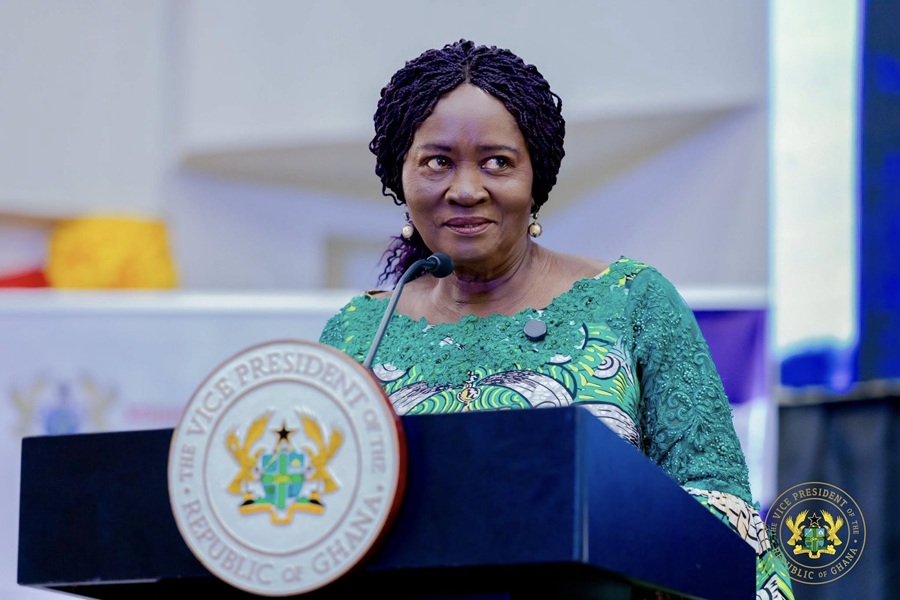
The Vice President of Ghana, Professor Jane Naana Opoku-Agyemang, has commended the contribution of accredited private medical schools to the national healthcare system, highlighting their importance in producing much-needed doctors to serve communities across the country. She made the remarks at the Sixth Graduation Ceremony of the Accra College of Medicine (ACM), which also marked the institution’s 10th anniversary.
At the ceremony, the college graduated 23 new doctors, its largest cohort to date. Thirteen percent of the graduates earned distinctions in at least one clinical discipline. The Vice President described the graduating class as “an army now serving across Ghana,” pointing to the growing influence of private medical education in closing healthcare gaps nationwide.
Professor Opoku-Agyemang emphasised that private institutions offer an essential complement to public medical schools, especially given the intense competition for limited slots in state-run institutions. She appealed to the new doctors to prioritise service in underserved areas, reminding them of the urgent need to expand access to medical care throughout Ghana.
The leadership at ACM noted that 97 percent of its alumni are working in hospitals and health facilities across Ghana. A significant portion of its student body is female, underscoring efforts to encourage gender balance in medical professions. The institution now uses modern educational tools, including virtual simulation software and advanced anatomy platforms, to deliver quality medical training.
Healthcare stakeholders say the Vice President’s praise and the growth of private medical schools come at a critical time. Ghana continues to face shortages of doctors and pressure on medical infrastructure, especially in rural and underserved regions. By expanding training capacity beyond public universities, private medical colleges are helping fill the gap. This could improve doctor-to-population ratios and support nationwide efforts to deliver timely healthcare.
Despite the success, experts call for government to complement private efforts with strong regulation, support for postgraduate training, and incentives to ensure that doctors remain in public service or underserved areas. With the health sector under heavy demand, cooperation between public and private institutions remains fundamental.
The recognition of private medical schools by the Vice President signals a shift in national priorities — one that regards medical education as a shared responsibility between state and private stakeholders. For many Ghanaians, that collaboration offers renewed hope for improved access to quality healthcare.